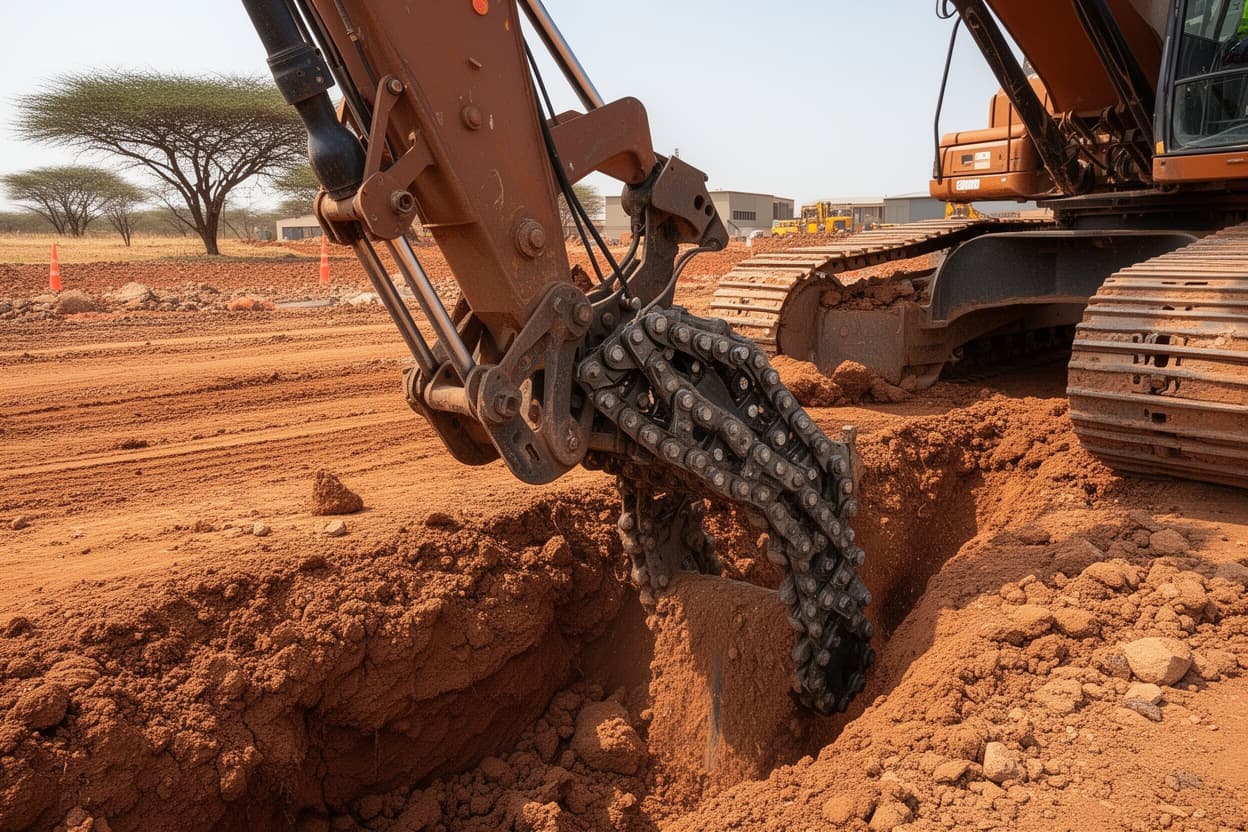
Brown 200 Trencher
The Brown 200 is a robust and powerful trencher designed for heavy-duty trenching applications in South Africa, offering significant digging depth and width for utility installation, pipeline projects, and agricultural drainage. It combines a durable chassis with a high-performance digging chain, making it suitable for challenging ground conditions and demanding operational cycles.
Overview
The Brown 200 trencher is engineered for serious trenching tasks, providing a reliable solution for contractors and plant hire companies across South Africa. Its design prioritises durability and performance, crucial for the varied and often tough ground conditions encountered locally, from rocky terrain to expansive clay soils. This model is typically employed in large-scale infrastructure projects, including the laying of water pipes, fibre optic cables, and electrical conduits, as well as for agricultural drainage and irrigation systems.
Key to its appeal is the balance between power and precision, allowing operators to achieve consistent trench profiles with minimal rework. The machine's substantial operating weight contributes to its stability during digging, reducing bounce and improving overall efficiency. For South African operations, where uptime is critical and maintenance resources can be stretched, the Brown 200 is built with accessible service points and robust components to withstand prolonged use.
The Brown 200 is not just about raw power; it also incorporates features aimed at operator comfort and safety, recognising that long hours in the cab demand a well-designed workspace. Its adaptability to various chain configurations and attachments further enhances its versatility, making it a valuable asset for a wide range of trenching requirements.
- Typical Applications in SA:
- Urban utility trenching (water, sewer, gas, fibre)
- Long-distance pipeline installation
- Agricultural drainage and irrigation
- Roadside cable laying
- Foundation trenching for large structures
Key specs
- Year range
- 2025
- Operating Weight
- 12,500 kg
- Engine Power
- Typically 100-130 kW (134-174 hp) (est.)
- Maximum Digging Depth
- Up to 2.5 - 3.0 m (est.)
- Maximum Trench Width
- 0.3 - 0.6 m (12-24 inches) (est.)
- Digging Chain Type
- Cup, Rock, or Combination Chain
- Track Type
- Steel or Rubber Tracks (optional)
- Fuel Tank Capacity
- Approx. 200-250 litres (est.)
- Hydraulic System Flow
- Typically 150-200 L/min (est.)
- Ground Pressure
- Approx. 0.4-0.6 kg/cm² (est.)
- Transport Length
- Approx. 7.0 - 8.5 m (est.)
- Transport Width
- Approx. 2.4 - 2.8 m (est.)
- Transport Height
- Approx. 2.8 - 3.2 m (est.)
Specifications are typical and may vary based on specific configuration, engine options, and market region. Always consult the manufacturer's official data sheet for precise figures.
Applications
- Utility installation (water, sewer, gas, electricity, fibre optics)
- Pipeline construction for oil, gas, and water
- Agricultural drainage and irrigation system trenching
- Road construction for cable and conduit laying
- Foundation trenching for commercial and industrial buildings
- Landscaping and large-scale earthmoving projects requiring precise trenching
Features
- Heavy-duty digging chain and boom for challenging ground conditions
- Robust chassis and undercarriage for stability and durability
- Powerful diesel engine for consistent performance
- Hydrostatic drive system for smooth operation and precise control
- Operator-friendly cabin with ergonomic controls and good visibility
- Adjustable digging depth and width for versatile applications
- Easy access service points for simplified maintenance
Operating requirements
- Skilled and certified trencher operator familiar with local ground conditions
- Regular pre-start checks and daily maintenance routines
- Adequate fuel supply and access to hydraulic oil and lubricants
- Support vehicle for transport to and from sites, especially for larger units
- Compliance with local safety regulations and trenching standards
- Clearance of underground services (e.g., using ground penetrating radar) before digging
- Appropriate ground conditions for safe and efficient trenching (avoiding excessively rocky or unstable ground without proper preparation)
Attachments and options
Common attachments
- Various digging chain types (cup, rock, combination) for different soil types
- Crumber bar for cleaning the trench bottom
- Spoil conveyor systems for efficient material removal
- Laser grading systems for precise depth control
- Backfill blades or attachments for trench closing
Options
- Enclosed, air-conditioned cabin for operator comfort
- GPS or automated guidance systems for enhanced precision
- Rubber track options for reduced ground disturbance
- Cold weather starting kits for specific regions
- Extended warranty and service packages from local dealers
Maintenance and inspections
- Daily inspection of digging chain, teeth, and sprockets for wear
- Regular lubrication of all moving parts and pivot points
- Checking hydraulic fluid levels and filters
- Engine oil and filter changes as per manufacturer's schedule
- Inspection of tracks and undercarriage components for damage or wear
- Cleaning of air filters and cooling system components
- Monitoring of electrical systems and battery condition
Adherence to the manufacturer's preventative maintenance schedule is crucial for maximising uptime and extending the lifespan of the Brown 200, especially given the demanding operational environments in South Africa.
Safety notes
- Always ensure operators are fully trained and certified for trencher operation
- Implement a strict 'locate before you dig' policy to avoid underground services
- Maintain safe distances from trench edges and unstable ground
- Ensure proper trench shoring or sloping when personnel enter trenches
- Regularly inspect safety guards, emergency stops, and warning systems
- Use appropriate personal protective equipment (PPE) at all times
- Ensure adequate lighting for night operations and clear site visibility
Buying checklist
- Verify the machine's service history and maintenance records
- Inspect the digging chain, teeth, and sprockets for excessive wear
- Check the condition of the undercarriage, tracks, and rollers
- Test all hydraulic functions for smooth and responsive operation
- Assess engine performance, looking for unusual noises or smoke
- Examine the cabin for damage, functionality of controls, and operator comfort
- Confirm availability of spare parts and local dealer support in South Africa
- Obtain a professional inspection if purchasing a used unit
- Clarify warranty terms, especially for new machines or certified used equipment
- Compare total cost of ownership, including fuel efficiency and maintenance costs
FAQ
What kind of ground can the Brown 200 trencher handle in South Africa?
The Brown 200, with its robust design and interchangeable chain types (cup, rock, combination), is capable of trenching in a wide range of South African ground conditions, from soft soils and sand to compacted clay and moderately rocky terrain. For extremely hard rock, specialized rock saws or pre-ripping might be required.
Is the Brown 200 suitable for urban utility trenching?
Yes, the Brown 200 is well-suited for urban utility trenching. Its ability to achieve precise trench depths and widths makes it ideal for laying water pipes, electrical cables, and fibre optics in urban environments, provided site access and spoil removal logistics are managed effectively.
What is the typical fuel consumption for a Brown 200 trencher?
Fuel consumption for the Brown 200 can vary significantly based on engine load, ground conditions, and operator technique. However, operators can typically expect consumption in the range of 15-25 litres per hour under average working conditions. This is an estimate and actual figures may differ. (est.)
How important is local dealer support for a trencher like the Brown 200 in South Africa?
Local dealer support is critically important for trenchers in South Africa. Given the specialized nature of these machines and the demanding work they perform, reliable access to spare parts, qualified technicians, and technical assistance from a reputable dealer ensures maximum uptime and efficient operation, minimising costly delays on projects.