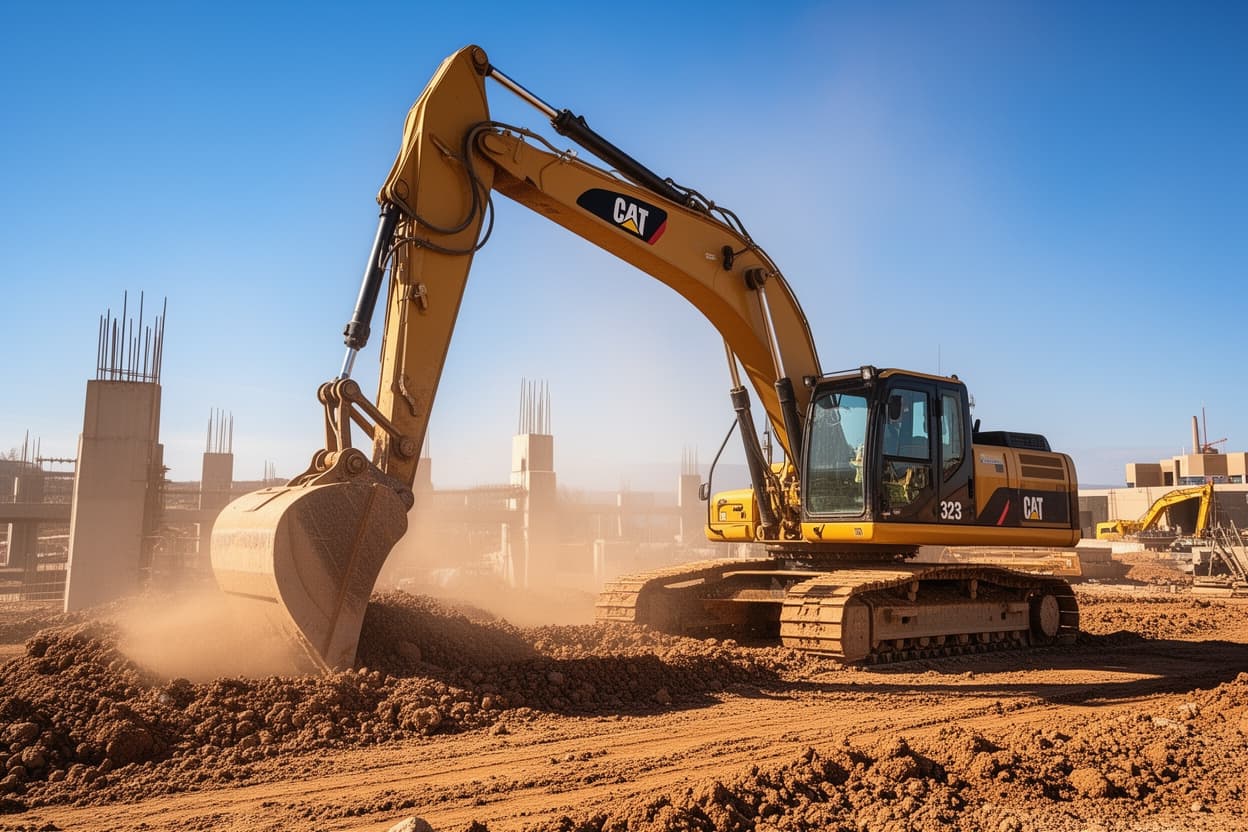
CAT 323 excavator
The CAT 323 is a robust 20-25 tonne class hydraulic excavator, known for its balance of power, fuel efficiency, and advanced technology, making it a versatile choice for various demanding construction and earthmoving tasks across South Africa.
Overview
The CAT 323 excavator, introduced around 2020, represents a significant advancement in the 20-25 tonne class, designed to deliver high performance and efficiency for a wide range of applications. This model is engineered with Caterpillar's latest technologies, focusing on operator comfort, fuel economy, and reduced maintenance costs, which are critical considerations for South African contractors and plant hire companies.
Its robust construction is suited for the challenging conditions often encountered on local sites, from general excavation and trenching to more demanding quarry and demolition work. The 323 typically features a powerful Cat C7.1 ACERT engine, known for its reliability and compliance with stringent emission standards, while still being adaptable to varying fuel qualities found in the region. Integrated technology, such as Cat GRADE with 2D, Assist, and Payload, helps operators work more efficiently and accurately, reducing rework and improving overall productivity.
For South African operations, the availability of parts and a strong dealer network are paramount. Caterpillar's extensive presence ensures that support, service, and genuine parts are generally accessible, mitigating downtime. The machine's design also prioritises ease of serviceability, with ground-level access to most routine maintenance points, further contributing to its operational efficiency.
Key aspects that make the CAT 323 a popular choice include:
- Advanced Hydraulics: Optimised for faster cycle times and improved lifting capabilities.
- Integrated Technology: Standard features like Cat GRADE and Payload assist in achieving higher accuracy and productivity.
- Fuel Efficiency: Designed to consume less fuel without compromising power, a major cost-saving for local operators.
- Operator Comfort: Spacious cab with intuitive controls, reducing fatigue during long shifts.
- Durability: Built to withstand harsh operating environments, ensuring a long service life.
The CAT 323 is a workhorse that combines traditional Caterpillar ruggedness with modern technological enhancements, making it a valuable asset for any earthmoving fleet in South Africa.
Key specs
- Years produced
- 2020–2020
- Year range
- 2020
- Operating Weight
- 23,000 - 25,000 kg (est.)
- Engine Model
- Cat C7.1 ACERT
- Engine Power
- 121 kW (162 hp)
- Bucket Capacity Range
- 0.8 - 1.5 m³ (est.)
- Max Digging Depth
- 6.7 - 7.2 m (est.)
- Max Reach at Ground Level
- 9.8 - 10.5 m (est.)
- Swing Speed
- 11.5 rpm
- Travel Speed (High)
- 5.5 km/h
- Fuel Tank Capacity
- 350 - 400 L (est.)
- Hydraulic System Flow
- 2 x 230 L/min (est.)
- Undercarriage Type
- Standard (Fixed) or Long (L)
- Tail Swing Radius
- 2.75 m
Specifications may vary based on configuration, attachments, and regional variations. Values provided are typical for models available in South Africa.
Applications
- General excavation and trenching for civil engineering projects
- Road construction and maintenance
- Quarrying and aggregate handling
- Demolition and site clearance
- Utility installation and pipeline work
- Loading dump trucks and material handling
Features
- Cat GRADE with 2D, Assist, and Payload for improved accuracy and productivity
- Smart Mode engine power management for fuel efficiency
- Electro-hydraulic control system for precise operation
- Spacious, sound-suppressed cab with ergonomic controls
- Automatic climate control and heated air-suspension seat options
- Integrated rearview and side-view cameras for enhanced visibility
- Product Link™ telematics for remote monitoring and fleet management
- Ground-level access to daily maintenance points
- Heavy-duty undercarriage for durability in tough conditions
- Advanced filtration system for extended component life
Operating requirements
- Skilled and certified excavator operator familiar with modern machine controls
- Regular access to clean diesel fuel (low sulphur preferred for optimal engine performance)
- Availability of genuine CAT parts and qualified service technicians for maintenance
- Suitable transport for moving a 20-25 tonne machine between sites (lowbed trailer)
- Adequate space for safe operation, including swing radius clearance
- Compliance with local safety regulations and site-specific PPE requirements
Attachments and options
Common attachments
- General purpose digging buckets (various sizes)
- Heavy-duty rock buckets
- Hydraulic hammers/breakers for demolition
- Quick couplers (hydraulic or mechanical)
- Grapples for material handling
- Compaction wheels/plates
Options
- Various stick and boom configurations (e.g., long reach)
- Additional hydraulic lines for advanced attachments
- Cat GRADE with Advanced 2D or 3D for more complex grading tasks
- Specialised undercarriage options (e.g., wider tracks)
- Cab guarding for demolition applications
- LED work lights for enhanced visibility
- Cold weather starting aids
Maintenance and inspections
- Daily pre-operation checks (fluid levels, track tension, visual inspection)
- Regular engine oil and filter changes (typically every 500 hours)
- Hydraulic oil and filter changes as per manufacturer schedule
- Greasing of pivot points and pins
- Undercarriage inspection and cleaning to prevent premature wear
- Cooling system checks and cleaning
- Air filter inspection and replacement
- Software updates and diagnostic checks via Cat ET
Adhering to Caterpillar's recommended maintenance schedule is crucial for maximising uptime and extending the lifespan of the machine, especially in the demanding South African operating environment.
Safety notes
- ROPS/FOPS certified cab for operator protection
- Integrated rearview and side-view cameras
- Seat belt interlock system
- Anti-skid plates on walking surfaces
- Emergency stop button
- Hydraulic lockout lever
- Audible travel alarm
- Ground-level engine shutoff switch
Buying checklist
- Verify service history and maintenance records, especially for models operating in harsh conditions.
- Inspect the undercarriage thoroughly for wear on tracks, rollers, and sprockets.
- Check for any leaks around hydraulic cylinders, hoses, and pumps.
- Test all hydraulic functions (boom, stick, bucket, swing) for smooth and powerful operation.
- Assess the condition of the engine for unusual noises, smoke, or excessive vibrations.
- Confirm the functionality of all cab controls, displays, and safety features.
- Enquire about the availability of genuine CAT parts and local dealer support.
- Obtain a recent oil analysis report if possible to gauge internal component health.
- Verify the machine's hours of operation against its overall condition.
- Consider a pre-purchase inspection by an independent, qualified technician.
FAQ
What is the typical fuel consumption of a CAT 323 in South Africa?
Fuel consumption for a CAT 323 can vary significantly based on application, operator technique, and engine load. However, with its Smart Mode and efficient Cat C7.1 engine, operators can expect consumption in the range of 15-25 litres per hour under typical South African operating conditions, with lighter work being more efficient. (est.)
Are parts and service readily available for the CAT 323 in South Africa?
Yes, Caterpillar has an extensive dealer network across South Africa (e.g., Barloworld Equipment), ensuring good availability of genuine parts, technical support, and qualified service personnel. This is a major advantage for CAT owners in the region.
What are the main technological advantages of the CAT 323?
The CAT 323 benefits from Caterpillar's 'Next Generation' technology, including standard Cat GRADE with 2D, Assist, and Payload systems for improved accuracy and productivity. It also features Smart Mode for optimised fuel efficiency and Product Link for remote fleet management, all contributing to lower operating costs and higher output.
Can the CAT 323 handle heavy-duty applications like quarry work?
Yes, the CAT 323 is designed with a robust structure and powerful hydraulics, making it suitable for heavy-duty applications such as quarrying, rock breaking, and demanding excavation tasks. Proper attachment selection (e.g., heavy-duty rock bucket or hydraulic hammer) is crucial for these applications.