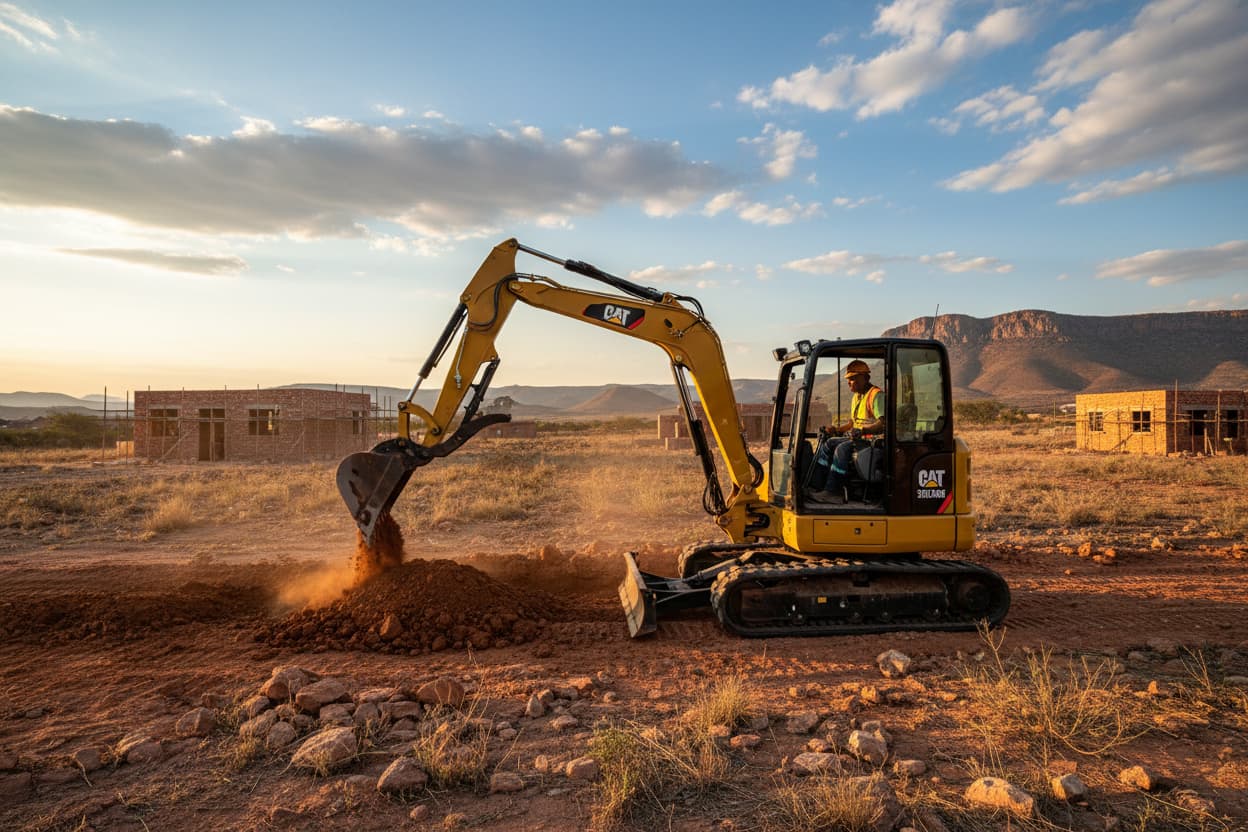
Caterpillar 302.7DCR Excavator
The Caterpillar 302.7DCR is a compact, zero tail swing (CR) mini excavator designed for tight access work in South Africa. It offers a balance of power, precision, and maneuverability, making it ideal for utility installations, landscaping, and small-to-medium construction projects where space is at a premium. Its robust build and operator-friendly features ensure efficiency and productivity on di
Overview
The Caterpillar 302.7DCR mini excavator is a popular choice in the South African market for its versatility and performance in confined spaces. As part of Caterpillar's DCR series, it features a Compact Radius (CR) design, meaning its tail swing stays within the width of its tracks, significantly reducing the risk of damage in tight operating environments. This makes it particularly well-suited for urban construction, residential landscaping, and utility trenching where space is often limited.
Operators appreciate the 302.7DCR for its intuitive controls and comfortable cabin, which contribute to reduced fatigue during long shifts. The machine is engineered for reliability, a critical factor for South African contractors who depend on consistent uptime. Its robust undercarriage and durable components are designed to withstand the challenging conditions often encountered on local job sites, from rocky terrain to dusty environments.
Key advantages for South African operations include:
- Maneuverability: Excellent for working alongside roads, within existing structures, or in densely populated areas.
- Fuel Efficiency: Designed to offer competitive fuel consumption, helping to manage operational costs.
- Serviceability: Easy access to service points simplifies routine maintenance, crucial for maintaining uptime in remote locations.
- Attachment Versatility: A wide range of compatible attachments enhances its utility across various applications, from digging and trenching to breaking and grading.
The 302.7DCR represents a sound investment for plant hire companies, small to medium-sized contractors, and municipalities looking for a reliable and efficient compact excavator that can tackle a broad spectrum of tasks with precision and power.
Key specs
- Years produced
- 2012–2019
- Year range
- 2025
- Operating Weight
- 2670 kg
- Engine Power
- 17.9 kW (24.0 hp)
- Dig Depth (Standard Stick)
- 2.85 m
- Max Reach at Ground Level
- 4.75 m
- Bucket Digging Force
- 24.7 kN
- Tail Swing Radius
- Compact Radius (Zero Tail Swing)
- Travel Speed (High)
- 4.5 km/h
- Hydraulic Flow (Auxiliary)
- 48 L/min
- Fuel Tank Capacity
- 35 L
- Overall Width
- 1.57 m
- Overall Height
- 2.40 m
- Blade Width
- 1.57 m
Specifications are based on standard configurations and may vary with specific attachments or regional variations. Always consult the official Caterpillar spec sheet for precise details.
Applications
- Utility trenching and pipe laying (water, electrical, fibre)
- Residential and commercial landscaping projects
- Site preparation and grading in confined spaces
- Demolition of small structures and interior work
- General construction tasks on urban and suburban sites
- Roadside maintenance and drainage work
- Agricultural tasks requiring precision digging
Features
- Compact Radius (CR) design for zero tail swing operation
- Load-sensing hydraulic system for precise control and efficiency
- Pilot-operated joystick controls for smooth operation
- Comfortable and spacious operator station with good visibility
- Automatic engine idle and shutdown for fuel savings
- Durable steel tracks for stability and traction
- Auxiliary hydraulic lines routed to the stick for attachment versatility
- Fold-down dozer blade for backfilling and grading
- Easy access to daily service points from ground level
Operating requirements
- Competent operator with relevant machine certification (e.g., Red Seal)
- Daily pre-start checks and fluid level monitoring
- Regular refueling with clean diesel fuel
- Adherence to site-specific safety protocols and PPE requirements
- Availability of suitable transport for machine relocation (e.g., low-bed trailer)
- Access to genuine Caterpillar parts and qualified technicians for maintenance
- Understanding of ground conditions to prevent rollovers or instability
Attachments and options
Common attachments
- General purpose digging buckets (various widths)
- Hydraulic hammers (breakers) for concrete and rock
- Augers for post-hole digging
- Grading buckets and tilt buckets
- Quick couplers for rapid attachment changes
- Rippers for breaking up hard ground
Options
- Air conditioning for operator comfort
- Rubber tracks for sensitive surfaces (e.g., paving, lawns)
- Long stick option for increased dig depth and reach
- Additional counterweight for enhanced stability with heavy attachments
- Security system (e.g., Cat Product Link for telematics)
- Work lights for low-light conditions
Maintenance and inspections
- Daily visual inspection of tracks, hoses, and cylinders
- Greasing of pivot points and pins as per manufacturer schedule
- Engine oil and filter changes at recommended intervals
- Hydraulic oil and filter replacement
- Air filter cleaning/replacement, especially in dusty SA conditions
- Coolant level and quality checks
- Track tension adjustment and inspection for wear
Regular maintenance is crucial for optimal performance and longevity, particularly in the demanding South African operating environment. Utilising genuine Cat parts and authorised service centres helps ensure reliability and resale value.
Safety notes
- ROPS/FOPS certified canopy or cab for operator protection
- Seat belt usage is mandatory
- Emergency stop button readily accessible
- Audible travel alarm for reversing
- Good visibility from the operator station, often enhanced with mirrors
- Lockable battery disconnect switch for security and safety during maintenance
- Safety decals and operating instructions clearly visible
Buying checklist
- Verify the machine's service history and maintenance records, especially for hydraulic system and engine.
- Inspect the undercarriage for excessive wear on tracks, rollers, and sprockets.
- Check for leaks around hydraulic cylinders, hoses, and pump.
- Test all hydraulic functions (boom, stick, bucket, swing, blade) for smooth and powerful operation.
- Assess engine condition: look for excessive smoke, unusual noises, or oil leaks.
- Confirm the functionality of all electrical components, lights, and gauges.
- Evaluate the condition of the pins and bushings on the boom and stick for excessive play.
- Inquire about the availability of spare parts and local dealer support in your region of South Africa.
- Confirm the machine's compliance with local safety standards and regulations.
- Obtain a recent oil analysis report if available, especially for higher-hour machines.
FAQ
What does 'DCR' stand for in Caterpillar mini excavators?
DCR stands for 'Compact Radius' or 'Zero Tail Swing'. This design means the excavator's tail section stays within the width of its tracks when swinging, allowing it to work effectively in very confined spaces without hitting obstacles.
Is the Caterpillar 302.7DCR suitable for rocky terrain in South Africa?
Yes, the 302.7DCR is robust enough for many rocky applications. However, for continuous heavy rock breaking, using a hydraulic hammer attachment is recommended, and regular inspection of the bucket and undercarriage for wear is crucial.
What are the typical fuel consumption rates for a 302.7DCR?
Fuel consumption can vary significantly based on application, operator technique, and engine load. Generally, you can expect a 302.7DCR to consume between 3 to 5 litres per hour under typical operating conditions. Features like auto-idle help to reduce this.
How does the 302.7DCR compare to newer Cat mini excavators like the 302.7 CR?
The 302.7DCR is an earlier generation model. Newer 'CR' (Compact Radius) models, often referred to as 'Next Generation' excavators, typically offer enhanced features such as improved operator comfort, more advanced technology (e.g., stick steer, cruise control), better fuel efficiency, and sometimes increased performance metrics. While the DCR is a solid performer, the newer CR models represent technological advancements.