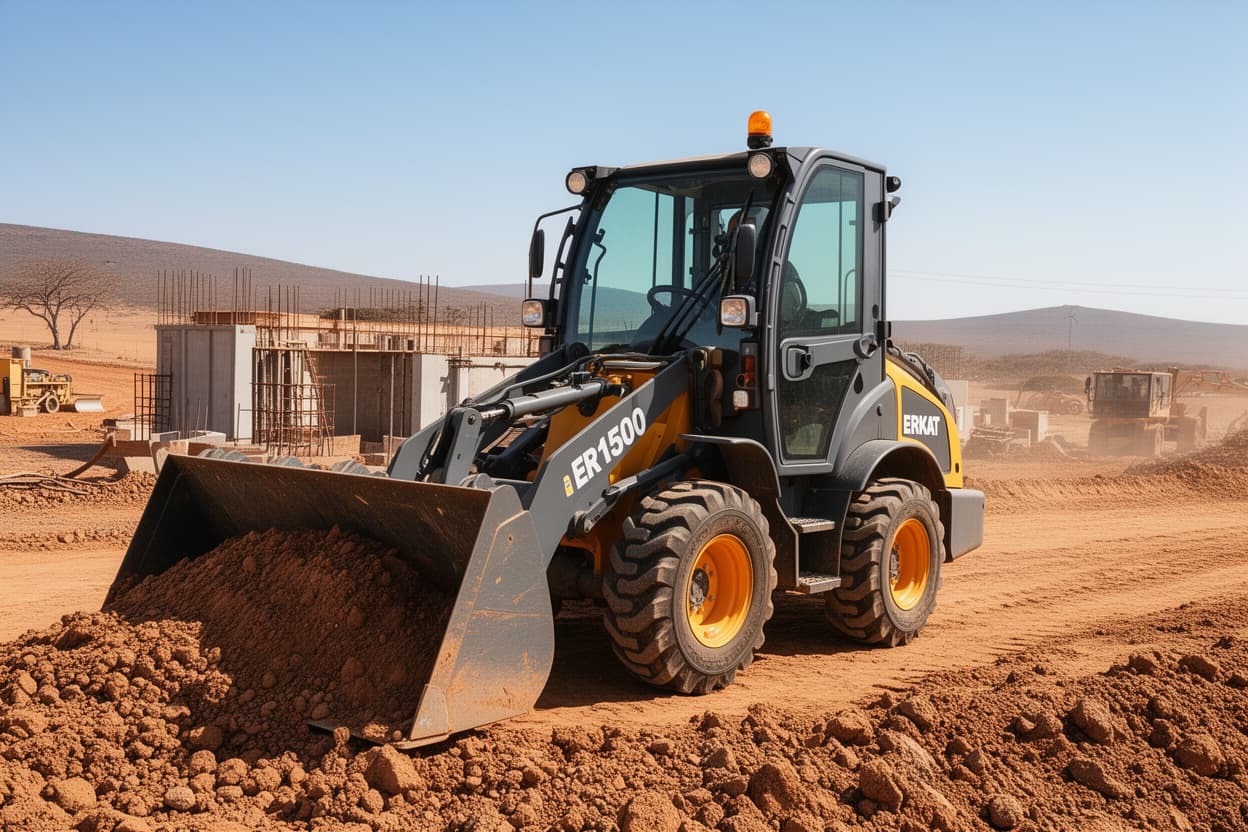
ERKAT ER1500 Front End Loader
The ERKAT ER1500 is a compact and versatile front end loader designed for light to medium-duty material handling, landscaping, and small-scale construction projects in South Africa. It offers a good balance of power, maneuverability, and cost-effectiveness for contractors needing reliable performance in confined spaces.
Overview
The ERKAT ER1500 front end loader is positioned as an agile and efficient solution for various tasks across South African construction, agricultural, and landscaping sectors. Its compact design makes it particularly suitable for operations in tight spaces where larger machines cannot easily access. This model is engineered for ease of operation and maintenance, aiming to reduce downtime and operational costs for local businesses.
Equipped with a robust engine and a responsive hydraulic system, the ER1500 delivers reliable lifting and loading capabilities. Operators benefit from a comfortable cabin designed to enhance visibility and reduce fatigue during long shifts. The machine's build quality is intended to withstand the demanding conditions often encountered on South African sites, from dusty quarries to uneven terrain.
Key considerations for South African buyers include:
- Parts Availability: While ERKAT is a newer entrant in some local markets, assessing the local dealer network for spare parts and service support is crucial.
- Fuel Efficiency: Given fluctuating fuel prices, the ER1500's fuel consumption figures are a significant factor for operational budgeting.
- Resale Value: As a relatively new or less common brand, understanding the potential resale market in South Africa is important for long-term investment planning.
- Adaptability: The ability to quickly change attachments enhances its versatility, making it a valuable asset for diverse job requirements.
Overall, the ERKAT ER1500 aims to provide a cost-effective entry point into the front end loader market, offering a practical solution for businesses requiring a dependable and maneuverable machine without the overhead of larger, more complex equipment.
Key specs
- Years produced
- 2025–2025 (est.)
- Year range
- 2025
- Operating Weight
- 4,400 kg
- Engine Power
- Approx. 37-45 kW (50-60 hp) (est.)
- Bucket Capacity
- 0.6 - 0.8 m³ (est.)
- Rated Load Capacity
- 1,500 kg (est.)
- Max. Lift Height (Pin)
- Approx. 3.0 - 3.2 m (est.)
- Max. Travel Speed
- Approx. 20-25 km/h (est.)
- Turning Radius (Outside Bucket)
- Approx. 4.0 - 4.5 m (est.)
- Transmission Type
- Hydrostatic or Torque Converter (est.)
- Fuel Tank Capacity
- Approx. 60-80 Litres (est.)
- Hydraulic System Pressure
- Approx. 16-18 MPa (est.)
- Tyre Size (Standard)
- 20.5/70-16 or similar (est.)
- Overall Length (Bucket on Ground)
- Approx. 5.0 - 5.5 m (est.)
Specifications are estimates based on typical compact front end loader models in this class, as detailed ERKAT ER1500 data is limited for the South African market. Actual specifications may vary.
Applications
- Light to medium-duty material handling (sand, gravel, soil)
- Landscaping and garden maintenance
- Small-scale construction and building sites
- Agricultural tasks (feed handling, manure removal)
- Waste management and recycling facilities (light materials)
- Municipal work and public infrastructure projects
Features
- Compact design for excellent maneuverability in confined spaces
- Ergonomic operator cabin with good visibility
- Responsive hydraulic system for efficient loading and lifting
- Robust chassis and boom construction for durability
- Easy access points for routine maintenance checks
- Standard quick coupler for attachment versatility
- LED lighting package for improved visibility in low light conditions
- Adjustable steering column and suspension seat for operator comfort
Operating requirements
- Competent and certified operator with relevant machine experience
- Regular pre-shift inspections and daily maintenance checks
- Access to quality diesel fuel and lubricants
- Suitable ground conditions for safe operation (avoid excessive slopes or unstable terrain)
- Adequate space for maneuvering, especially when fully loaded
- Compliance with local safety regulations and site-specific protocols
- Availability of genuine spare parts and technical support for optimal uptime
Attachments and options
Common attachments
- General purpose bucket
- 4-in-1 bucket
- Pallet forks
- Grapple bucket
- Snow blade (less common in SA, but possible for specific applications)
- Sweeper attachment
Options
- Air conditioning for operator comfort in hot climates
- Additional work lights (front and rear)
- Reverse camera system for enhanced safety
- Tyre options for various terrains (e.g., industrial, agricultural)
- Radio/Bluetooth entertainment system
- Custom paint schemes or branding
- Extended warranty packages
Maintenance and inspections
- Daily checks of fluid levels (engine oil, hydraulic fluid, coolant)
- Greasing of pivot points and articulation joints
- Regular inspection and cleaning of air filters
- Checking tyre pressure and condition
- Scheduled engine service (oil and filter changes) as per manufacturer guidelines
- Hydraulic system filter replacement
- Brake system inspection and adjustment
- Battery terminal cleaning and charge level check
Adhering to the manufacturer's recommended service schedule is critical for ensuring the longevity and reliability of the ERKAT ER1500, especially given the demanding operating conditions in South Africa. Sourcing genuine or high-quality aftermarket parts is essential.
Safety notes
- ROPS/FOPS certified cabin for operator protection
- Seat belt interlock system
- Audible reverse alarm
- Flashing beacon for site visibility
- Emergency stop button
- Non-slip steps and handrails for safe entry/exit
- Load sensing system to prevent overloading (if equipped)
- Clear visibility from the operator's seat to the work area
Buying checklist
- Verify the local ERKAT dealer network and parts availability in your region of South Africa.
- Obtain a detailed quote including delivery, commissioning, and initial service package.
- Inquire about warranty terms and conditions, including extended warranty options.
- Request a demonstration of the machine on a similar job site to assess its performance.
- Evaluate the total cost of ownership, including fuel consumption, maintenance, and potential resale value.
- Confirm the availability of operator training and technical support from the dealer.
- Inspect the machine for any signs of damage or manufacturing defects prior to purchase.
- Ensure all necessary safety features and compliance certifications are in place for South African regulations.
- Discuss financing options and payment terms with the supplier.
FAQ
What is the typical fuel consumption of the ERKAT ER1500?
While exact figures vary with application and operator technique, compact loaders in this class typically consume between 5 to 10 litres of diesel per hour under normal operating conditions. Factors like load, terrain, and engine RPM will influence this. (est.)
Is the ERKAT ER1500 suitable for heavy-duty quarry work?
The ER1500 is primarily designed for light to medium-duty applications. While robust, it may not be ideal for continuous heavy-duty quarry work involving dense rock or high-volume excavation. For such tasks, a larger, more powerful loader would typically be recommended.
What kind of operator license is required to operate the ERKAT ER1500 in South Africa?
In South Africa, operators of front end loaders generally require a valid Code 10 (EC1) or Code 14 (EC) driver's license, along with a valid Certificate of Competency for Earthmoving Equipment (specifically for front end loaders), obtained from an accredited training provider.
How does the ERKAT ER1500 compare to established brands in the South African market?
The ERKAT ER1500 aims to compete on value and maneuverability in the compact loader segment. While established brands may offer a wider service network and higher resale value, the ER1500 could present a cost-effective alternative for specific applications, especially where space is a constraint and initial investment is a key factor.