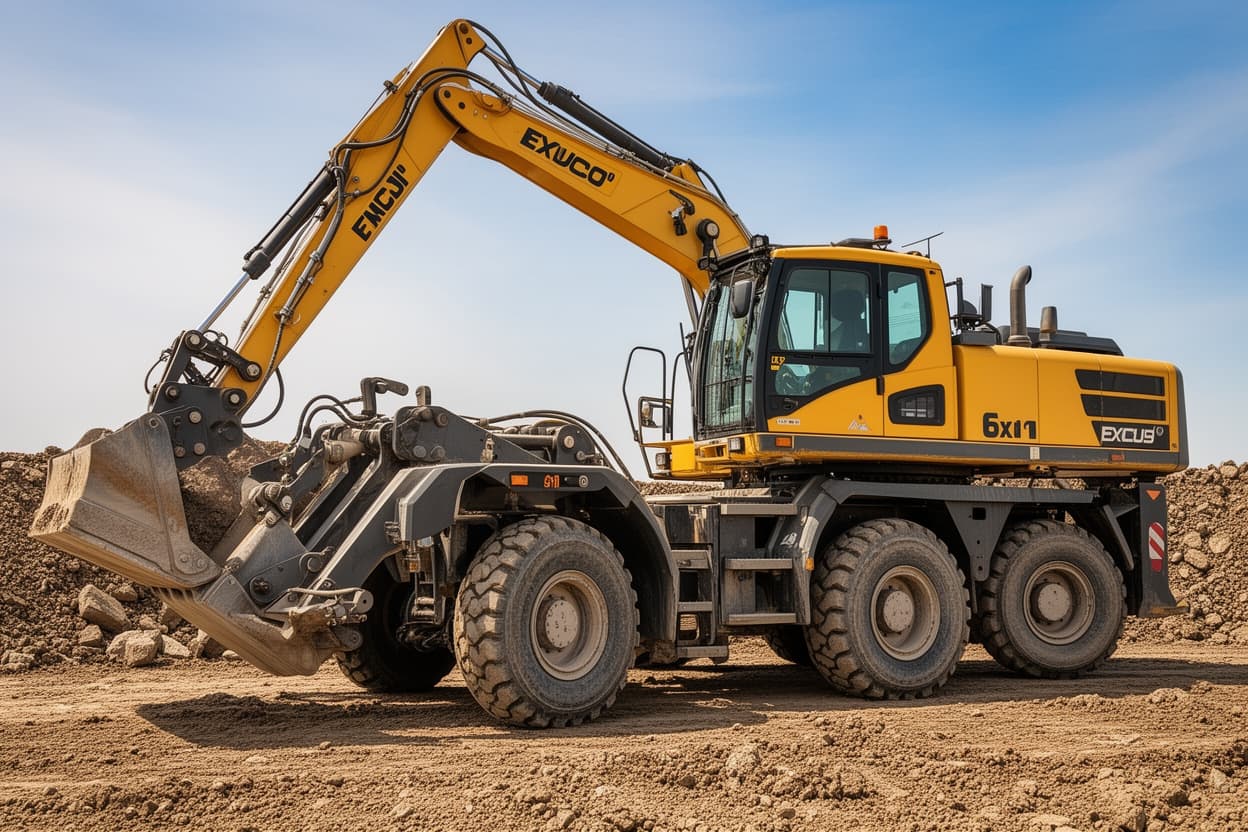
Excavator 6x6 Excavator
The Excavator 6x6 is a highly specialized all-wheel-drive excavator designed for extreme off-road and challenging terrain applications in South Africa. It combines the digging capabilities of a conventional excavator with enhanced mobility, making it suitable for projects where standard tracked or wheeled excavators struggle to operate effectively.
Overview
The Excavator 6x6 represents a niche but critical solution for South African contractors facing demanding site conditions. Unlike traditional excavators, its 6x6 drive system provides superior traction and stability on steep inclines, muddy ground, and uneven surfaces. This makes it an invaluable asset for infrastructure development in remote areas, pipeline projects, forestry, and disaster relief operations where accessibility is paramount.
While not a high-volume machine, its unique capabilities fill a significant gap in the market. Operators benefit from enhanced maneuverability and the ability to traverse terrain that would otherwise require extensive site preparation or multiple pieces of equipment. The design typically incorporates robust axles, heavy-duty suspension, and often articulated steering to further improve off-road performance.
Key considerations for South African buyers include:
- Terrain Versatility: Excels in conditions where standard excavators are limited, such as wetlands, steep slopes, and soft ground.
- Operational Efficiency: Reduces the need for additional support equipment for site access, potentially lowering project costs and timelines.
- Specialised Application: Best suited for projects specifically requiring its all-terrain capabilities, rather than general excavation tasks.
- Maintenance & Support: Due to its specialized nature, parts and technical support might require more planning compared to common excavator models.
The Excavator 6x6 is a strategic investment for companies whose core business involves working in challenging environments, offering a distinct competitive advantage in such projects.
Key specs
- Year range
- 2025
- Operating Weight
- 23,000 - 25,000 kg (est.)
- Engine Power
- 130 - 180 kW (175 - 240 hp) (est.)
- Bucket Capacity
- 0.8 - 1.5 m³ (est.)
- Max Digging Depth
- 5.5 - 7.0 m (est.)
- Max Reach at Ground Level
- 8.5 - 10.5 m (est.)
- Drive System
- 6x6 All-Wheel Drive
- Travel Speed (Max)
- 20 - 35 km/h (est.)
- Gradeability
- Up to 70% (est.)
- Ground Clearance
- 400 - 600 mm (est.)
- Fuel Tank Capacity
- 300 - 450 litres (est.)
- Hydraulic Flow
- 250 - 350 L/min (est.)
- Tyre Size (Typical)
- 20.5R25 or similar off-road (est.)
Specifications are typical for a specialized 6x6 excavator in this weight class and may vary significantly between manufacturers and specific model configurations.
Applications
- Pipeline construction in remote or challenging terrain
- Forestry and land clearing on uneven ground
- Infrastructure development in mountainous or wetland regions
- Disaster relief and recovery operations (e.g., flood-affected areas)
- Utility installation in difficult-to-access locations
- Specialized mining or quarrying applications on steep faces
Features
- Robust 6x6 hydrostatic or mechanical drive system for superior traction
- Heavy-duty axles and suspension designed for off-road conditions
- High ground clearance for navigating obstacles
- Articulated chassis or oscillating axles for enhanced maneuverability and stability
- Ergonomic operator cabin with excellent visibility and climate control
- Advanced hydraulic system for precise and powerful digging
- Integrated safety systems including ROPS/FOPS cabin and emergency stops
Operating requirements
- Skilled operator experienced in all-terrain equipment and challenging site conditions
- Regular inspection and maintenance of drive train components, tyres, and suspension
- Access to specialized off-road tyres and spare parts, potentially requiring longer lead times
- Careful route planning and site assessment due to machine size and weight
- Adequate fuel supply for remote operations, considering higher consumption in tough terrain
- Compliance with environmental regulations for working in sensitive areas
Attachments and options
Common attachments
- General purpose digging buckets (various sizes)
- Heavy-duty rock buckets
- Hydraulic breakers/hammers for demolition or rock breaking
- Grapples for forestry or material handling
- Augers for drilling post holes or foundations
- Tiltrotators for enhanced versatility and precision
Options
- Centralized lubrication system
- Additional work lighting packages (LED)
- Cold weather starting aids
- Specialized tyre options (e.g., flotation, forestry-specific)
- GPS/telematics systems for fleet management and tracking
- Biodegradable hydraulic oil for environmentally sensitive sites
Maintenance and inspections
- Daily pre-operation checks (fluids, tyres, lights, hydraulics)
- Regular lubrication of all pivot points and articulation joints
- Frequent inspection of drive shafts, differentials, and suspension components
- Tyre pressure and condition monitoring, especially for off-road use
- Hydraulic system filter and fluid changes as per manufacturer schedule
- Engine oil and filter changes based on operating hours and conditions
- Cooling system inspection and cleaning, critical in dusty SA environments
Due to the specialized nature and demanding operating environments, maintenance schedules for a 6x6 excavator are often more stringent than for standard excavators. Access to specialized parts and technical expertise is crucial.
Safety notes
- ROPS/FOPS certified cabin for operator protection
- Emergency stop buttons easily accessible
- Seatbelt interlock system
- Rearview camera and mirrors for improved visibility
- Non-slip surfaces and handrails for safe access and egress
- Audible travel alarm and rotating beacon
- Load holding valves on boom and arm cylinders
Buying checklist
- Assess specific project requirements: Is a 6x6 truly necessary, or can a standard machine suffice?
- Evaluate terrain: Confirm the machine's capabilities match the most challenging conditions expected.
- Check manufacturer support: Verify parts availability and technical service network in South Africa.
- Inspect drive train: Pay close attention to axles, differentials, and transfer case for wear.
- Tyre condition: Off-road tyres are expensive; check for cuts, wear, and proper inflation.
- Hydraulic system: Look for leaks, smooth operation, and responsiveness.
- Operator comfort and controls: Ensure the cabin is ergonomic for long shifts in tough conditions.
- Documentation: Verify service history, maintenance records, and compliance certificates.
- Resale value: Understand the niche market for these machines in South Africa.
- Transport logistics: Plan for moving this specialized machine between sites.
FAQ
What makes a 6x6 excavator different from a standard wheeled excavator?
A 6x6 excavator features all-wheel drive on six wheels, providing significantly enhanced traction and stability on challenging, uneven, or soft terrain. Standard wheeled excavators typically have 2-wheel or 4-wheel drive and are designed for more stable, prepared surfaces.
Is the Excavator 6x6 suitable for general construction work in South Africa?
While capable, the 6x6 excavator is generally over-specified and more expensive for typical urban or well-prepared construction sites. Its primary value lies in specialized applications where its all-terrain mobility is a critical advantage, such as remote infrastructure or pipeline projects.
What are the main challenges of operating a 6x6 excavator in South Africa?
Key challenges include higher initial purchase cost, potentially higher fuel consumption in extreme conditions, and the need for specialized maintenance expertise and parts. Transporting these machines between sites can also be more complex due to their size and weight.
How does the 6x6 drive system impact fuel efficiency?
Operating in challenging off-road conditions with a 6x6 drive system generally results in higher fuel consumption compared to a standard excavator on firm ground. The engine works harder to maintain traction and navigate difficult terrain, impacting overall efficiency.