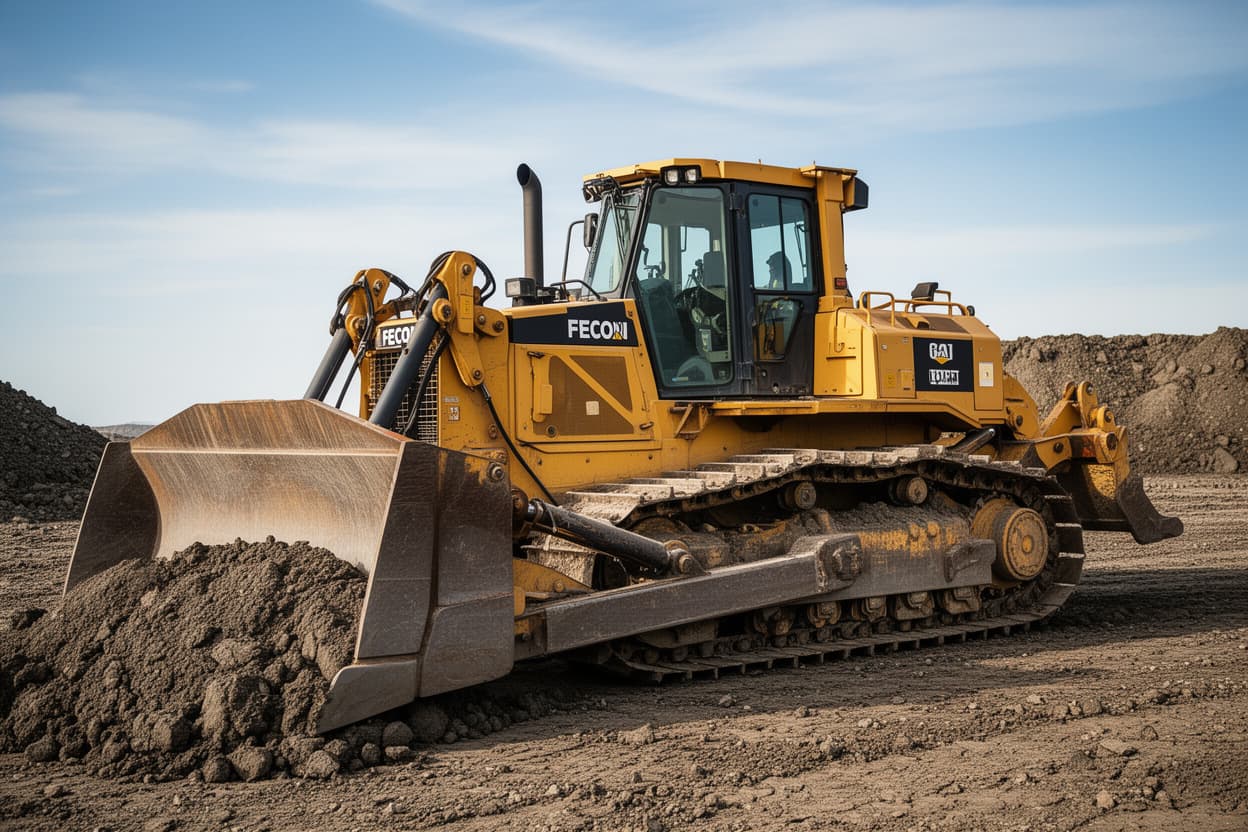
FECON 135VRT Bulldozer
The FECON 135VRT is a compact, track-driven mulching bulldozer designed for efficient land clearing, forestry, and vegetation management in South Africa. Its low ground pressure and powerful mulching capabilities make it suitable for challenging terrain and sensitive environments, offering versatility for contractors and agricultural operations.
Overview
The FECON 135VRT is not a traditional bulldozer in the earthmoving sense, but rather a specialized compact track loader (CTL) chassis configured as a dedicated mulching machine, often referred to as a 'mulching dozer' or 'forestry dozer'. It's built for demanding vegetation management tasks, offering a combination of power, maneuverability, and low ground pressure. This makes it particularly well-suited for South African conditions where land clearing, firebreak creation, and agricultural preparation are common requirements.
Equipped with a powerful engine and a robust hydraulic system, the 135VRT is designed to efficiently drive high-flow mulching attachments. Its compact size allows access to tighter areas that larger dozers or excavators might struggle with, while the track system provides excellent traction and stability on uneven or soft ground. The machine's design prioritizes operator comfort and safety, with a focus on visibility and ergonomic controls for long working hours.
For South African contractors, the FECON 135VRT represents a specialized tool that can significantly improve productivity in specific applications. Its ability to process vegetation on-site reduces the need for hauling and disposal, offering cost savings and environmental benefits. The machine's reliability and the availability of parts and service support are crucial considerations for sustained operation in remote areas.
- Key Applications:
- Bush clearing and land preparation
- Forestry and plantation maintenance
- Firebreak creation and maintenance
- Pipeline and powerline servitude clearing
- Agricultural land reclamation
Key specs
- Years produced
- 2025–2025
- Year range
- 2025
- Operating Weight
- 7,080 kg
- Engine Power
- 135 hp (100 kW)
- Track Type
- Rubber Tracks
- Ground Pressure
- Approximately 0.25-0.35 kg/cm² (est.)
- Hydraulic Flow (High Flow)
- Typically 150-170 L/min (est.)
- Hydraulic Pressure
- Typically 270-300 bar (est.)
- Travel Speed (Max)
- Approximately 10-12 km/h (est.)
- Fuel Tank Capacity
- Approximately 150-180 Litres (est.)
- Overall Length (without attachment)
- Approximately 3.8-4.2 m (est.)
- Overall Width (without attachment)
- Approximately 2.0-2.2 m (est.)
- Overall Height
- Approximately 2.2-2.4 m (est.)
- Blade Type (Optional)
- 6-way dozer blade or grading blade
Specifications are typical for this class of machine and may vary based on specific configuration and attachments.
Applications
- Land clearing and site preparation for construction or agriculture
- Forestry operations, including thinning and firebreak maintenance
- Vegetation management along roadsides, power lines, and pipelines
- Reclamation of overgrown agricultural land
- Habitat restoration and invasive species removal
Features
- High-flow auxiliary hydraulics for demanding mulching attachments
- Robust track system for excellent traction and low ground pressure
- Comfortable and ergonomic operator cabin with good visibility
- Heavy-duty construction designed for harsh operating environments
- Efficient cooling system for continuous high-load operation
- Integrated safety features for operator protection
Operating requirements
- Skilled operator trained in mulching and compact track loader operation
- Regular inspection and maintenance of mulching head and tracks
- Adequate fuel supply (diesel) for extended work periods
- Access to genuine FECON or compatible spare parts for mulching attachments
- Understanding of local environmental regulations for land clearing
- Logistics for transporting the machine to various sites, often requiring a suitable low-bed trailer
Attachments and options
Common attachments
- FECON Bull Hog mulching heads (various models)
- Stump grinders
- 6-way dozer blade or grading blade
- Grapples for material handling
Options
- Various mulching head configurations (e.g., rotor type, tooth options)
- Specialized track options for different ground conditions
- Additional lighting packages for night operations
- GPS/telematics systems for fleet management and tracking
- Fire suppression systems for high-risk environments
Maintenance and inspections
- Daily pre-operation checks (fluids, tracks, mulching head teeth)
- Regular greasing of pivot points and articulation joints
- Scheduled engine oil and filter changes as per manufacturer guidelines
- Hydraulic system checks and filter replacements
- Track tension adjustment and inspection for wear and damage
- Mulching head rotor and tooth inspection/replacement based on wear
Given the demanding nature of mulching, diligent maintenance, especially of the mulching head and tracks, is critical for longevity and performance in South African conditions.
Safety notes
- ROPS/FOPS certified cabin for operator protection
- Emergency stop buttons easily accessible
- Good visibility from the operator's seat, often with rearview cameras
- Safety interlocks to prevent accidental operation
- Warning alarms for critical system parameters
- Proper guarding around moving parts, especially the mulching head
Buying checklist
- Verify the machine's service history and maintenance records, especially for the mulching head.
- Inspect the tracks and undercarriage for excessive wear, cracks, or damage.
- Test the hydraulic system for smooth operation and full power output, particularly for the high-flow circuit.
- Check the condition of the mulching head rotor, teeth, and bearings.
- Assess the cabin for comfort, functionality of controls, and overall condition.
- Confirm the availability of local FECON parts and service support in South Africa.
- Obtain a detailed quote including any desired attachments and transport costs.
- Consider the total cost of ownership, including fuel consumption and wear part replacement.
FAQ
What is the primary difference between the FECON 135VRT and a traditional bulldozer?
The FECON 135VRT is a specialized compact track loader chassis designed primarily to power high-flow mulching attachments for vegetation management. While it can be fitted with a light dozer blade, its core function is not earthmoving like a traditional bulldozer, but rather land clearing and forestry.
Is the FECON 135VRT suitable for heavy earthmoving tasks?
No, the 135VRT is not designed for heavy earthmoving. Its low ground pressure and track system are optimized for traversing soft or uneven terrain while mulching, not for pushing large volumes of soil or rock. For heavy earthmoving, a dedicated bulldozer or excavator would be more appropriate.
What kind of fuel does the FECON 135VRT use?
The FECON 135VRT typically uses standard diesel fuel. Operators should always refer to the manufacturer's manual for specific fuel grade recommendations to ensure optimal engine performance and longevity.
How does the low ground pressure benefit operations in South Africa?
Low ground pressure is highly beneficial in South Africa for several reasons: it allows the machine to operate on soft or wet ground without getting stuck, reduces soil compaction which is important for agricultural land, and minimizes environmental impact in sensitive areas like nature reserves or wetlands.