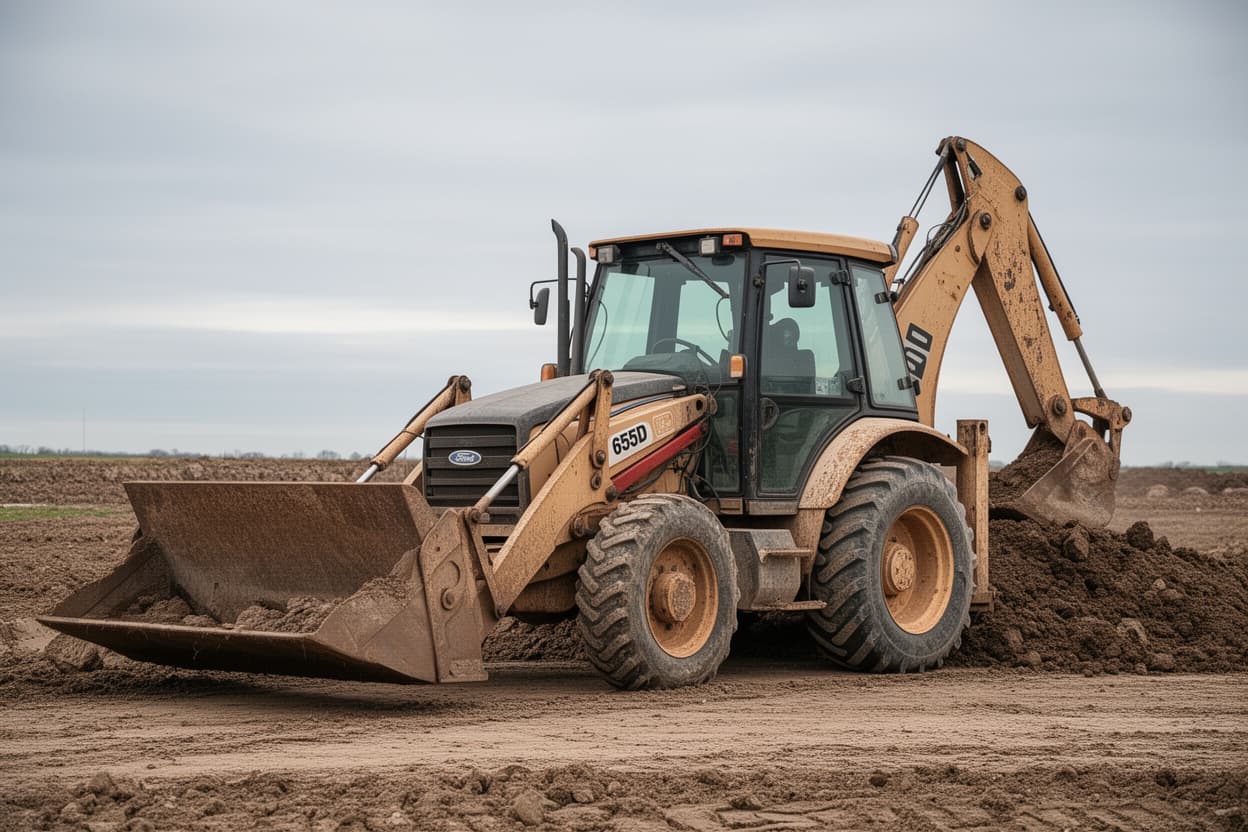
FORD 655D Tractor Loader Backhoe
The Ford 655D is a robust and reliable Tractor Loader Backhoe (TLB) known for its strong digging and loading capabilities, making it a popular choice for general construction, agricultural, and utility applications across South Africa. It offers a good balance of power and versatility for various site conditions.
Overview
The Ford 655D TLB, produced in the late 1980s and early 1990s, established itself as a workhorse in the South African earthmoving sector. Renowned for its durability and straightforward mechanical design, it remains a viable option for contractors and farmers seeking a cost-effective and dependable machine. Its design prioritises operator comfort and ease of maintenance, crucial for long hours on demanding sites.
Key to the 655D's appeal is its powerful engine and hydraulic system, providing ample force for both digging and loading tasks. The backhoe offers good reach and digging depth, while the front loader is capable of handling significant material volumes. This versatility makes it suitable for a wide array of jobs, from trenching and excavation to material handling and site clear-up. Despite its age, well-maintained units continue to perform reliably, supported by a relatively accessible parts market.
- Engine Performance
- Typically powered by a Ford diesel engine, offering good torque and fuel efficiency for its class.
- Hydraulic System
- Designed for responsive and powerful operation of both loader and backhoe functions.
- Operator Environment
- Features a functional cab with good visibility, aiming to reduce operator fatigue during extended use.
- Structural Integrity
- Built with heavy-duty components to withstand the rigours of demanding construction and agricultural environments.
For South African operators, the 655D represents a practical investment, particularly for smaller to medium-sized projects where budget and reliability are paramount. Its mechanical simplicity often translates to easier troubleshooting and repair compared to more modern, electronically complex machines, a significant advantage in remote areas.
Key specs
- Years produced
- 1989–1994
- Year range
- 2025
- Operating Weight
- 7,520 kg
- Engine Power
- 60-65 kW (80-87 hp) (est.)
- Loader Bucket Capacity
- 0.9 - 1.1 m³ (est.)
- Backhoe Digging Depth
- 4.5 - 5.0 m (est.)
- Backhoe Reach (from swing pivot)
- 5.5 - 6.0 m (est.)
- Loader Lift Capacity (max height)
- 2,500 - 3,000 kg (est.)
- Transmission Type
- Synchro-Shuttle or Power-Shuttle (est.)
- Fuel Tank Capacity
- 120 - 150 litres (est.)
- Hydraulic System Flow
- 90 - 110 L/min (est.)
- Tyre Size (Front)
- 12.5/80-18 or similar (est.)
- Tyre Size (Rear)
- 16.9-28 or similar (est.)
- Overall Length (transport)
- 6.5 - 7.0 m (est.)
Specifications can vary slightly based on specific configuration, year of manufacture, and regional variations. Values provided are typical for the Ford 655D series.
Applications
- General construction (trenching, excavation, backfilling)
- Agricultural tasks (land clearing, ditching, material handling)
- Utility work (pipe laying, cable trenching)
- Road maintenance and small-scale infrastructure projects
- Site preparation and landscaping
Features
- Robust Ford diesel engine for reliable power
- Heavy-duty chassis and boom construction
- Synchro-Shuttle or Power-Shuttle transmission options for ease of operation
- Open-centre hydraulic system for responsive control
- Comfortable operator station with good visibility
- Easy access points for routine maintenance checks
- Integrated loader and backhoe controls
Operating requirements
- Competent and certified TLB operator
- Regular pre-shift inspections and fluid level checks
- Adequate fuel (diesel) and hydraulic oil supply
- Safe operating clearances around the machine
- Understanding of site-specific safety protocols and ground conditions
- Proper attachment selection and securement
Attachments and options
Common attachments
- Standard digging buckets (various widths)
- Loader general purpose bucket
- Ripper tooth
- Hydraulic hammer (breaker)
- Pallet forks (for loader)
- Compactor plate (backhoe mounted)
Options
- Enclosed cab with heating (and optional air conditioning)
- Extendahoe (extendable dipperstick) for increased reach
- 4-in-1 loader bucket
- Auxiliary hydraulic lines for attachments
- Ride control system (optional)
- Different tyre configurations for specific terrains
Maintenance and inspections
- Daily greasing of pivot points and pins
- Regular engine oil and filter changes (every 250-500 hours)
- Hydraulic oil and filter replacement (as per manufacturer schedule, typically 1000-2000 hours)
- Checking and adjusting drive belts and hoses
- Inspection of tyres for wear and correct pressure
- Brake system inspection and adjustment
- Coolant level and quality checks
Given the age of these machines, proactive maintenance and sourcing quality replacement parts are crucial for longevity and reliable operation in South Africa.
Safety notes
- Always wear appropriate PPE (hard hat, safety boots, high-vis vest)
- Ensure all safety guards and shields are in place
- Use seatbelt at all times during operation
- Maintain three points of contact when entering/exiting the cab
- Be aware of overhead power lines and underground services
- Never exceed rated lift capacities
- Lower attachments to the ground when parking or leaving the machine
Buying checklist
- Inspect engine for excessive smoke, leaks, and unusual noises
- Check hydraulic system for leaks, smooth operation, and cylinder condition
- Examine boom, dipper, and loader arms for cracks, welds, and excessive pin wear
- Test all functions (digging, loading, steering, braking) thoroughly
- Verify transmission shifts smoothly without hesitation or grinding
- Assess the condition of tyres and rims
- Check for any signs of rust or structural damage on the chassis and cab
- Review service history and maintenance records (if available)
- Confirm availability of spare parts and local technical support in South Africa
FAQ
What is the typical fuel consumption of a Ford 655D?
Fuel consumption can vary significantly based on application and operator technique, but a Ford 655D typically consumes between 8 to 15 litres per hour under normal operating conditions in South Africa. (est.)
Are spare parts readily available for the Ford 655D in South Africa?
While the Ford 655D is an older model, many common wear parts and engine components are still available through aftermarket suppliers and specialist dealers in South Africa. Some specific body or hydraulic parts might require more searching or fabrication.
What are the common issues to look out for on a used Ford 655D?
Common issues include wear in the backhoe pins and bushes, hydraulic pump and cylinder leaks, transmission wear (especially if not serviced correctly), and general engine wear. Thorough inspection is essential.
Is the Ford 655D suitable for heavy-duty quarry work?
While robust, the Ford 655D is generally better suited for medium-duty construction, agricultural, and utility tasks rather than continuous heavy-duty quarry work, which might demand larger, more specialised equipment. It can handle occasional quarry tasks but not as its primary role.