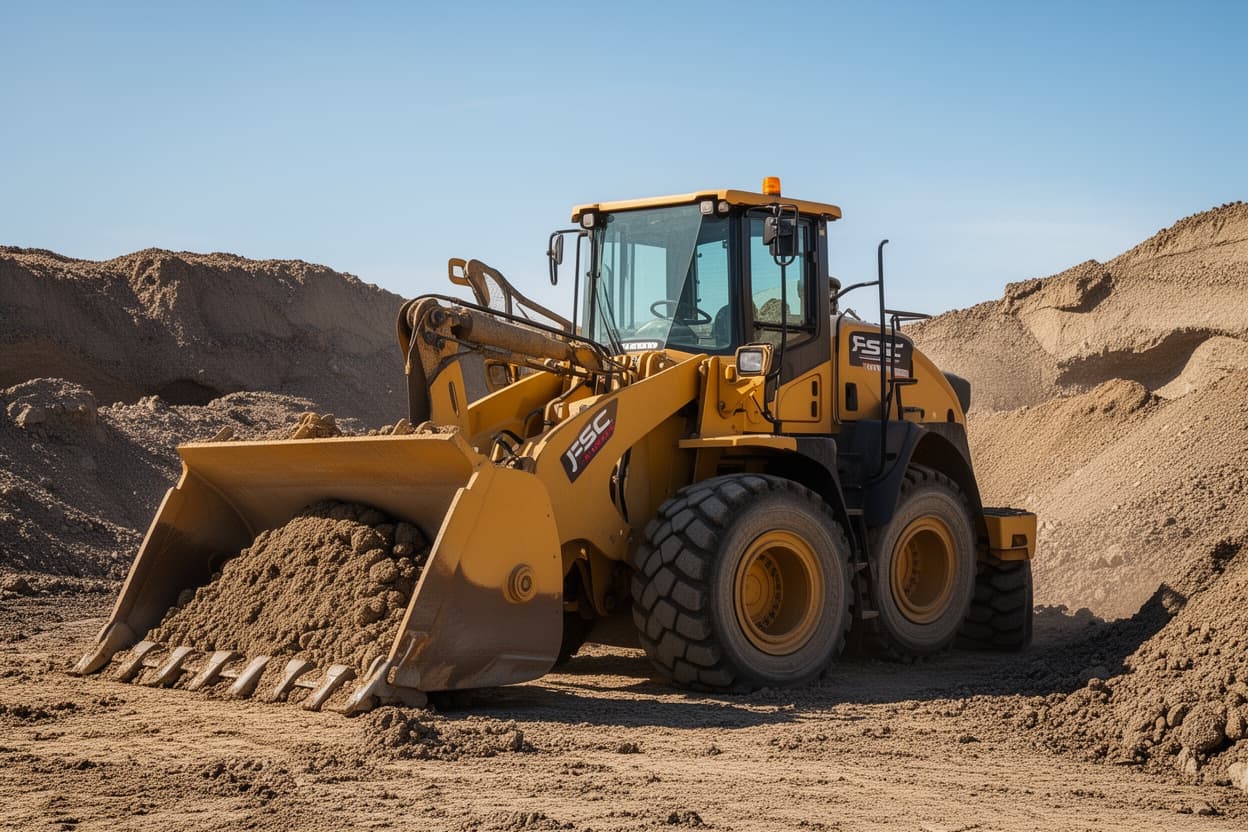
FSC 100W Front End Loader
The FSC 100W is a compact and versatile front-end loader designed for light to medium-duty material handling in South Africa. With an operating weight of approximately 9.5 tonnes and a typical bucket capacity of 1.5-2.0 m³, it offers a balance of manoeuvrability and lifting power for various applications, from agricultural tasks to small-scale construction and quarry operations.
Overview
The FSC 100W Front End Loader is positioned as a reliable workhorse for South African contractors and plant hire companies requiring a machine that is agile yet capable. Its design focuses on operational efficiency and ease of maintenance, crucial factors in the demanding local environment. This model is well-suited for tasks such as loading aggregates, sand, gravel, and other loose materials, as well as general site clean-up and levelling operations.
Operators will appreciate the 100W's comfortable cabin, designed to reduce fatigue during long shifts, a common requirement on South African sites. The machine's hydraulic system is engineered for responsive control, allowing for precise bucket movements and efficient cycle times. Furthermore, the FSC brand, while perhaps not as ubiquitous as some global giants, aims to provide robust equipment with a focus on local support and parts availability, which is a significant consideration for operational uptime in remote areas.
Key considerations for the South African market include:
- Fuel Efficiency: With fluctuating fuel prices, the 100W's engine performance and consumption figures are critical for managing operational costs.
- Durability: The machine's structural integrity and component quality must withstand harsh operating conditions, including dust, heat, and uneven terrain.
- Serviceability: Easy access to service points and readily available spare parts are paramount for minimising downtime and ensuring long-term viability.
- Operator Comfort & Safety: A well-designed cabin with good visibility and safety features contributes to productivity and reduces accident risks.
The FSC 100W aims to meet these demands, offering a cost-effective solution for businesses looking to expand their fleet or replace older, less efficient machinery.
Key specs
- Years produced
- 2025–2025 (est.)
- Year range
- 2025
- Operating Weight
- 9,500 kg
- Engine Power
- 75 - 90 kW (100 - 120 hp) (est.)
- Standard Bucket Capacity
- 1.5 - 2.0 m³ (est.)
- Rated Load Capacity
- 2,500 - 3,000 kg (est.)
- Dump Height (Max)
- 2,800 - 3,200 mm (est.)
- Wheelbase
- 2,400 - 2,600 mm (est.)
- Overall Length (Bucket on Ground)
- 6,500 - 7,000 mm (est.)
- Overall Width (Over Tyres)
- 2,200 - 2,400 mm (est.)
- Overall Height (to top of cab)
- 3,100 - 3,300 mm (est.)
- Travel Speed (Max)
- 30 - 35 km/h (est.)
- Fuel Tank Capacity
- 120 - 150 litres (est.)
- Hydraulic System Pressure
- 16 - 20 MPa (est.)
Specifications are typical for this class of machine and may vary based on specific configurations, regional standards, and manufacturer updates. Values provided are estimates where precise data for the 2025 model is not yet publicly available.
Applications
- Loading sand, gravel, and aggregates in construction and quarry operations
- Material handling in agricultural settings (e.g., feed, manure, silage)
- General site clean-up and levelling tasks
- Road maintenance and small-scale infrastructure projects
- Waste management and recycling facilities (light-duty material sorting)
- Plant hire fleets for versatile job site deployment
Features
- Ergonomic operator cabin with good all-round visibility
- Robust chassis and boom design for demanding South African conditions
- Efficient hydraulic system for precise and powerful bucket control
- Reliable diesel engine meeting current emissions standards (where applicable)
- Easy access service points for simplified maintenance routines
- Comfortable seating and intuitive controls to reduce operator fatigue
- Heavy-duty axles and transmission for enhanced durability
- LED lighting package for improved visibility during low-light operations
Operating requirements
- Competent and certified front-end loader operator (e.g., SETA accredited)
- Regular pre-shift inspections and daily maintenance checks
- Appropriate PPE (Personal Protective Equipment) for operators and ground staff
- Adequate fuel supply (diesel) and clean lubricants
- Suitable ground conditions for safe operation and traction
- Clearance for boom movement and safe loading/unloading zones
- Access to manufacturer-approved spare parts and technical support
- Compliance with local traffic and safety regulations for site movement
Attachments and options
Common attachments
- General purpose bucket (standard)
- Light material bucket (larger capacity for less dense materials)
- Multi-purpose 4-in-1 bucket
- Pallet forks
- Grapple attachment (for logs or waste)
- Snow plough (less common in SA, but possible for specific industrial applications)
Options
- Air conditioning for operator comfort in hot climates
- Ride control system for smoother operation over rough terrain
- Automatic lubrication system
- Reverse camera and proximity sensors for enhanced safety
- Specialised tyre options (e.g., solid tyres for waste, L5 for quarries)
- Quick coupler system for rapid attachment changes
- Telematics system for fleet management and remote diagnostics
Maintenance and inspections
- Daily visual inspections (fluid levels, tyre pressure, leaks, damage)
- Regular engine oil and filter changes (every 250-500 hours)
- Hydraulic oil and filter replacement as per manufacturer schedule
- Greasing of all pivot points and articulation joints
- Checking and adjusting brake system components
- Inspection of electrical system, lights, and safety devices
- Cooling system checks and coolant replacement
- Tyre rotation and wear inspection
Adherence to the manufacturer's recommended service schedule is critical for optimal performance, longevity, and warranty validity, especially given the demanding operating conditions often found in South Africa.
Safety notes
- ROPS/FOPS certified cabin for operator protection
- Seat belt interlock system
- Emergency stop button
- Audible reverse alarm and flashing beacon
- Good visibility from the operator's seat, often aided by mirrors
- Non-slip steps and handrails for safe entry and exit
- Articulation lock for maintenance and transport
- Fire extinguisher readily accessible
Buying checklist
- Verify the machine's actual operating weight and bucket capacity against your specific job requirements.
- Inquire about the availability and cost of spare parts and consumables in your region of South Africa.
- Assess the local dealer network for service support, technical assistance, and warranty claims.
- Request a full service history if buying used, or a detailed pre-delivery inspection report for new machines.
- Evaluate the fuel consumption figures and compare them with other models in its class.
- Check for any optional extras that might be crucial for your operations (e.g., air conditioning, quick coupler).
- Confirm compliance with relevant South African safety standards and regulations.
- Consider the total cost of ownership, including maintenance, fuel, and potential resale value.
- Arrange for an operator to test the machine's controls and overall feel if possible.
- Understand the warranty terms and conditions, especially for major components like engine and transmission.
FAQ
What is the typical fuel consumption of the FSC 100W?
Fuel consumption for a front-end loader of this size (9.5 tonnes) can vary significantly based on application, operator technique, and engine load. Expect a range of 8-15 litres per hour under typical South African operating conditions, with higher consumption during heavy loading cycles. (est.)
Is the FSC 100W suitable for quarry work?
The FSC 100W is generally considered a light to medium-duty loader. While it can handle some quarry tasks like loading processed aggregates or sand, it may not be robust enough for continuous, heavy-duty face loading or breaking applications. For such demanding work, a heavier-class loader would typically be recommended. It's best suited for secondary loading or stockpile management in quarries. (est.)
What kind of operator training is required for the FSC 100W in South Africa?
In South Africa, operators of front-end loaders like the FSC 100W must hold a valid Certificate of Competency, typically issued after completing a SETA-accredited training course. This ensures they are proficient in safe operation, routine maintenance, and understanding the machine's capabilities and limitations.
How does the FSC 100W compare to more established brands in the South African market?
The FSC 100W aims to offer a competitive balance of features, performance, and price. While established brands may have a larger service network, FSC's strategy often involves providing robust machines with a focus on essential features and potentially more accessible pricing. Buyers should compare specific dealer support, parts availability, and long-term running costs. (est.)