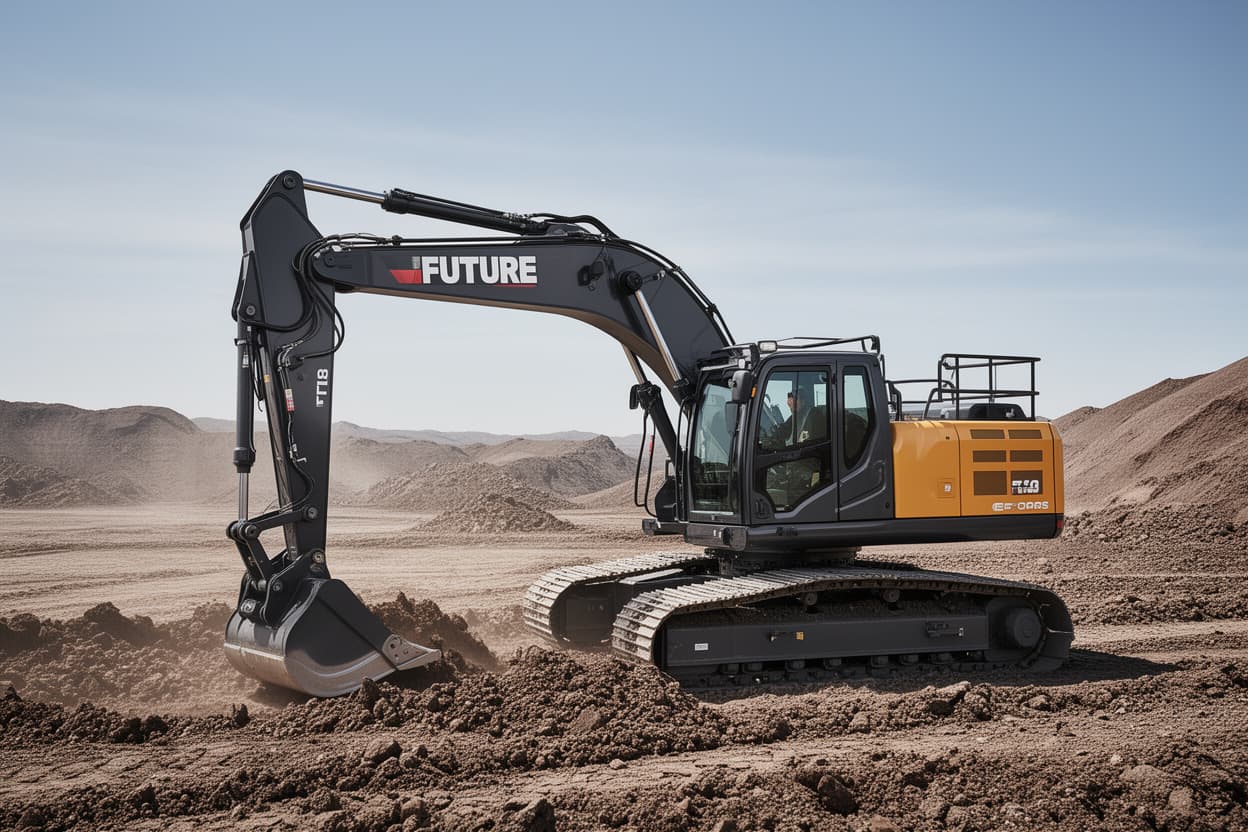
Future FT18 Excavator
The Future FT18 is a compact and agile mini excavator designed for precision work in confined spaces, offering a balance of power and maneuverability for South African small-to-medium contractors tackling landscaping, utility installations, and residential construction projects. Its ease of transport and operational efficiency make it a practical choice for diverse job sites.
Overview
The Future FT18 mini excavator is positioned as a versatile and cost-effective solution for a range of light to medium-duty excavation tasks across South Africa. With an operating weight of approximately 1.8 tonnes, it's designed to be easily transportable, making it ideal for contractors who frequently move between job sites. This machine excels in applications where larger excavators are impractical due to space constraints or ground conditions.
Key to its appeal is its compact footprint, allowing it to navigate tight urban environments, residential gardens, and indoor demolition projects with relative ease. Despite its size, the FT18 is engineered to deliver reliable digging force and lifting capacity, ensuring productivity for tasks such as trenching for pipes and cables, digging foundations for small structures, and general site preparation. The machine's design often prioritises operator comfort and intuitive controls, aiming to reduce fatigue during long shifts, a crucial factor in the demanding South African climate.
For South African operators, considerations like fuel efficiency, ease of maintenance, and local parts availability are paramount. The Future FT18 typically features a robust, yet accessible engine and hydraulic system, simplifying routine servicing. Its design often incorporates standard components, which can aid in sourcing spare parts locally, minimising downtime. Furthermore, the ability to fit a variety of attachments enhances its utility, allowing a single machine to perform multiple functions, from breaking concrete to drilling post holes.
- Typical Applications
- Residential landscaping and garden design
- Utility trenching (water, electrical, fibre optics)
- Small-scale demolition and renovation
- Foundation digging for outbuildings and extensions
- Site clean-up and material handling
- Advantages for SA Contractors
- Compact size for urban and confined spaces
- Relatively low operating costs
- Versatility with various attachments
- Ease of transport between sites
Key specs
- Year range
- 2025
- Operating Weight
- 1,800 kg
- Engine Power
- 11-15 kW (15-20 hp) (est.)
- Bucket Capacity
- 0.04 - 0.06 m³ (est.)
- Max Digging Depth
- 2.0 - 2.4 m (est.)
- Max Digging Reach
- 3.5 - 4.0 m (est.)
- Travel Speed (High)
- 3.5 - 4.5 km/h (est.)
- Overall Width
- 990 - 1100 mm (est.)
- Overall Height
- 2.2 - 2.4 m (est.)
- Fuel Tank Capacity
- 18 - 25 litres (est.)
- Hydraulic Flow
- 25 - 35 L/min (est.)
- Ground Pressure
- 25 - 30 kPa (est.)
- Swing Speed
- 8 - 10 rpm (est.)
Specifications are typical for a machine in this class and may vary slightly based on specific configurations or regional models. Consult the manufacturer's official documentation for precise figures.
Applications
- Residential landscaping and garden design, including pool excavations and tree planting.
- Utility trenching for water pipes, electrical cables, and fibre optic installations in urban and rural areas.
- Small-scale demolition of interior structures, sheds, and concrete slabs.
- Foundation digging for small buildings, extensions, and retaining walls.
- Site preparation and grading for driveways, pathways, and compact construction sites.
- Material handling and loading of small trucks or skips with aggregates, soil, or debris.
Features
- Compact design for excellent maneuverability in confined spaces.
- Robust undercarriage for stability and durability on varied terrain.
- Auxiliary hydraulic lines for powering a range of attachments.
- Ergonomic operator station with intuitive controls for ease of use.
- Swing boom functionality for parallel digging alongside walls or obstacles.
- Retractable tracks (on some models) to further reduce width for access.
- Easy access to service points for simplified routine maintenance.
Operating requirements
- Competent and certified operator familiar with mini excavator operation and safety protocols.
- Adequate fuel supply (diesel) and hydraulic oil for continuous operation.
- Appropriate transport vehicle (e.g., bakkie with trailer or small flatbed truck) for relocation between sites.
- Clearance for boom swing and track movement, especially in tight areas.
- Understanding of ground conditions to prevent rollovers or instability.
- Regular pre-start checks and daily maintenance as per manufacturer guidelines.
Attachments and options
Common attachments
- Standard digging buckets (various widths)
- Hydraulic hammer (breaker) for concrete and rock demolition.
- Auger drives for drilling post holes or foundation piers.
- Grading/clean-up buckets for finishing work.
- Ripper tooth for breaking up hard ground or roots.
- Quick coupler systems for rapid attachment changes.
Options
- Enclosed cab with heating/air conditioning for operator comfort in diverse climates.
- Rubber tracks for reduced ground disturbance on sensitive surfaces.
- Blade extensions for wider backfilling or grading.
- Additional counterweights for enhanced stability with heavy attachments.
- LED work lights for improved visibility during low-light operations.
- Telematics system for remote monitoring of machine performance and location.
Maintenance and inspections
- Daily visual inspection of tracks, hoses, and hydraulic cylinders.
- Regular greasing of pivot points and articulation joints.
- Checking engine oil, coolant, and hydraulic fluid levels daily.
- Cleaning air filters and radiator fins to prevent overheating.
- Scheduled replacement of engine oil and filters as per service intervals.
- Inspection and adjustment of track tension.
- Checking battery terminals and fluid levels.
Adhering to the manufacturer's recommended service schedule is crucial for longevity and optimal performance, especially given the demanding operating conditions often found in South Africa. Sourcing genuine or high-quality aftermarket parts is vital.
Safety notes
- Always wear appropriate Personal Protective Equipment (PPE), including hard hat, safety boots, and high-visibility clothing.
- Ensure the work area is clear of personnel and obstacles before operating.
- Maintain three points of contact when entering or exiting the cab.
- Never exceed the machine's rated lifting capacity.
- Be aware of overhead power lines and underground utilities.
- Perform a thorough walk-around inspection before each shift.
- Engage parking brake and lower attachments to the ground when parking or leaving the machine unattended.
Buying checklist
- Verify the machine's service history and maintenance records, especially for used models.
- Inspect the undercarriage for excessive wear on tracks, rollers, and sprockets.
- Check for leaks around hydraulic cylinders, hoses, and engine components.
- Test all hydraulic functions (boom, arm, bucket, swing, blade) for smooth and responsive operation.
- Assess engine performance: look for excessive smoke, unusual noises, or difficulty starting.
- Confirm the availability of spare parts and local dealer support in your region of South Africa.
- Evaluate the condition of the operator's cab, controls, and safety features.
- Consider the total cost of ownership, including fuel consumption, maintenance, and potential resale value.
- Ensure the machine comes with all necessary documentation, including operator's manual and service guides.
FAQ
What are the primary advantages of a mini excavator like the Future FT18 for South African contractors?
The main advantages include its compact size for working in tight spaces, ease of transport between diverse job sites, lower fuel consumption compared to larger machines, and versatility with various attachments, making it suitable for a wide range of small-to-medium scale projects from landscaping to utility trenching.
Can the Future FT18 handle hard ground conditions common in South Africa?
While designed for general excavation, its performance in extremely hard ground or rock will depend on the specific attachment used (e.g., a hydraulic hammer or ripper tooth) and the engine's power. For very tough conditions, pre-ripping or a larger machine might be necessary, but for typical South African soil, it performs well.
What kind of transport is required for the Future FT18?
Given its operating weight of around 1.8 tonnes, the FT18 can typically be transported on a suitable trailer towed by a robust bakkie or a small flatbed truck. Always ensure the towing vehicle's capacity and the trailer's rating exceed the machine's weight, and secure it properly for safe transit on South African roads.
Is parts availability a concern for a brand like Future in South Africa?
As a newer or less established brand, parts availability can sometimes be a concern. It's crucial to confirm with the local dealer or supplier about their stock levels for common wear parts and critical components. Many manufacturers use standard engines and hydraulic components, which can ease sourcing, but always verify before purchase.