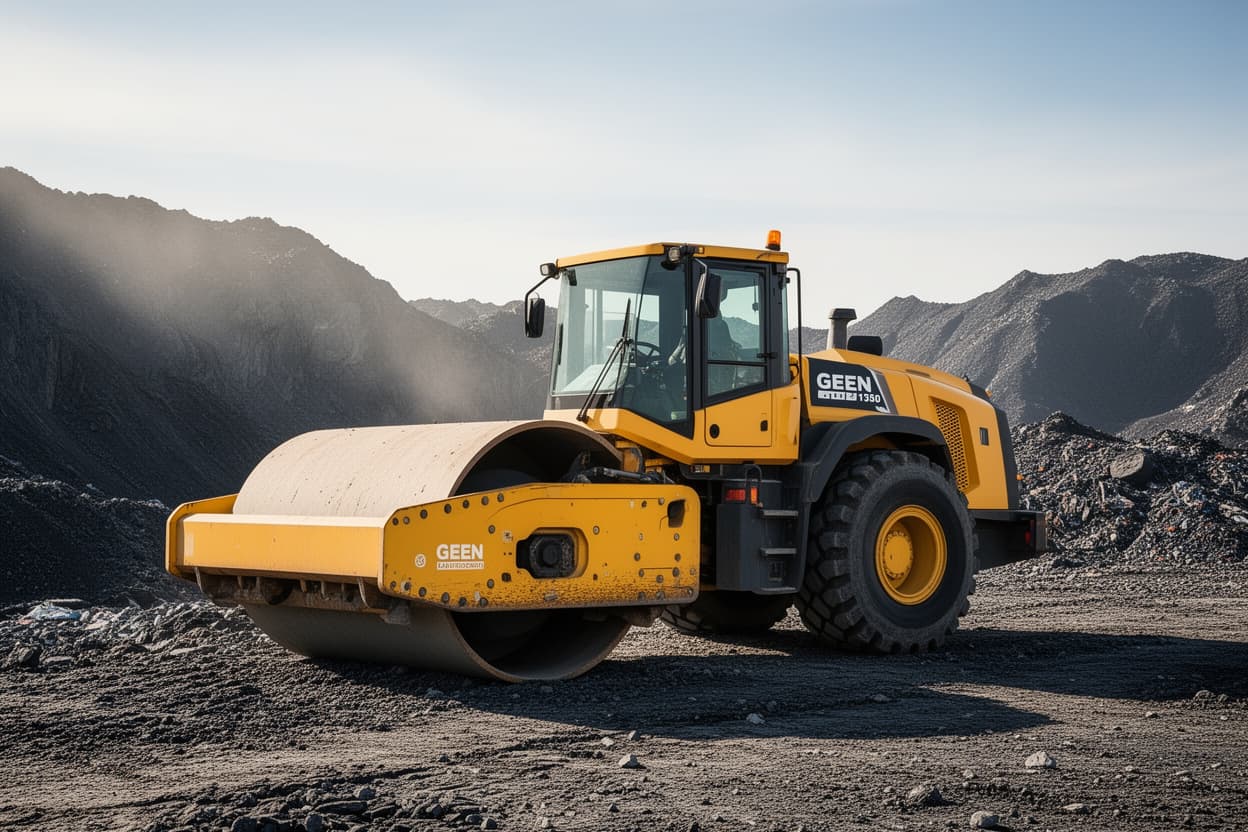
GEEN 1350 Landfill Compactor
The GEEN 1350 is a purpose-built landfill compactor designed for medium-sized waste management operations in South Africa, offering robust compaction, operator comfort, and ease of maintenance to maximise landfill lifespan and operational efficiency. It features a powerful engine and specialised compaction wheels for effective waste reduction.
Overview
The GEEN 1350 Landfill Compactor is engineered to meet the demanding requirements of modern waste management facilities, particularly within the South African context. Its primary role is to efficiently compact municipal solid waste, thereby extending the operational life of landfills and optimising airspace utilisation. This machine is built for durability and reliability, crucial for continuous operation in harsh landfill environments.
Key design considerations for the GEEN 1350 include a robust chassis, powerful drivetrain, and specialised compaction wheels that deliver high-density compaction. Operators benefit from a comfortable and safe cab environment, which is essential for long shifts on challenging terrain. The machine's design also prioritises ease of maintenance, understanding that minimal downtime is critical for landfill operations where continuous waste processing is paramount.
In South Africa, where landfill space is a valuable commodity and environmental regulations are becoming stricter, efficient compaction equipment like the GEEN 1350 plays a vital role. Its ability to achieve high compaction densities directly translates into cost savings for landfill operators by delaying the need for new landfill cells and reducing overall operational expenses. Furthermore, its robust construction is well-suited to the often-rugged conditions found on local landfill sites.
- Engine Performance
- Equipped with a high-torque, fuel-efficient engine, the GEEN 1350 provides ample power for traversing waste and driving compaction wheels, ensuring consistent performance even under heavy loads.
- Compaction Technology
- The machine features aggressive, self-cleaning compaction wheels designed to shred, crush, and compact various types of waste effectively, reducing voids and increasing density.
- Operator Environment
- The cab is designed for operator comfort and safety, offering excellent visibility, ergonomic controls, and climate control, which are crucial for productivity during extended shifts in dusty and often hot conditions.
- Serviceability
- Easy access to service points and robust componentry contribute to reduced maintenance times and lower overall operating costs, a significant factor for South African plant hire companies and municipalities.
Key specs
- Years produced
- 2025–2025
- Year range
- 2025
- Operating Weight
- 19,958 kg
- Engine Power
- Approximately 180-220 kW (240-295 hp) (est.)
- Compaction Width
- Approximately 3.0 - 3.5 meters (est.)
- Number of Wheels
- 4 (articulated)
- Wheel Type
- Steel with aggressive compaction teeth/cleats
- Travel Speed (Forward/Reverse)
- Up to 10-12 km/h (est.)
- Fuel Tank Capacity
- Approximately 350-450 litres (est.)
- Blade Capacity (Optional)
- Approximately 4.0 - 5.0 m³ (est.)
- Articulation Angle
- Typically ±30 degrees (est.)
- Oscillation Angle
- Typically ±10 degrees (est.)
- Ground Clearance
- Approximately 500-600 mm (est.)
- Overall Length (with blade)
- Approximately 7.5 - 8.5 meters (est.)
Specifications are estimates based on typical landfill compactors in this weight class and may vary slightly for the GEEN 1350 model.
Applications
- Municipal Solid Waste (MSW) Landfills
- Waste Transfer Stations (for pre-compaction)
- Industrial Waste Management Sites
- Recycling Facilities (for bulky waste reduction)
- Landfill Remediation and Capping Projects
Features
- Heavy-duty articulated chassis for excellent manoeuvrability and stability on uneven terrain.
- Specialised compaction wheels with aggressive cleats for maximum waste shredding and density.
- Pressurised, air-conditioned cab with ROPS/FOPS protection for operator comfort and safety.
- Advanced engine management system for optimal fuel efficiency and reduced emissions.
- Centralised lubrication points for simplified and quicker routine maintenance.
- Reversing fan for radiator cleaning, crucial in dusty landfill environments.
- Integrated fire suppression system for enhanced safety in high-risk areas.
Operating requirements
- Skilled and certified operators familiar with landfill operations and heavy machinery.
- Regular daily inspections and preventative maintenance schedule.
- Access to suitable fuel (diesel) and lubricants, often requiring on-site storage.
- Adequate lighting for night operations, common in busy landfill sites.
- Support infrastructure for tyre/wheel maintenance and repair.
- Compliance with local environmental regulations regarding emissions and waste handling.
Attachments and options
Common attachments
- Front-mounted waste blade (standard or optional, depending on configuration) for spreading and pushing waste.
- Rear ripper or scarifier (less common, but possible for specific tasks).
- Specialised wheel cleaning systems for extremely sticky waste conditions.
Options
- Various compaction wheel configurations (e.g., different cleat patterns for specific waste types).
- Automatic greasing system for reduced manual maintenance.
- Telematics and GPS tracking systems for fleet management and operational monitoring.
- Cold weather starting aids for operations in colder regions (less common in SA, but available).
- Enhanced lighting packages for improved visibility during night shifts.
- Additional safety features such as cameras and proximity sensors.
Maintenance and inspections
- Daily visual inspection of wheels, chassis, and hydraulic lines.
- Regular cleaning of radiators and engine compartments due to dust and debris.
- Scheduled oil and filter changes for engine, transmission, and hydraulics.
- Inspection and replacement of compaction wheel cleats/tips as wear dictates.
- Checking and adjusting articulation and oscillation joint lubrication.
- Monitoring hydraulic system pressure and fluid levels.
- Regular inspection of ROPS/FOPS structure and safety systems.
Given the harsh operating environment of a landfill, adherence to a strict preventative maintenance schedule is paramount to ensure machine longevity and minimise unexpected downtime. Access to genuine GEEN parts and qualified technicians in South Africa is crucial.
Safety notes
- ROPS/FOPS certified cab for operator protection against rollovers and falling objects.
- Emergency stop buttons accessible from inside and outside the cab.
- Integrated fire suppression system, often mandatory on landfill sites.
- Excellent all-round visibility, often supplemented with cameras and mirrors.
- Audible reverse alarm and flashing beacons for site safety.
- Non-slip surfaces and handrails for safe entry and exit.
- Lockout/tagout points for safe maintenance procedures.
Buying checklist
- Verify the machine's service history and maintenance records, especially for previous owners.
- Inspect compaction wheels thoroughly for wear, damage, and cleat integrity.
- Assess the condition of the chassis, articulation joints, and blade for structural integrity.
- Check engine and hydraulic systems for leaks, unusual noises, or performance issues.
- Evaluate the cab's condition, including HVAC, controls, and safety features.
- Confirm availability of spare parts and technical support for GEEN equipment in your region of South Africa.
- Consider the total cost of ownership, including fuel consumption, maintenance, and potential downtime.
- Review any warranty provisions, particularly for new machines.
- Ensure the machine meets local environmental and safety regulations for landfill operations.
- Arrange for a pre-purchase inspection by an independent, qualified technician.
FAQ
What is the typical lifespan of a landfill compactor like the GEEN 1350?
With proper maintenance and operating conditions, a landfill compactor can have an operational lifespan of 10,000 to 20,000 hours or more. The harsh environment means components like compaction wheels will require regular replacement.
How does the GEEN 1350 contribute to landfill efficiency?
By achieving high compaction densities, the GEEN 1350 maximises the amount of waste that can be stored in a given volume, extending the landfill's operational life, reducing the need for new cells, and optimising airspace utilisation. This directly translates to significant cost savings for operators.
Is the GEEN 1350 suitable for all types of waste?
The GEEN 1350 is primarily designed for municipal solid waste (MSW). While it can handle a variety of waste streams, extremely abrasive, highly corrosive, or excessively wet waste might require specific operational adjustments or alternative equipment. Its robust design is generally well-suited for typical South African landfill waste.
What are the main considerations for transporting a GEEN 1350 compactor in South Africa?
Due to its size and weight (nearly 20 tonnes), the GEEN 1350 requires a heavy-duty low-bed trailer and appropriate permits for road transport in South Africa. Route planning is essential to avoid restrictions on bridges and roads, and transport costs should be factored into the acquisition budget.