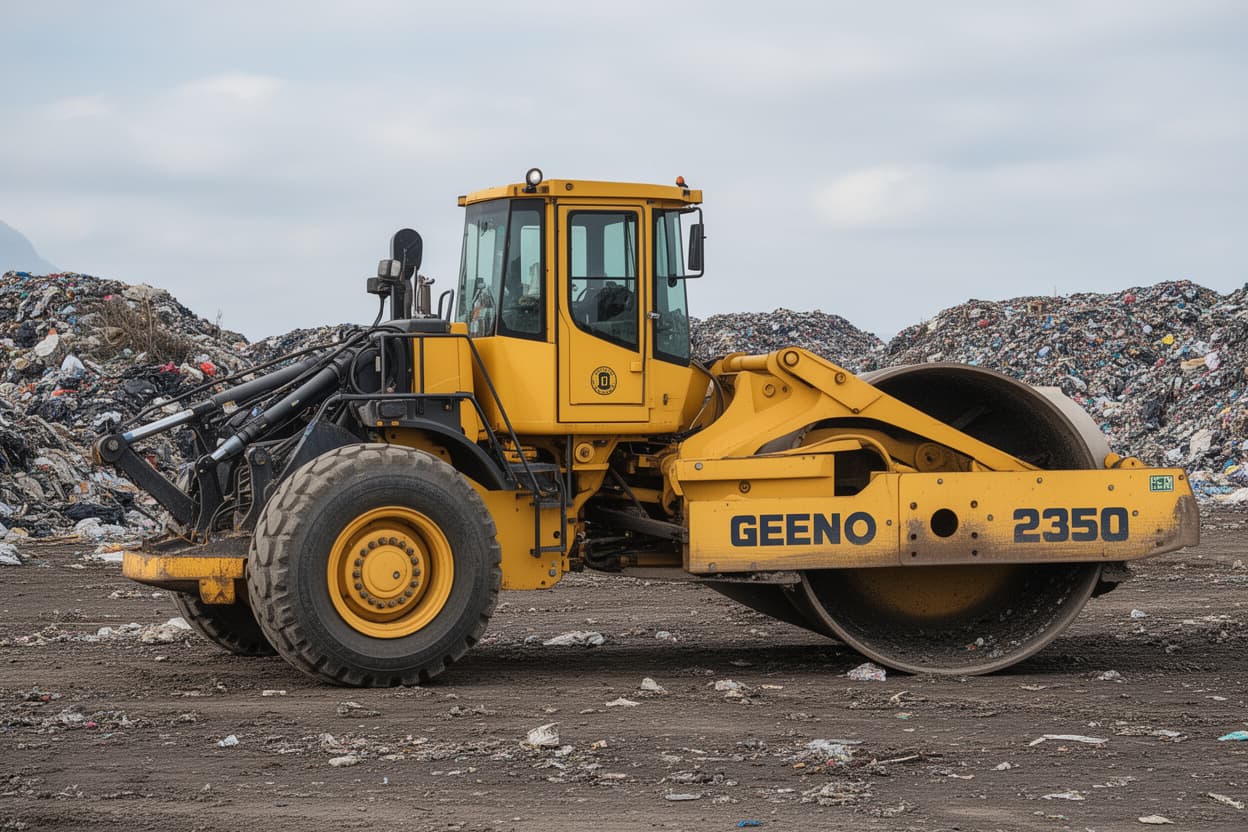
GEEN 2350 Landfill Compactor
The GEEN 2350 is a purpose-built landfill compactor designed for efficient waste compaction in South African waste management facilities. It offers robust construction, effective compaction force, and operator comfort, making it suitable for medium to large-scale landfill operations requiring reliable performance and durability in demanding environments.
Overview
The GEEN 2350 Landfill Compactor is engineered to meet the rigorous demands of modern waste management. In South Africa, where landfill capacity and operational efficiency are critical, machines like the 2350 play a vital role in extending the life of landfill sites and ensuring environmental compliance. This model is typically characterised by its heavy-duty frame, powerful engine, and specialised compaction wheels designed to shred, crush, and compact various types of waste materials.
Operators in South Africa often face challenging conditions, including high temperatures, abrasive materials, and long operating hours. The GEEN 2350 is built with these factors in mind, featuring reinforced structures, advanced cooling systems, and an ergonomic cabin to minimise operator fatigue and maximise productivity. Its design focuses on achieving high compaction densities, which is crucial for optimising airspace utilisation and reducing settlement issues at landfill sites.
Key considerations for South African buyers include:
- Durability: The ability to withstand harsh operating environments and abrasive waste.
- Maintenance: Ease of access for routine servicing and availability of spare parts.
- Fuel Efficiency: Managing operational costs in a high-utilisation application.
- Compaction Performance: Achieving optimal density to maximise landfill life.
- Operator Comfort & Safety: Essential for long shifts and productivity.
The GEEN 2350 aims to deliver a balanced package of these attributes, making it a competitive option for municipalities, private waste management companies, and plant hire firms operating in the South African market.
Key specs
- Years produced
- 2025–2025
- Year range
- 2025
- Operating Weight
- 23,500 kg (est.)
- Engine Power
- 200-250 kW (268-335 hp) (est.)
- Compaction Width
- 2.8 - 3.2 m (est.)
- Number of Compaction Wheels
- 4 (est.)
- Wheel Type
- Cleated/Drum-type (est.)
- Travel Speed (Max)
- 10-15 km/h (est.)
- Blade Capacity
- 4.5 - 6.0 m³ (est.)
- Fuel Tank Capacity
- 400-500 litres (est.)
- Hydraulic System Pressure
- 200-250 bar (est.)
- Ground Clearance
- 450-550 mm (est.)
- Turning Radius
- 7.0 - 8.5 m (est.)
- Overall Length (with blade)
- 8.5 - 9.5 m (est.)
Specifications are estimated based on typical landfill compactors in this weight class and may vary slightly depending on specific configurations or regional models.
Applications
- Municipal solid waste (MSW) compaction in large landfills
- Industrial waste compaction
- Waste transfer station operations (large scale)
- Landfill cell construction and shaping
- Recycling facility material processing (for certain waste streams)
- Waste-to-energy plant feedstock preparation
Features
- Heavy-duty compaction wheels with aggressive cleats for maximum shredding and compaction
- Robust chassis and frame designed for harsh landfill environments
- Powerful, fuel-efficient diesel engine meeting modern emission standards
- Full-width dozer blade for spreading and pushing waste
- Pressurised and air-conditioned ROPS/FOPS cabin for operator comfort and safety
- Advanced cooling system to prevent overheating in dusty, high-temperature conditions
- Centralised lubrication points for simplified maintenance
- Articulated steering for excellent manoeuvrability on uneven terrain
- Integrated fire suppression system (optional on some models)
- Rearview camera system for enhanced visibility
Operating requirements
- Skilled and certified operators experienced in landfill operations
- Regular daily pre-shift inspections and fluid checks
- Access to quality diesel fuel and lubricants
- Adequate lighting for night operations on landfill sites
- Effective dust suppression measures on site
- Regular cleaning of cooling systems and radiator fins
- Strict adherence to site-specific safety protocols for waste handling
- Availability of genuine GEEN spare parts and technical support in South Africa
Attachments and options
Common attachments
- Standard landfill blade (full-width)
- Specialised compaction wheel configurations (e.g., different cleat patterns)
- Heavy-duty ripper attachment (rear-mounted, for breaking up compacted material)
- Waste handling grapple (for specific applications, less common on compactors)
Options
- Automatic fire suppression system
- Additional work lights (LED)
- Cold weather starting aids
- Specialised tyre/wheel protection systems
- Telematics and fleet management systems
- Biodegradable hydraulic oil
- Custom paint schemes for corporate branding
Maintenance and inspections
- Daily visual inspection of wheels, blade, and hydraulic lines
- Regular cleaning of radiator and engine compartments to prevent overheating
- Scheduled oil and filter changes for engine, transmission, and hydraulics
- Greasing of all pivot points and articulation joints
- Inspection and replacement of compaction wheel cleats as needed
- Checking and adjusting blade wear plates
- Routine checks of all safety systems, including brakes and emergency stops
- Monitoring of onboard diagnostics and fault codes
Given the harsh operating environment of a landfill, proactive and rigorous maintenance is paramount to ensure longevity and minimise downtime. Access to GEEN-approved service centres and genuine parts in South Africa is crucial.
Safety notes
- ROPS/FOPS certified cabin for operator protection
- Emergency stop buttons (internal and external)
- Audible reverse alarm and flashing beacon
- Non-slip surfaces and handrails for safe access
- Integrated rearview camera system
- Automatic engine shutdown in critical fault conditions
- Fire suppression system (optional but highly recommended for landfill use)
- Lockable battery disconnect switch
Buying checklist
- Verify the machine's operating hours and service history (if used)
- Inspect compaction wheels for wear and damage to cleats
- Check for structural integrity, especially around the chassis and blade mounts
- Evaluate the condition of the engine, transmission, and hydraulic system for leaks or unusual noises
- Test all cabin controls, air conditioning, and safety features
- Confirm availability of GEEN spare parts and technical support in your region of South Africa
- Obtain a detailed quote including delivery, commissioning, and initial service package
- Review fuel consumption data and compare with other models for operational cost efficiency
- Assess the machine's suitability for your specific landfill size and waste stream characteristics
- Enquire about operator training programs offered by GEEN or their local dealer
FAQ
What is the typical lifespan of compaction wheels on a GEEN 2350?
The lifespan of compaction wheels and cleats on a GEEN 2350 varies significantly based on the type of waste, operating hours, and operator technique. In typical South African landfill conditions, cleats might require replacement every 1,500 to 3,000 hours, while the wheel drums themselves can last much longer with proper maintenance and repair. (est.)
Is the GEEN 2350 suitable for all types of waste?
The GEEN 2350 is primarily designed for municipal solid waste (MSW) and general industrial waste. While it can handle a variety of materials, extremely abrasive or highly corrosive waste streams might require specific operational adjustments or more frequent maintenance. It's not typically used for hazardous waste without specialised modifications.
What are the main advantages of using a dedicated landfill compactor like the GEEN 2350 over a modified dozer?
Dedicated landfill compactors like the GEEN 2350 offer significantly higher compaction densities due to their specialised wheel design, leading to better airspace utilisation and extended landfill life. They are also built with greater protection against waste ingress and abrasion, resulting in lower maintenance costs and higher uptime compared to dozers modified for landfill use.
What kind of fuel efficiency can be expected from the GEEN 2350?
Fuel efficiency for a landfill compactor like the GEEN 2350 is highly dependent on operating conditions, engine load, and operator efficiency. However, typical consumption for a machine in this class can range from 25 to 40 litres per hour under heavy load. Modern engines are designed to optimise fuel use while maintaining power output. (est.)