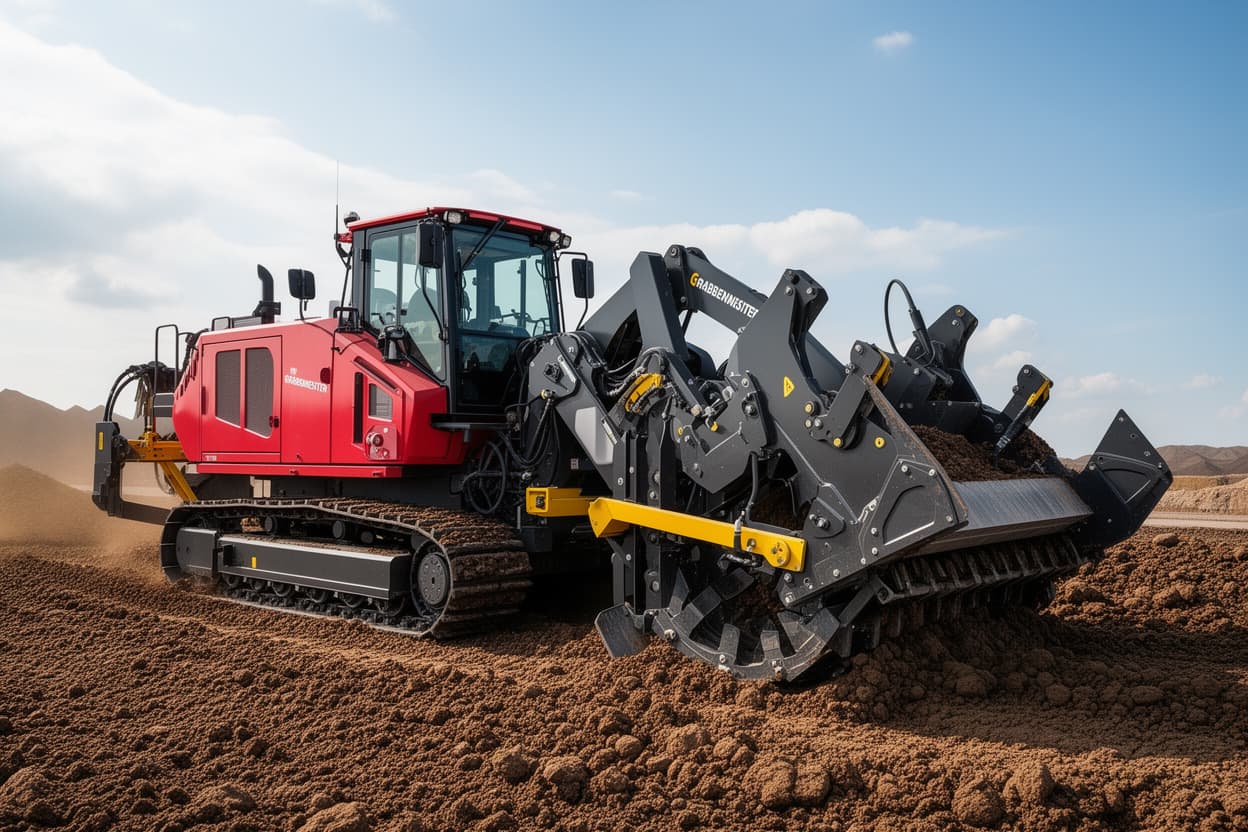
Grabenmeister 6 Trencher
The Grabenmeister 6 is a heavy-duty, purpose-built trencher designed for demanding trenching applications in South Africa, offering significant power, depth, and width capabilities for utility installation, pipeline projects, and large-scale drainage. Its robust construction and advanced controls aim for high productivity and precision in varied ground conditions.
Overview
The Grabenmeister 6 trencher represents a significant investment for South African contractors tackling large-scale trenching projects. This machine is engineered for high performance and durability, capable of cutting through challenging ground conditions, from soft soils to fractured rock. Its design prioritises operational efficiency, aiming to reduce project timelines and labour costs.
Key to its performance is a powerful engine coupled with a heavy-duty digging chain and boom, allowing for impressive trench depths and widths. Operators benefit from a modern cabin environment, typically featuring ergonomic controls and good visibility, which is crucial for precision work and safety on busy construction sites. The Grabenmeister 6 is positioned as a reliable workhorse for infrastructure development, including fibre optic cable laying, water and sewer pipeline installation, and agricultural drainage systems.
Considering the typical South African operating environment, factors like robust chassis design, ease of maintenance, and availability of wear parts are critical. The Grabenmeister 6 is expected to meet these demands, offering a machine that can withstand the rigours of continuous operation in diverse climates and terrains. Its substantial weight and power output make it suitable for projects where smaller trenchers would be insufficient, providing a competitive edge for contractors needing to deliver on large-scale commitments.
- Typical Applications:
- Large-diameter pipeline installation
- Major utility trenching (water, sewer, gas)
- Fibre optic backbone infrastructure
- Agricultural drainage and irrigation channels
- Road construction utility crossings
Key specs
- Years produced
- 2025–2025
- Year range
- 2025
- Operating Weight
- 34,493 kg
- Engine Power
- 200-250 kW (268-335 hp) (est.)
- Maximum Trench Depth
- 2.5 - 4.0 m (est.)
- Maximum Trench Width
- 400 - 900 mm (est.)
- Digging Chain Type
- Heavy-duty rock/dirt chain
- Track Type
- Steel tracks
- Fuel Tank Capacity
- 400 - 600 litres (est.)
- Hydraulic System Flow
- 250 - 350 L/min (est.)
- Ground Pressure
- 0.5 - 0.7 kg/cm² (est.)
- Transport Length
- 10.0 - 12.0 m (est.)
- Transport Width
- 2.5 - 3.0 m (est.)
- Transport Height
- 3.0 - 3.5 m (est.)
Specifications are typical for a machine of this class and may vary based on specific configurations and market region.
Applications
- Large-scale utility trenching (water, sewer, gas, electricity)
- Fibre optic cable installation for national backbone networks
- Pipeline construction for oil and gas, and bulk water transfer
- Agricultural drainage and irrigation system development
- Road and highway construction for utility crossings and drainage
Features
- High-power, fuel-efficient diesel engine for demanding conditions
- Heavy-duty digging chain and boom for deep and wide trenches
- Robust chassis and undercarriage designed for stability and durability
- Advanced hydraulic system for precise control and efficient power delivery
- Operator-friendly cabin with ergonomic controls and good visibility
- Integrated diagnostic systems for easier troubleshooting and maintenance
- Optional GPS guidance systems for enhanced trenching accuracy
Operating requirements
- Skilled and certified trencher operators experienced with heavy machinery
- Regular access to quality diesel fuel and hydraulic fluids
- Adequate transport logistics for moving a 34-tonne machine between sites
- On-site support for routine maintenance and minor repairs
- Compliance with local environmental regulations regarding noise and emissions
- Thorough ground condition assessment prior to operation to prevent damage
Attachments and options
Common attachments
- Various digging chain configurations (rock, dirt, combination)
- Different tooth types (carbide, cup, chisel) for specific ground conditions
- Crumber bar for cleaning the trench bottom
- Spoil conveyor systems for precise material placement
- Laser or GPS guidance systems for accurate depth and alignment
Options
- Enclosed, air-conditioned operator cabin
- Cold weather starting packages
- Heavy-duty track shoes for abrasive conditions
- Automatic lubrication systems
- Telematics and fleet management integration
- Custom paint and branding options
Maintenance and inspections
- Daily pre-operation checks (fluid levels, chain tension, visual inspection)
- Regular lubrication of all pivot points and chain components
- Scheduled engine service (oil, filters, coolant) as per manufacturer guidelines
- Inspection and replacement of digging chain teeth and segments
- Hydraulic system filter changes and fluid analysis
- Undercarriage inspection for wear on tracks, rollers, and idlers
- Electrical system checks and battery maintenance
Adherence to the manufacturer's recommended service schedule is crucial for maximising uptime and extending the lifespan of this heavy-duty trencher, especially given the harsh operating conditions often found in South Africa.
Safety notes
- ROPS/FOPS certified operator cabin for protection against rollovers and falling objects
- Emergency stop buttons accessible from multiple points
- Audible and visual alarms for reverse travel and critical system faults
- Clear visibility from the operator's station, often supplemented with cameras
- Safety interlocks to prevent accidental engagement of digging functions
- Proper lighting for night operations and high-visibility markings
- Comprehensive operator training on safe operating procedures and hazard identification
Buying checklist
- Verify full specifications against project requirements (depth, width, ground conditions)
- Assess the availability of local dealer support and spare parts in South Africa
- Review the warranty terms and conditions for new machinery
- Consider the total cost of ownership, including fuel, maintenance, and wear parts
- Evaluate financing options and potential trade-in values if applicable
- Confirm compliance with all relevant South African safety and environmental standards
- Arrange for operator training and familiarisation with the new machine's controls
- Plan for transport logistics and site access requirements for a machine of this size
- Request a demonstration or site visit to see the machine in action if possible
FAQ
What kind of ground conditions can the Grabenmeister 6 handle?
The Grabenmeister 6 is designed for heavy-duty applications, capable of trenching through a wide range of materials from soft soils and clay to compacted earth, calcrete, and even fractured rock, depending on the chain configuration and tooth type used.
Is the Grabenmeister 6 suitable for urban utility projects in South Africa?
While powerful, its size and weight (over 34 tonnes) make it more suited for large-scale, open-area projects. For congested urban environments, smaller, more agile trenchers or excavators might be more appropriate due to space constraints and transport challenges.
What is the typical fuel consumption for a machine of this size?
Fuel consumption can vary significantly based on engine load, ground conditions, and operator technique. However, for a machine of this power class (200-250 kW), expect consumption to be in the range of 30-60 litres per hour under typical operating conditions. (est.)
How does Grabenmeister support its equipment in South Africa?
As a new model, Grabenmeister is expected to establish or leverage existing dealer networks in South Africa, offering parts supply, technical support, and field service. It's crucial for buyers to confirm the extent of local support before purchase.