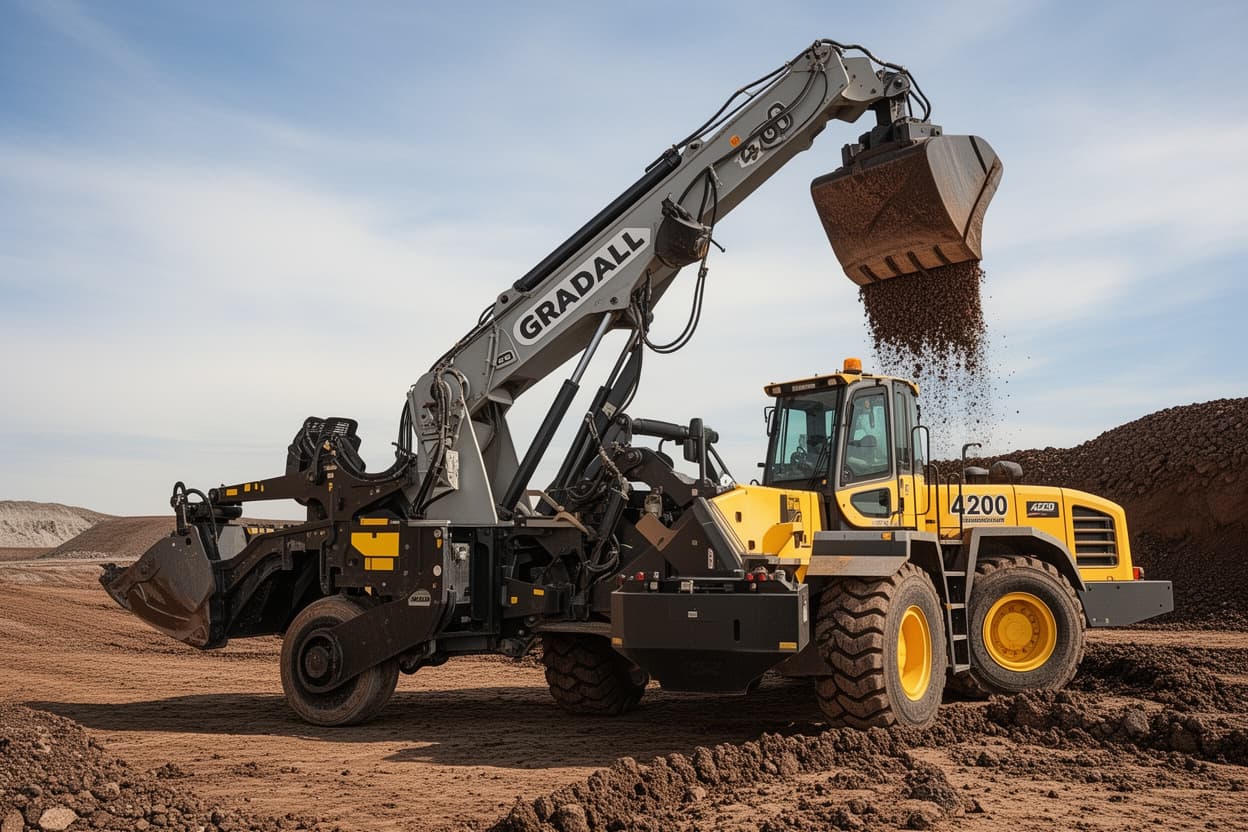
Gradall 4200 Underground Loader
The Gradall 4200 is a robust and compact underground loader designed for efficient material handling in confined mining environments. It offers a balance of power, manoeuvrability, and operator comfort, making it suitable for various South African underground operations requiring reliable performance and safety.
Overview
The Gradall 4200 underground loader is engineered to meet the rigorous demands of hard rock and soft rock mining applications in South Africa. Its design prioritises durability, operational efficiency, and operator safety, crucial factors for sustained productivity in challenging subterranean conditions. This model is typically employed in development headings, stoping operations, and general muck-out tasks where space is at a premium.
Key to the 4200's performance is its robust powertrain and hydraulic system, providing ample breakout force and fast cycle times. The machine's compact dimensions and articulated steering allow for excellent manoeuvrability in narrow tunnels and tight turns, reducing non-productive time. Operators benefit from an ergonomically designed cabin, offering good visibility and intuitive controls, which contributes to reduced fatigue during long shifts.
For South African mining contractors and plant hire companies, the Gradall 4200 represents a strategic investment. Its reliability helps minimise downtime, a critical consideration given the high costs associated with underground operations. Furthermore, the availability of parts and service support is a significant factor, and Gradall, through its local distributors, aims to provide comprehensive backing to ensure maximum uptime.
Considerations for deployment include:
- Tunnel Dimensions: Ensure the loader's width and height are compatible with existing mine infrastructure.
- Material Density: Bucket capacity and breakout force should match the specific ore or waste material being handled.
- Ventilation: Engine emissions and heat generation need to be managed within mine ventilation standards.
- Maintenance Access: Design features that facilitate easier routine maintenance are vital for underground equipment.
Key specs
- Year range
- 2025
- Operating Weight
- 21,260 kg
- Engine Power
- 150-180 kW (200-240 hp) (est.)
- Bucket Capacity (Standard)
- 3.5 - 4.5 m³ (est.)
- Tramming Capacity
- 8,000 - 10,000 kg (est.)
- Breakout Force
- 150 - 180 kN (est.)
- Overall Length (Bucket Down)
- 9.5 - 10.5 m (est.)
- Overall Width
- 2.2 - 2.5 m (est.)
- Overall Height (Cabin)
- 2.2 - 2.4 m (est.)
- Turning Radius (Outer)
- 5.5 - 6.5 m (est.)
- Articulation Angle
- ±40 degrees (est.)
- Transmission Type
- Hydrostatic or Powershift (est.)
- Fuel Tank Capacity
- 250 - 350 litres (est.)
- Ground Clearance
- 350 - 450 mm (est.)
Specifications are typical for this class of underground loader and may vary based on specific configurations and market region. Exact figures should be verified with the manufacturer or dealer.
Applications
- Hard rock mining development and production
- Soft rock mining and tunnelling operations
- Muck-out and material transport in confined underground spaces
- Ore pass loading and stockpile management underground
- Mine infrastructure development and maintenance
Features
- Robust, heavy-duty frame designed for harsh underground conditions
- Powerful, emissions-compliant diesel engine (Tier 3/4 equivalent for underground)
- Ergonomic operator compartment with ROPS/FOPS certification
- Articulated steering for superior manoeuvrability in tight spaces
- Load-sensing hydraulic system for efficient power distribution
- Automatic transmission for smooth operation and reduced operator fatigue
- Centralised greasing points for simplified maintenance
- LED lighting package for enhanced visibility in dark environments
Operating requirements
- Skilled and certified underground loader operators (e.g., MQA competency)
- Adequate mine ventilation to manage exhaust fumes and heat
- Regular access to clean diesel fuel and hydraulic oil
- Established maintenance schedule and access to qualified technicians
- Compliance with mine safety regulations (e.g., DMR requirements)
- Sufficient turning and operating space within tunnels and headings
- Availability of spare parts and technical support from local dealers
Attachments and options
Common attachments
- Various bucket sizes and types (e.g., rock buckets, light material buckets)
- Ejector buckets for sticky materials
- Forks for material handling
- Tyre protection chains for abrasive ground conditions
Options
- Automatic fire suppression system
- Remote control operation capabilities
- Integrated weighing system for payload monitoring
- Air conditioning for operator comfort
- Specialised tyre options for different ground conditions
- Cold weather starting aids
- Advanced telematics and fleet management systems
Maintenance and inspections
- Daily pre-shift inspections (fluids, tyres, lights, safety systems)
- Regular engine oil and filter changes (e.g., every 250-500 hours)
- Hydraulic system filter replacement and oil checks
- Greasing of all pivot points and articulation joints
- Brake system inspection and adjustment
- Tyre pressure and condition checks
- Structural integrity checks for frame, boom, and bucket
- Electrical system and lighting checks
Adherence to the manufacturer's recommended service intervals is crucial for optimal performance and longevity in the demanding South African underground mining environment. Utilise genuine Gradall parts where possible to ensure compatibility and reliability.
Safety notes
- ROPS/FOPS certified operator cabin for roll-over and falling object protection
- Emergency stop buttons (cabin and external)
- Automatic parking brake engagement
- Visual and audible reverse alarms
- Fire suppression system (optional but highly recommended)
- Lockout/tagout points for safe maintenance
- Excellent visibility from the operator's seat, often aided by cameras
- Safety interlocks to prevent unintended machine movement
Buying checklist
- Verify the machine's full service history and maintenance records.
- Inspect the frame for cracks, welds, or signs of structural fatigue.
- Check the condition of the bucket, pins, and bushings for wear.
- Test all hydraulic functions for smooth operation and leaks.
- Assess the engine for excessive smoke, unusual noises, or fluid leaks.
- Confirm the functionality of all safety features (brakes, lights, alarms, E-stops).
- Evaluate the condition of the tyres or tyre protection chains.
- Obtain a recent oil analysis report for engine, transmission, and hydraulics.
- Confirm availability of local Gradall parts and service support in South Africa.
- Negotiate a warranty, especially for newer or reconditioned units.
FAQ
What is the typical fuel consumption for a Gradall 4200 underground loader?
Fuel consumption for the Gradall 4200 can vary significantly based on application, operator technique, and engine load. Typically, you can expect a range of 20-35 litres per hour under normal operating conditions in a South African mine. (est.)
Is the Gradall 4200 suitable for narrow vein mining?
While the Gradall 4200 is designed for confined spaces, its suitability for narrow vein mining depends on the specific vein width. Its typical width of 2.2-2.5m might be too large for extremely narrow veins, which often require specialised, smaller loaders. Always check the machine's dimensions against your tunnel profiles. (est.)
What are the common wear parts on a Gradall 4200?
Common wear parts on an underground loader like the Gradall 4200 include bucket teeth, cutting edges, bucket pins and bushings, tyres, brake components, hydraulic filters, engine filters, and various seals and hoses. Regular inspection and timely replacement of these parts are crucial for uptime.
How important is operator training for this machine?
Operator training is paramount for underground loaders. Proper training ensures efficient operation, maximises productivity, minimises wear and tear on the machine, and most importantly, enhances safety in a high-risk environment. MQA-accredited training is often a requirement in South African mines.