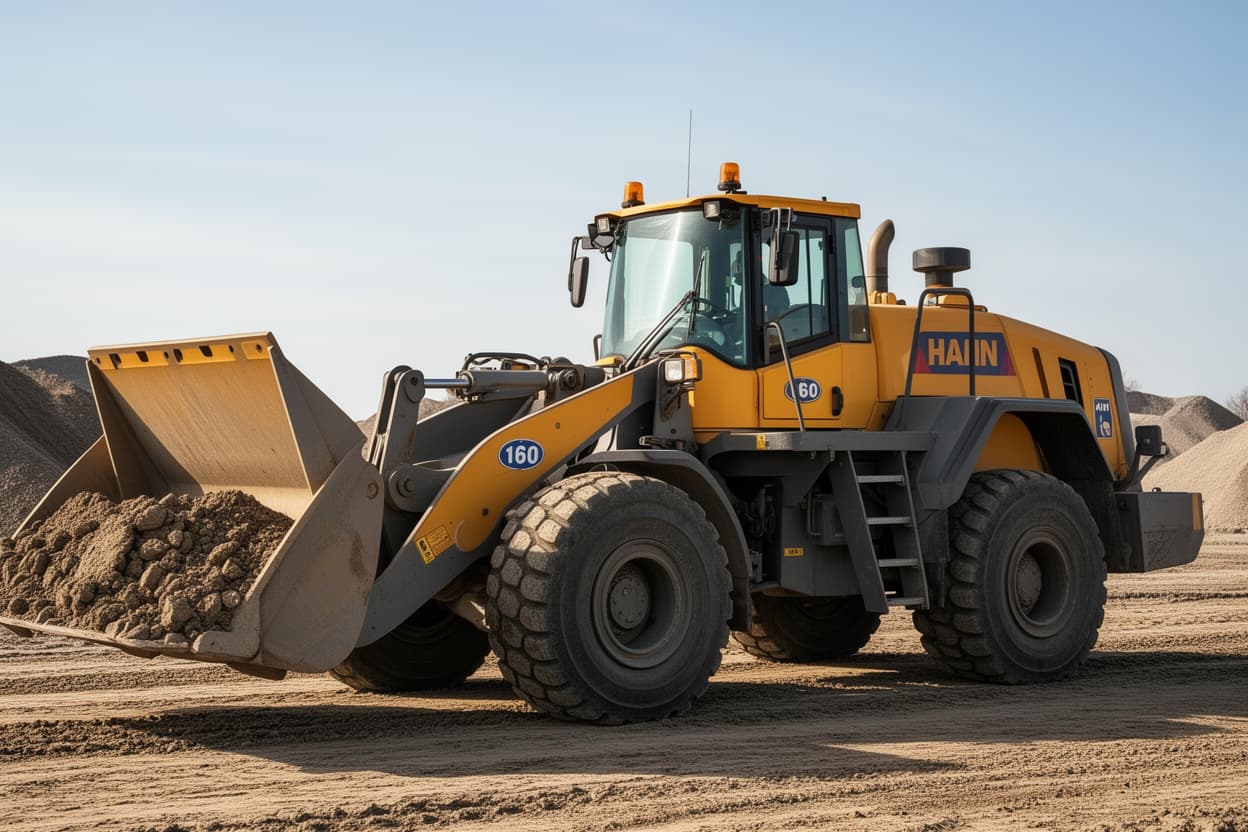
Hahn 160 Front End Loader
The Hahn 160 is a robust and versatile front-end loader designed for demanding South African conditions, offering a balance of power, efficiency, and operator comfort for various material handling and loading tasks in construction, mining, and agricultural sectors.
Overview
The Hahn 160 Front End Loader is positioned as a reliable workhorse for medium to heavy-duty applications across South Africa. Engineered to withstand the rigours of local operating environments, this machine focuses on delivering consistent performance, fuel efficiency, and ease of maintenance. Its design prioritises operator comfort and safety, crucial for long shifts in challenging conditions often found in quarries, construction sites, and large-scale agricultural operations.
With a strong emphasis on durability, the Hahn 160 typically features a robust chassis and heavy-duty components, ensuring longevity and reduced downtime. The powertrain is usually configured to provide ample torque for digging and loading, while the hydraulic system is designed for responsive and precise control. For South African contractors, the availability of parts and reliable after-sales support are critical, and Hahn aims to meet these expectations to minimise operational interruptions.
Key considerations for operators and owners include:
- Engine Performance: Optimised for power and fuel economy, crucial for managing running costs.
- Hydraulic System: Designed for quick cycle times and precise bucket control, enhancing productivity.
- Operator Environment: Cab features often include air conditioning, ergonomic controls, and good visibility to reduce fatigue.
- Structural Integrity: Built to handle tough South African terrain and heavy loads without compromising stability.
- Serviceability: Easy access to service points for routine maintenance, reducing service times.
The Hahn 160 is a strategic investment for businesses requiring a dependable loader that can handle a variety of tasks, from loading aggregates and sand to managing waste and bulk materials, all while keeping operational costs in check.
Key specs
- Year range
- 2025
- Operating Weight
- 15,500 kg
- Engine Power
- 130-150 kW (174-201 hp) (est.)
- Bucket Capacity
- 2.5 - 3.2 m³ (est.)
- Rated Load Capacity
- 4,500 - 5,500 kg (est.)
- Max Dump Height
- 3,000 - 3,500 mm (est.)
- Max Digging Depth
- 50 - 150 mm (below ground) (est.)
- Transmission Type
- Power Shift (typically 4F/2R) (est.)
- Fuel Tank Capacity
- 250 - 300 litres (est.)
- Hydraulic System Pressure
- 18-22 MPa (est.)
- Tyre Size (Standard)
- 23.5-25 (est.)
- Turning Radius (Outside Bucket)
- 5,500 - 6,500 mm (est.)
- Travel Speed (Max Forward)
- 35-40 km/h (est.)
Specifications are typical for this class and model; actual values may vary based on specific configurations and market releases.
Applications
- Loading aggregates, sand, and gravel in quarries and batching plants
- Material handling and stockpiling on construction sites
- Waste management and recycling operations
- Agricultural bulk material handling (e.g., feed, fertiliser)
- Road construction and maintenance projects
- Mining support tasks and material movement
Features
- Robust chassis and heavy-duty articulation joint for durability
- Fuel-efficient diesel engine with ample torque
- Ergonomic operator cabin with air conditioning and adjustable seating
- Pilot control joystick for precise and effortless operation
- Advanced hydraulic system for fast cycle times and strong breakout force
- Excellent all-round visibility for enhanced safety and productivity
- Easy access service points for simplified maintenance
Operating requirements
- Skilled and certified operator for safe and efficient operation
- Regular pre-shift inspections and daily maintenance checks
- Adequate fuel supply (diesel) and hydraulic oil
- Suitable ground conditions for optimal traction and stability
- Compliance with site-specific safety regulations and PPE requirements
- Access to genuine spare parts and qualified service technicians for maintenance and repairs
Attachments and options
Common attachments
- General purpose bucket (standard)
- Heavy-duty rock bucket
- Light material bucket (for less dense materials)
- Pallet forks
- Grapple attachments (for logs or waste)
Options
- Automatic lubrication system
- Ride control system for smoother operation over rough terrain
- Reverse camera and proximity sensors
- Cold weather starting aids
- Specialised tyre options (e.g., solid tyres for waste applications)
- Additional work lights (LED)
Maintenance and inspections
- Daily checks: fluid levels (engine oil, coolant, hydraulic oil), tyre pressure, lights, and safety systems.
- Regular greasing of all pivot points and articulation joints.
- Scheduled engine oil and filter changes (typically every 250-500 hours).
- Hydraulic oil and filter replacement as per manufacturer's schedule.
- Inspection and cleaning of air filters, radiator, and cooling system.
- Brake system inspection and adjustment.
- Structural integrity checks for cracks or damage on chassis and boom.
Adherence to the manufacturer's recommended service schedule is crucial for maximising uptime and extending the lifespan of the machine, especially in the demanding South African operating environment.
Safety notes
- ROPS/FOPS certified cabin for operator protection
- Emergency stop button within easy reach
- Audible reverse alarm and flashing beacon
- Seatbelt interlock system
- Non-slip steps and handrails for safe access
- Fire extinguisher mounting point
- Clear visibility from the operator's seat, often aided by mirrors and cameras
Buying checklist
- Verify the machine's service history and maintenance records.
- Inspect the articulation joint for excessive play or wear.
- Check the condition of the bucket, cutting edge, and teeth.
- Assess the engine for unusual noises, smoke, or leaks.
- Test the hydraulic system for smooth operation, leaks, and full range of motion.
- Examine the tyres for wear, damage, and correct pressure.
- Confirm the availability of spare parts and local dealer support in your region.
- Evaluate the operator cabin for comfort, functionality, and intact safety features.
- Obtain a comprehensive pre-purchase inspection report from a qualified technician.
- Clarify warranty terms and conditions, especially for new models.
FAQ
What is the typical fuel consumption of a Hahn 160 Front End Loader?
Fuel consumption for a Hahn 160 can vary significantly based on application, operator technique, and load. Typically, you can expect it to consume between 15 to 25 litres per hour under average operating conditions in South Africa. (est.)
Is the Hahn 160 suitable for mining applications in South Africa?
Yes, the Hahn 160, particularly when equipped with a heavy-duty rock bucket and appropriate tyre options, is well-suited for various support tasks in mining, such as loading blasted material, maintaining haul roads, and general material handling within the mine site.
What kind of after-sales support can I expect for a Hahn 160 in South Africa?
Hahn typically partners with regional distributors and service centres across South Africa to provide after-sales support, including parts supply, scheduled maintenance, and technical assistance. It's advisable to confirm the specific support network in your operational area before purchase.
How does the Hahn 160 compare to other brands in its class regarding cost of ownership?
The Hahn 160 aims to offer a competitive total cost of ownership through a combination of reasonable acquisition price, fuel efficiency, and durable components that contribute to lower maintenance costs. However, actual costs will depend on usage, maintenance practices, and local parts pricing. (est.)