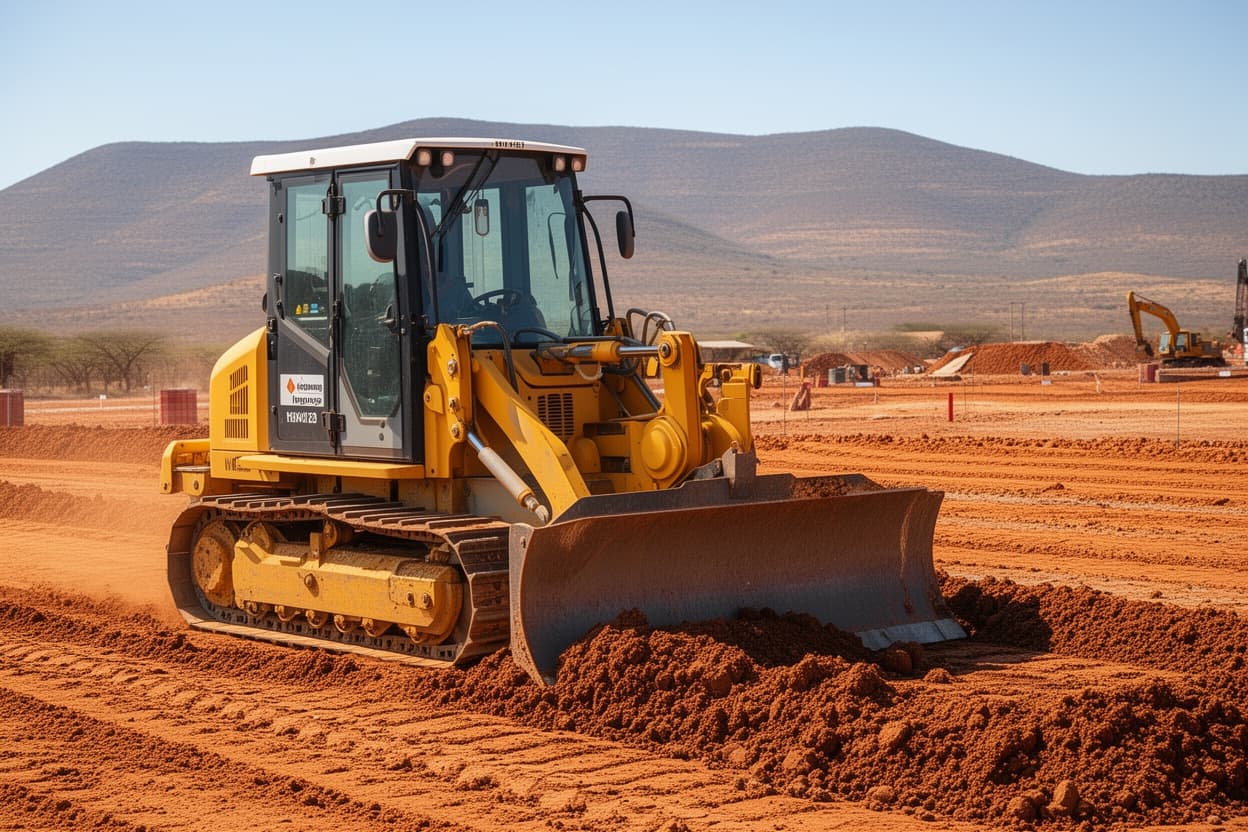
Hengwang HW13 Bulldozer
The Hengwang HW13 is a compact and agile bulldozer designed for light to medium-duty earthmoving, grading, and land clearing tasks. Ideal for smaller construction sites, agricultural projects, and landscaping in South Africa, it offers a balance of power and maneuverability for cost-effective operation.
Overview
The Hengwang HW13 bulldozer is positioned as an entry-level to mid-range compact dozer, suitable for a variety of applications where larger machines are impractical or uneconomical. Its relatively small footprint and operating weight make it easy to transport and maneuver in confined spaces, a significant advantage for many South African contractors working on urban developments, residential projects, or smaller agricultural holdings.
While specific engine details can vary by market and production year, the HW13 typically features a reliable diesel engine providing sufficient power for its class. The hydrostatic drive system, common in modern compact dozers, offers smooth operation and precise control, which is crucial for fine grading work. Operators will appreciate the intuitive controls and a cabin designed for reasonable comfort during extended shifts.
For South African conditions, the HW13's robust undercarriage and durable blade construction are important considerations. Availability of parts and local service support for Hengwang equipment is a growing factor, and potential buyers should investigate the local dealer network. This machine is a practical choice for businesses looking for an affordable and efficient solution for tasks like:
- Site preparation and leveling
- Backfilling trenches and foundations
- Spreading aggregates and topsoil
- Light land clearing and bush encroachment control
- Maintaining access roads on farms or smallholdings
Its versatility makes it a valuable asset for general contractors, landscapers, and agricultural enterprises.
Key specs
- Years produced
- 2020–2020 (est.)
- Year range
- 2025
- Operating Weight
- 6,000 kg
- Engine Power
- 55-75 kW (74-100 hp) (est.)
- Blade Type
- Straight Tilt Blade (standard) (est.)
- Blade Capacity
- 1.5 - 2.0 m³ (est.)
- Max. Travel Speed
- Up to 9 km/h (est.)
- Ground Pressure
- Approximately 35-45 kPa (est.)
- Track Width
- Approx. 400-450 mm (est.)
- Overall Length (with blade)
- Approx. 4.5 - 5.0 m (est.)
- Overall Width (with blade)
- Approx. 2.2 - 2.5 m (est.)
- Overall Height
- Approx. 2.6 - 2.8 m (est.)
- Fuel Tank Capacity
- Approx. 100-120 Litres (est.)
- Drive System
- Hydrostatic
Specifications are typical and may vary based on specific configuration, market, and year of manufacture. Always consult the manufacturer's official data sheet for precise figures.
Applications
- Light to medium site preparation and leveling
- Backfilling and trenching operations
- Spreading and grading aggregates, sand, and topsoil
- Landscaping and garden development projects
- Agricultural land management and small-scale land clearing
- Road maintenance on private farms or access routes
Features
- Compact size for excellent maneuverability in tight spaces
- Hydrostatic drive system for smooth power delivery and precise control
- Comfortable operator cabin with good visibility (ROPS/FOPS optional)
- Robust undercarriage designed for durability in varied terrain
- Easy access service points for simplified maintenance
- Reliable diesel engine, often meeting current emission standards
- Straight tilt blade for versatile pushing and grading
Operating requirements
- Competent and certified bulldozer operator (e.g., SETA accredited)
- Regular pre-shift inspections and daily maintenance checks
- Adequate fuel supply (diesel) and appropriate lubricants
- Suitable transport for relocation between sites (low-bed trailer)
- Access to genuine or high-quality aftermarket spare parts
- Understanding of local ground conditions and material characteristics
Attachments and options
Common attachments
- Straight Tilt Blade (standard)
- Angle Blade (optional for some configurations)
- Rear Ripper (light-duty, for breaking up compacted soil)
- Winches (rare, but possible for specific forestry/recovery tasks)
Options
- Enclosed cabin with air conditioning
- ROPS/FOPS certified canopy or cabin
- LED work lights for night operation
- Various track shoe options (e.g., swamp shoes for soft ground)
- GPS grading systems (aftermarket integration)
- Cold weather starting aids
Maintenance and inspections
- Daily checks: fluid levels (engine oil, hydraulic, coolant), track tension, blade condition
- Regular greasing of pivot points and articulation joints
- Engine oil and filter changes as per manufacturer schedule (typically 250-500 hours)
- Hydraulic system filter changes and oil analysis
- Undercarriage inspection for wear on rollers, idlers, and sprockets
- Air filter cleaning/replacement, especially in dusty South African conditions
- Cooling system inspection and cleaning
Adhering to the manufacturer's recommended service intervals is crucial for longevity and performance, particularly given the often harsh operating environments in South Africa. Sourcing genuine Hengwang parts or reliable aftermarket alternatives is key.
Safety notes
- Always wear appropriate PPE (hard hat, safety boots, hearing protection)
- Ensure ROPS/FOPS structure is intact and certified
- Maintain three points of contact when entering/exiting the cabin
- Be aware of blind spots and use mirrors effectively; consider spotters on busy sites
- Never operate on excessively steep slopes beyond manufacturer recommendations
- Ensure blade is lowered to the ground when parking or leaving the machine unattended
- Regularly check brakes and steering for proper function
Buying checklist
- Verify the machine's service history and maintenance records (if buying used)
- Inspect the undercarriage thoroughly for wear on tracks, rollers, and sprockets
- Check for leaks around hydraulic cylinders, hoses, and engine seals
- Test all blade functions and travel speeds for smooth operation
- Assess the condition of the engine and listen for unusual noises during operation
- Confirm availability of local Hengwang parts and service support in your region
- Review operator comfort and visibility from the cabin
- Compare fuel efficiency figures against similar models for long-term running costs
- Obtain a clear understanding of the warranty terms, especially for new machines
- Factor in transport costs if relocating the machine frequently
FAQ
What are the main advantages of a compact bulldozer like the Hengwang HW13?
The primary advantages are its maneuverability in confined spaces, lower transport costs, reduced fuel consumption compared to larger dozers, and suitability for smaller-scale projects where a large machine would be overkill. This makes it very cost-effective for many South African contractors.
Is the Hengwang HW13 suitable for heavy-duty ripping or rock work?
No, the HW13 is designed for light to medium-duty earthmoving. While it can handle some compacted soil with a light ripper attachment, it is not built for heavy-duty ripping of rock or extremely dense materials. Attempting such tasks could lead to premature wear or damage.
What kind of fuel consumption can I expect from the HW13?
Fuel consumption for a compact dozer like the HW13 typically ranges from 8 to 15 litres per hour, depending on the engine size, load, and operating conditions. Factors like operator technique and terrain significantly influence actual consumption. Always budget for the higher end in demanding South African conditions. (est.)
How does Hengwang support and parts availability in South Africa compare to established brands?
Hengwang is a growing brand in South Africa, and its support network is expanding. While not as extensive as some long-established global brands, dedicated dealers are increasing. It's crucial for potential buyers to verify the local dealer's reputation, parts stock, and service capabilities before purchase to ensure reliable operation.