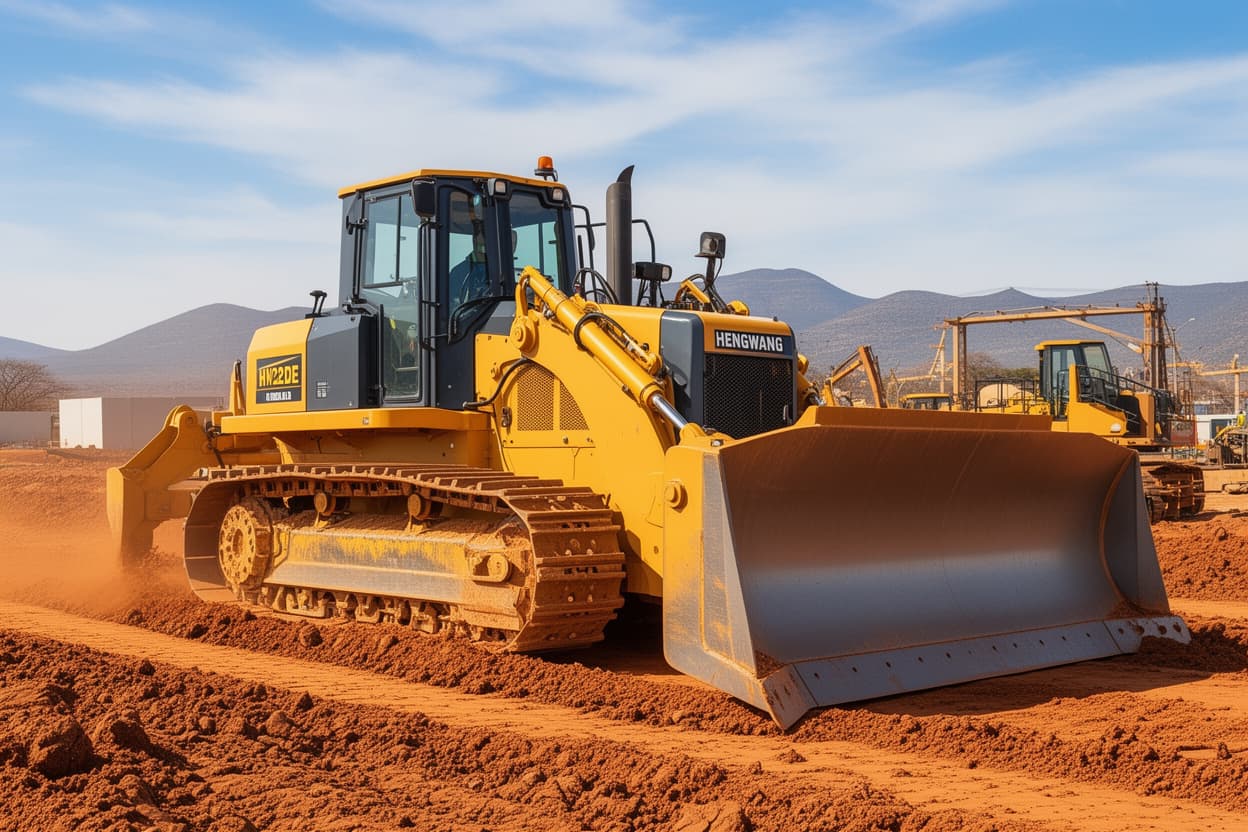
Hengwang HW22DE Bulldozer
The Hengwang HW22DE is a modern, electric-powered bulldozer in the 22-ton class, offering an environmentally conscious solution for various earthmoving tasks in South Africa. It's designed for efficiency and reduced emissions, suitable for construction, mining, and land clearing operations where sustainability and operational costs are key considerations.
Overview
The Hengwang HW22DE represents a significant step towards sustainable earthmoving in the South African market. As an electric bulldozer, it eliminates direct emissions and significantly reduces noise pollution, making it ideal for urban construction sites, enclosed environments, or operations with strict environmental regulations. This 22-ton class machine is engineered for robust performance, leveraging electric motor torque for powerful dozing and ripping capabilities.
Operators will appreciate the focus on modern controls and a comfortable cabin, designed to reduce fatigue during long shifts. The electric powertrain also promises lower running costs due to reduced fuel consumption and potentially simpler maintenance requirements compared to traditional diesel engines. However, potential buyers in South Africa must consider the charging infrastructure requirements and the availability of technical support and spare parts for electric earthmoving equipment, which is still an emerging segment in the region.
Key considerations for South African contractors:
- Charging Infrastructure: Planning for adequate charging facilities on-site is crucial for continuous operation.
- Power Grid Stability: Reliance on grid power or robust generator solutions for charging.
- Technical Support: Ensuring local dealer support for electric drivetrain components and specialized maintenance.
- Initial Investment vs. Operating Costs: Evaluating the higher upfront cost against long-term savings in fuel and maintenance.
- Environmental Compliance: Meeting increasingly stringent environmental standards, particularly in sensitive areas.
The HW22DE is positioned for forward-thinking companies looking to invest in greener technology without compromising on the power and reliability expected from a 22-ton bulldozer.
Key specs
- Years produced
- 2025–2025
- Year range
- 2025
- Operating Weight
- 22,000 kg
- Power Type
- Electric Motor
- Rated Power Output
- Approximately 160-180 kW (est.)
- Blade Type
- Straight Tilt Blade (Standard)
- Blade Capacity
- Approximately 4.5 - 5.5 m³ (est.)
- Max. Drawbar Pull
- Approximately 200 kN (est.)
- Travel Speed (Forward/Reverse)
- Up to 10 km/h (est.)
- Battery Capacity
- Typically 200-300 kWh (est.)
- Operating Time per Charge
- 4-8 hours (depending on duty cycle) (est.)
- Charging Time (Fast Charge)
- 1-2 hours (with appropriate charger) (est.)
- Ground Pressure
- Approximately 60-70 kPa (est.)
- Overall Length (with blade)
- Approximately 5.8 - 6.2 m (est.)
Specifications are based on typical electric bulldozers in this class and may vary slightly for the specific Hengwang HW22DE model. Exact figures should be confirmed with the manufacturer or local dealer.
Applications
- General construction and site preparation
- Land clearing and levelling
- Road building and maintenance
- Mining operations (especially underground or sensitive areas)
- Waste management and landfill operations
- Urban development projects requiring low noise and emissions
Features
- Zero direct emissions, contributing to environmental compliance
- Significantly reduced noise levels for urban and sensitive sites
- High torque electric motor for powerful dozing and ripping
- Advanced battery management system for optimal performance and longevity
- Comfortable, air-conditioned cabin with modern ergonomic controls
- Fast charging capability (with compatible infrastructure)
- Robust undercarriage designed for demanding South African terrain
- Integrated telematics for remote monitoring and diagnostics
Operating requirements
- Reliable access to high-power charging infrastructure (e.g., 380V/400V 3-phase)
- Trained operators familiar with electric heavy equipment operation and safety protocols
- Scheduled battery health checks and maintenance
- Adequate on-site power supply for charging, potentially requiring generator backup
- Specialized technicians for electric drivetrain diagnostics and repair
- Consideration for ambient temperatures affecting battery performance and charging efficiency
Attachments and options
Common attachments
- Straight Tilt Blade (standard)
- Angle Blade
- Multi-shank Ripper
- Winches (for specific applications)
- Various track shoe options (e.g., swamp shoes, extreme service)
Options
- Fast charging station package
- Additional battery packs (if swappable or for extended range)
- GPS/GNSS grade control systems
- Heavy-duty guarding for forestry or demolition
- Cold weather package (if operating in extreme high-altitude SA regions)
- Specialized lighting packages
Maintenance and inspections
- Regular inspection of electrical connections and cabling
- Battery health monitoring and diagnostics
- Routine checks of hydraulic systems (for blade/ripper functions)
- Greasing of pivot points and articulation joints
- Undercarriage inspection and track tension adjustment
- Cooling system checks for electric motors and battery packs
- Software updates for control systems and battery management
Maintenance for electric bulldozers differs significantly from diesel models, focusing more on electrical systems and battery health rather than engine and fuel system components. Specialized training for technicians is essential.
Safety notes
- High voltage safety protocols and lockout/tagout procedures
- Emergency stop systems accessible from multiple points
- ROPS/FOPS certified cabin for operator protection
- Backup alarms and warning lights for site safety
- Fire suppression system (especially for battery compartments)
- Excellent visibility from the operator's station, often with cameras
- Ground fault detection systems for electrical safety
Buying checklist
- Assess your site's charging infrastructure capabilities and power supply.
- Evaluate the total cost of ownership, including initial purchase, charging costs, and maintenance.
- Confirm local dealer support for electric heavy equipment, including parts and specialized technicians.
- Verify battery warranty and expected lifespan, crucial for long-term investment.
- Arrange for operator training specific to electric bulldozer operation and safety.
- Consider the typical duty cycle and how it aligns with the machine's operating time per charge.
- Review the telematics system for remote monitoring and predictive maintenance capabilities.
- Check for any government incentives or rebates for electric heavy equipment in South Africa.
- Inspect the undercarriage and blade for wear and suitability for your specific applications.
FAQ
What is the typical operating time of the Hengwang HW22DE on a single charge?
The operating time can vary significantly based on the intensity of the work. For typical earthmoving tasks, you can expect 4 to 8 hours of operation. Heavy ripping or continuous high-load work will reduce this, while lighter duties can extend it. (est.)
How long does it take to charge the HW22DE?
With a suitable fast charger, the HW22DE can typically be charged in 1 to 2 hours. Standard charging methods will take longer. The availability of appropriate charging infrastructure on your site is critical. (est.)
Are spare parts and technical support readily available for electric Hengwang bulldozers in South Africa?
As electric heavy equipment is still emerging in SA, it's crucial to confirm the local dealer's specific support for the HW22DE. Inquire about parts inventory for electric components, diagnostic tools, and the availability of factory-trained technicians for electric drivetrains.
What are the main advantages of an electric bulldozer like the HW22DE over a diesel equivalent?
Key advantages include zero direct emissions, significantly reduced noise pollution, lower operating costs due to no fuel consumption and potentially less maintenance, and instant torque delivery from the electric motor for powerful performance. It also aligns with increasing environmental regulations.