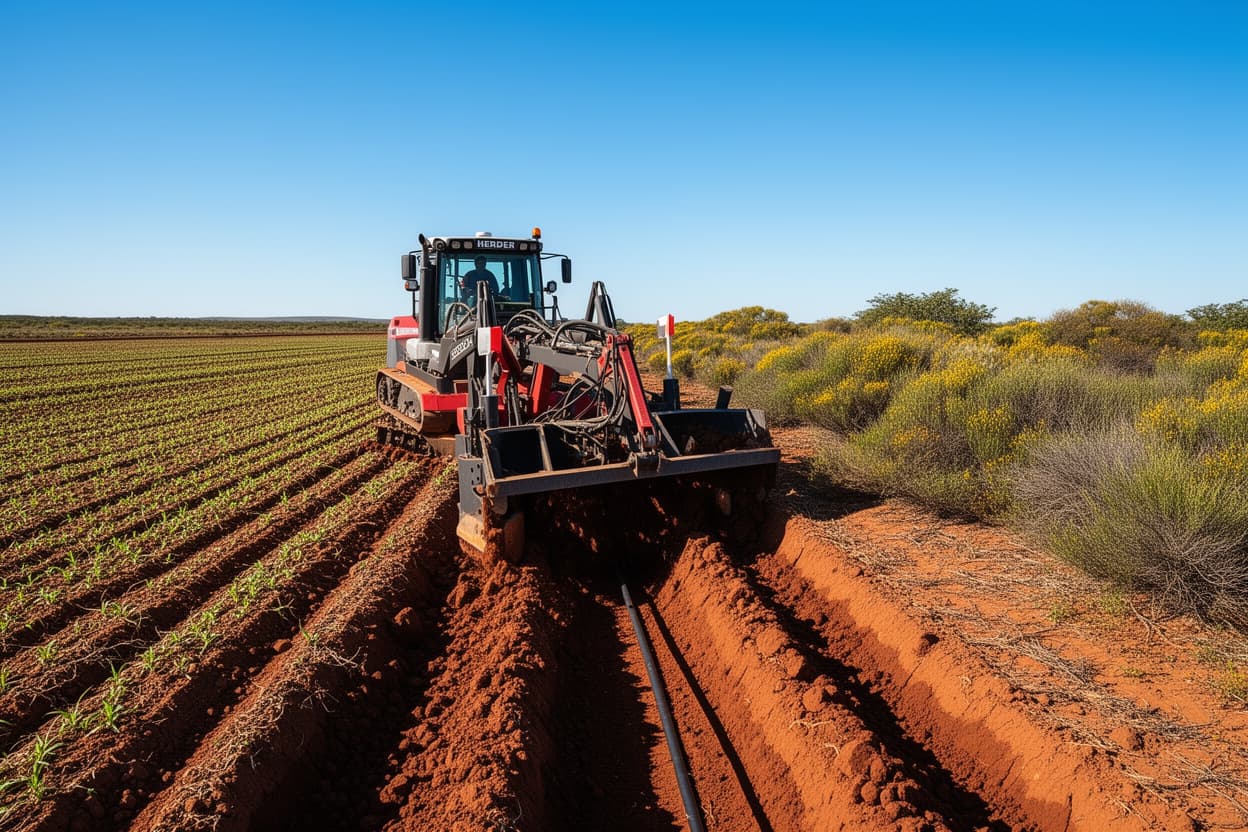
Herder 550H Trencher
The Herder 550H is a robust and versatile trencher designed for demanding applications in South Africa, offering powerful performance for trenching, ditch cleaning, and vegetation management. Its hydraulic system and adaptable attachments make it suitable for various agricultural, municipal, and infrastructure projects, providing efficiency and precision in challenging conditions.
Overview
The Herder 550H represents a modern approach to trenching and land management equipment, specifically engineered to meet the rigorous demands of the South African market. This machine is not just a trencher; it's a multi-functional tool carrier, capable of handling a wide array of tasks from precision trenching for irrigation and utility installation to heavy-duty ditch cleaning and vegetation control along roadsides and waterways.
Its design prioritises hydraulic power and stability, crucial for operating effectively in diverse South African terrains, from sandy soils to rocky ground. The 550H is typically mounted on a tractor or other suitable prime mover, leveraging the existing power unit for enhanced mobility and operational flexibility. This integration allows contractors and municipalities to maximise their investment by utilising a single power source for multiple specialised tasks.
Key to its versatility is the advanced hydraulic system, which provides precise control over the attachment's movements and power delivery. This ensures optimal performance whether digging a narrow trench or clearing dense brush. Operators benefit from ergonomic controls and good visibility, contributing to both efficiency and safety on site. The robust construction is designed for longevity, a critical factor given the often-harsh operating environments and the need for reliable equipment in remote areas of South Africa.
The Herder 550H is a strategic asset for operations requiring high productivity and adaptability, offering a cost-effective solution for a range of earthmoving and land maintenance challenges faced by South African businesses.
Key specs
- Years produced
- 2025–2025
- Year range
- 2025
- Operating Weight
- 6,800 kg
- Power Requirement (Prime Mover)
- Typically 100-150 hp (75-112 kW) (est.)
- Trenching Depth (Max)
- Up to 1.5 - 2.0 m (est.)
- Trenching Width (Variable)
- 150 mm - 400 mm (depending on chain/boom) (est.)
- Hydraulic Flow Requirement
- Approx. 80-120 L/min (est.)
- Reach (Horizontal from Centre)
- Up to 6.0 - 7.5 m (est.)
- Boom Rotation
- 180-270 degrees (depending on configuration) (est.)
- Control System
- Electro-hydraulic proportional control
- Mounting Type
- Three-point linkage or custom frame mount
- Transport Dimensions (Approx.)
- Varies significantly with prime mover (est.)
- Typical Fuel Consumption
- Dependent on prime mover and application (est.)
- Working Pressure
- Approx. 200-250 bar (est.)
Specifications are indicative and can vary based on specific configuration, prime mover, and attachments. Consult Herder documentation for precise figures.
Applications
- Agricultural trenching for irrigation and drainage systems
- Utility trenching for cables, pipes, and fibre optics
- Ditch cleaning and maintenance along roads and waterways
- Vegetation management and brush cutting along verges and embankments
- Forestry and land clearing for firebreaks or planting
- Specialised earthmoving for small to medium-scale infrastructure projects
Features
- Advanced hydraulic system for precise control and power delivery
- Robust construction designed for heavy-duty, continuous operation
- Modular design allowing for quick attachment changes
- High reach and versatile boom articulation for difficult access areas
- Operator-friendly controls, often integrated with the prime mover's cabin
- Excellent visibility of the working area for enhanced safety and accuracy
- Low maintenance requirements due to durable components and design
Operating requirements
- Compatible prime mover (tractor, telehandler, or custom carrier) with sufficient hydraulic flow and power
- Skilled operator trained in trencher operation and safety protocols
- Regular maintenance checks, especially on hydraulic lines and cutting components
- Access to spare parts and technical support, particularly important in remote SA locations
- Appropriate ground conditions for safe and efficient trenching (avoiding excessively rocky or unstable ground)
- Clearance for boom swing and trench spoil placement
Attachments and options
Common attachments
- Trenching chain and boom assemblies (various widths and depths)
- Ditch cleaning buckets and flail mowers
- Vegetation management heads (e.g., rotary mowers, mulchers)
- Grapples for material handling
- Post-hole augers
- Tree and hedge trimmers
Options
- Various trenching chain types (e.g., rock, dirt, combination)
- Different boom lengths and articulation configurations
- Remote control systems for enhanced safety in hazardous areas
- GPS/GNSS guidance systems for precision trenching
- Integrated dust suppression systems
- Custom paint and branding options for fleet consistency
Maintenance and inspections
- Daily inspection of hydraulic hoses, fittings, and cylinders for leaks or damage
- Regular lubrication of all pivot points and moving parts
- Checking and adjusting trenching chain tension and replacing worn teeth
- Monitoring hydraulic fluid levels and quality, replacing filters as per schedule
- Inspecting and cleaning cooling systems of the prime mover and hydraulic system
- Checking for structural integrity of the boom and frame, addressing any cracks or fatigue
- Servicing of the prime mover as per manufacturer's recommendations
Proactive maintenance is crucial for longevity and preventing costly downtime, especially given the demanding nature of trenching work in South Africa.
Safety notes
- Always ensure the prime mover is stable and on level ground before operation
- Maintain a safe distance from the trenching area for personnel and other equipment
- Use appropriate personal protective equipment (PPE) including hard hat, safety glasses, and hearing protection
- Be aware of underground utilities; always conduct thorough site surveys before digging
- Ensure all safety guards and interlocks are in place and functional
- Never operate the machine with passengers or unauthorised personnel in the vicinity
- Regularly inspect and maintain emergency stop buttons and safety decals
Buying checklist
- Verify the compatibility of the Herder 550H with your existing prime mover (hydraulic flow, power, mounting points)
- Assess the availability of local Herder dealer support and spare parts in South Africa
- Consider the specific trenching depths and widths required for your typical projects
- Evaluate the range of attachments available and their suitability for your diverse applications
- Inspect the hydraulic system thoroughly for any signs of wear, leaks, or previous repairs
- Check the condition of the trenching chain, teeth, and boom for excessive wear or damage
- Review the machine's service history and maintenance records, if available
- Factor in transport logistics and costs, especially if operating in remote areas
- Obtain a clear understanding of warranty terms and post-sales support in South Africa
- Compare total cost of ownership, including fuel, maintenance, and potential downtime
FAQ
What kind of prime mover is needed for the Herder 550H?
The Herder 550H typically requires a tractor, telehandler, or a custom-built carrier with sufficient hydraulic power and flow, usually in the range of 100-150 hp, and a robust three-point linkage or custom mounting frame. Compatibility should be confirmed with Herder or a local dealer.
Can the Herder 550H handle rocky ground in South Africa?
While designed for robust operation, its effectiveness in rocky ground depends on the specific trenching chain configuration (e.g., rock teeth) and the density/type of rock. For extremely hard rock, a rock saw attachment or different trenching method might be more suitable. It's best to consult with a Herder specialist for specific ground conditions.
What is the typical lead time for spare parts in South Africa?
Lead times for spare parts can vary. For common wear parts, local dealers may stock them. For more specialised components, parts might need to be imported, which could take several weeks. It's advisable to discuss parts availability and lead times with your local Herder distributor before purchase.
Is training provided for operating the Herder 550H?
Many reputable dealers offer operator training as part of the purchase package or as an additional service. Given the complexity and power of the machine, professional training is highly recommended to ensure safe and efficient operation, especially for new operators.