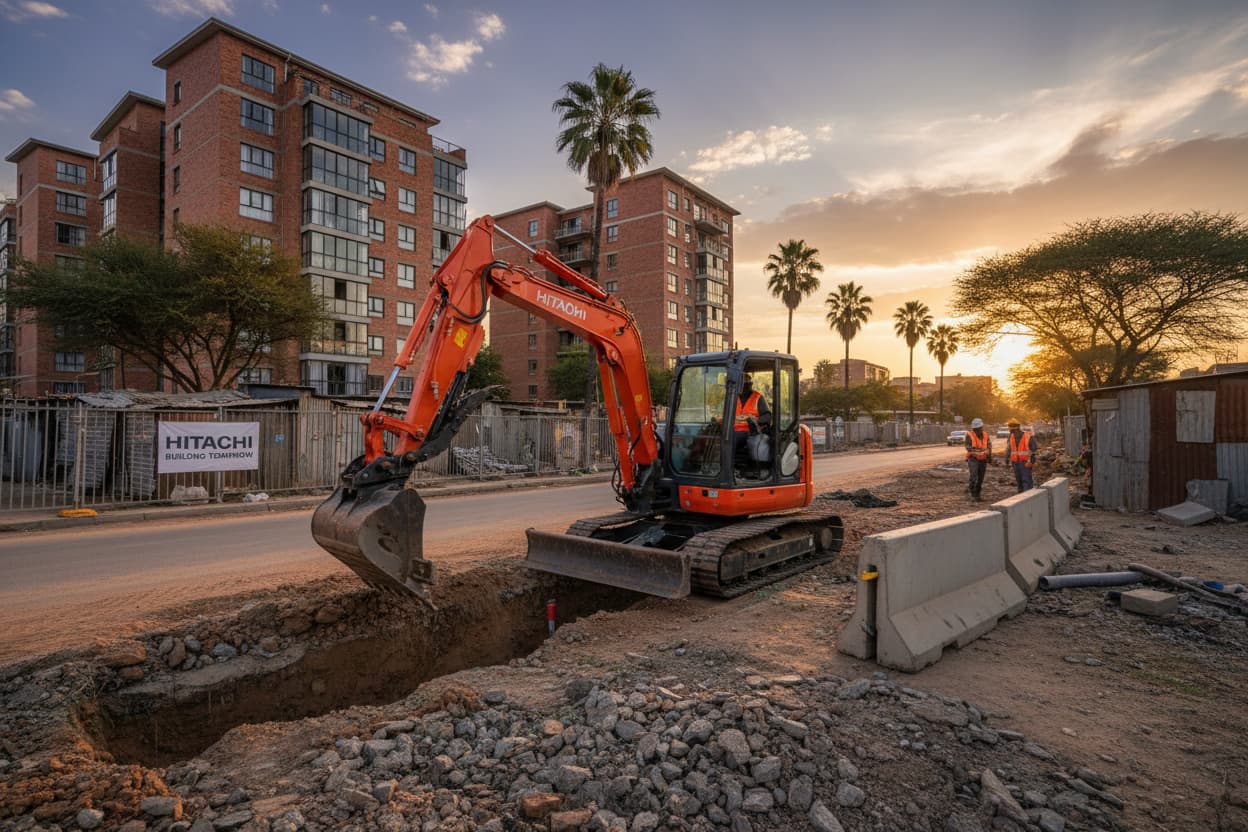
Hitachi ZX90 Excavator
The Hitachi ZX90 is a versatile compact excavator designed for precision and efficiency in South African urban and confined construction sites. Offering a balance of power and manoeuvrability, it's well-suited for trenching, utility work, and general earthmoving tasks where space is a premium.
Overview
The Hitachi ZX90 excavator represents a robust solution for contractors in South Africa requiring a machine that can perform effectively in tight spaces without compromising on digging power. As a compact excavator, it bridges the gap between mini-excavators and larger general-purpose machines, making it highly adaptable for a variety of projects.
Its design prioritises operator comfort and control, which is crucial for long working hours on demanding South African sites. The hydraulic system is engineered for smooth, precise movements, allowing operators to tackle intricate tasks like pipe laying or detailed landscaping with confidence. The machine's relatively low operating weight also makes it easier to transport between sites, a significant advantage for plant hire companies and contractors working across multiple locations.
In the South African context, the ZX90's fuel efficiency and reliability are key considerations. Hitachi's reputation for durable machinery and a decent support network, particularly in major urban centres, adds to its appeal. While parts availability can sometimes be a concern for imported machinery, Hitachi generally maintains a reasonable stock for common wear items. The machine's compact footprint also means reduced site impact, which is increasingly important for environmentally sensitive projects or those in densely populated areas.
- Typical Applications:
- Urban utility trenching (water, sewer, fibre)
- Residential and commercial building foundations
- Landscaping and site preparation
- Road maintenance and repair
- Demolition of small structures
Key specs
- Operating Weight
- 9,000 kg
- Engine Power
- Approx. 40-50 kW (54-67 hp) (est.)
- Bucket Capacity
- 0.25 - 0.45 m³ (est.)
- Max Digging Depth
- Approx. 4.0 - 4.5 m (est.)
- Max Reach at Ground Level
- Approx. 6.5 - 7.0 m (est.)
- Tail Swing Type
- Conventional or Reduced Tail Swing (model dependent) (est.)
- Travel Speed (High)
- Approx. 4.5 - 5.5 km/h (est.)
- Fuel Tank Capacity
- Approx. 100 - 120 litres (est.)
- Hydraulic Pump Flow
- Approx. 120 - 140 L/min (est.)
- Undercarriage Type
- Steel tracks (rubber pad option) (est.)
- Overall Width
- Approx. 2.3 - 2.5 m (est.)
- Transport Height
- Approx. 2.5 - 2.7 m (est.)
Specifications are estimates for a typical Hitachi ZX90 model available in South Africa and may vary based on specific configuration, year of manufacture, and regional variations.
Applications
- Urban utility installation and repair (water, sewer, electrical, fibre)
- Residential and commercial building foundation excavation
- Landscaping, site preparation, and grading in confined areas
- Road and pavement repair, including pothole patching and trenching
- Small-scale demolition of concrete and masonry structures
- Agricultural tasks such as ditching and land clearing on smaller farms
Features
- Efficient and reliable diesel engine for optimal fuel consumption
- Advanced hydraulic system for smooth, precise, and powerful operation
- Comfortable and ergonomic operator cabin with good visibility
- Robust undercarriage designed for durability in varied terrain
- Easy access to service points for simplified maintenance
- Compact dimensions for excellent manoeuvrability in tight spaces
- Standard auxiliary hydraulics for attachment versatility
Operating requirements
- Competent and certified excavator operator (e.g., SETA accredited)
- Daily pre-start checks and fluid level monitoring
- Appropriate personal protective equipment (PPE) for operators and ground staff
- Clearance for tail swing, even with reduced tail swing models, to prevent collisions
- Stable and level ground for safe operation, especially when digging deep or lifting
- Regular refuelling with clean, appropriate diesel fuel
- Access to a reliable water source for dust suppression on dry sites
Attachments and options
Common attachments
- General purpose digging buckets (various widths)
- Hydraulic breakers (hammers) for concrete and rock
- Grading/clean-up buckets for finishing work
- Augers for drilling post holes or foundations
- Quick couplers for rapid attachment changes
- Grapples for material handling and demolition
Options
- Air conditioning for operator comfort in hot climates
- Rubber track pads for working on paved surfaces
- Additional auxiliary hydraulic lines for complex attachments
- Blade for backfilling and levelling
- GPS/telematics system for fleet management and security
- Specialised safety lighting and beacons
Maintenance and inspections
- Adherence to manufacturer's recommended service intervals (e.g., 250/500/1000 hours)
- Regular inspection and lubrication of pins, bushings, and pivot points
- Daily cleaning of the radiator and engine compartment to prevent overheating
- Checking and topping up hydraulic oil, engine oil, and coolant levels
- Inspection of tracks, rollers, and idlers for wear and damage
- Replacement of fuel, oil, and hydraulic filters as per schedule
- Monitoring of hydraulic hose condition for leaks or damage
Timely maintenance is critical for machine longevity and performance, especially given the harsh operating conditions often encountered in South Africa. Sourcing genuine Hitachi parts or high-quality aftermarket equivalents is recommended.
Safety notes
- Daily safety checks including brakes, lights, and warning systems
- Ensuring clear communication between operator and ground staff (e.g., hand signals)
- Maintaining a safe distance from trenches, embankments, and overhead power lines
- Proper use of seatbelts and ensuring ROPS/FOPS cabin integrity
- Implementing a lockout/tagout procedure during maintenance
- Awareness of blind spots and using mirrors/cameras effectively
- Never exceeding the machine's rated lifting capacity
Buying checklist
- Verify the machine's service history and maintenance records (if used)
- Inspect the undercarriage for excessive wear on tracks, rollers, and sprockets
- Check for hydraulic leaks around cylinders, hoses, and pumps
- Test all hydraulic functions for smooth and responsive operation
- Assess engine condition: look for excessive smoke, unusual noises, or fluid leaks
- Confirm availability of local Hitachi parts and service support in your region
- Evaluate the condition of the cabin, controls, and safety features
- Obtain a detailed quote including delivery, warranty, and any optional extras
- Consider the total cost of ownership, including fuel efficiency and expected maintenance
- Ensure the machine's specifications meet your specific project requirements
FAQ
What makes the Hitachi ZX90 suitable for South African conditions?
Its robust build, efficient engine, and compact size make it ideal for varied South African terrains and urban construction sites where space is often limited. Hitachi's established presence also aids in service and parts availability.
What is the typical fuel consumption for a Hitachi ZX90?
Fuel consumption can vary significantly based on application and operator technique, but you can generally expect around 8-12 litres per hour under typical operating conditions for a machine of this size. (est.)
Can the ZX90 be transported easily on South African roads?
Yes, its operating weight of around 9 tonnes means it can typically be transported on a standard low-bed trailer with a suitable truck, making inter-site logistics manageable for most contractors. (est.)
Are parts readily available for the Hitachi ZX90 in South Africa?
Hitachi has a network of dealers and service centres in South Africa, particularly in major provinces. Common wear parts are generally available, but specialised components might require ordering, so planning for maintenance is advised.