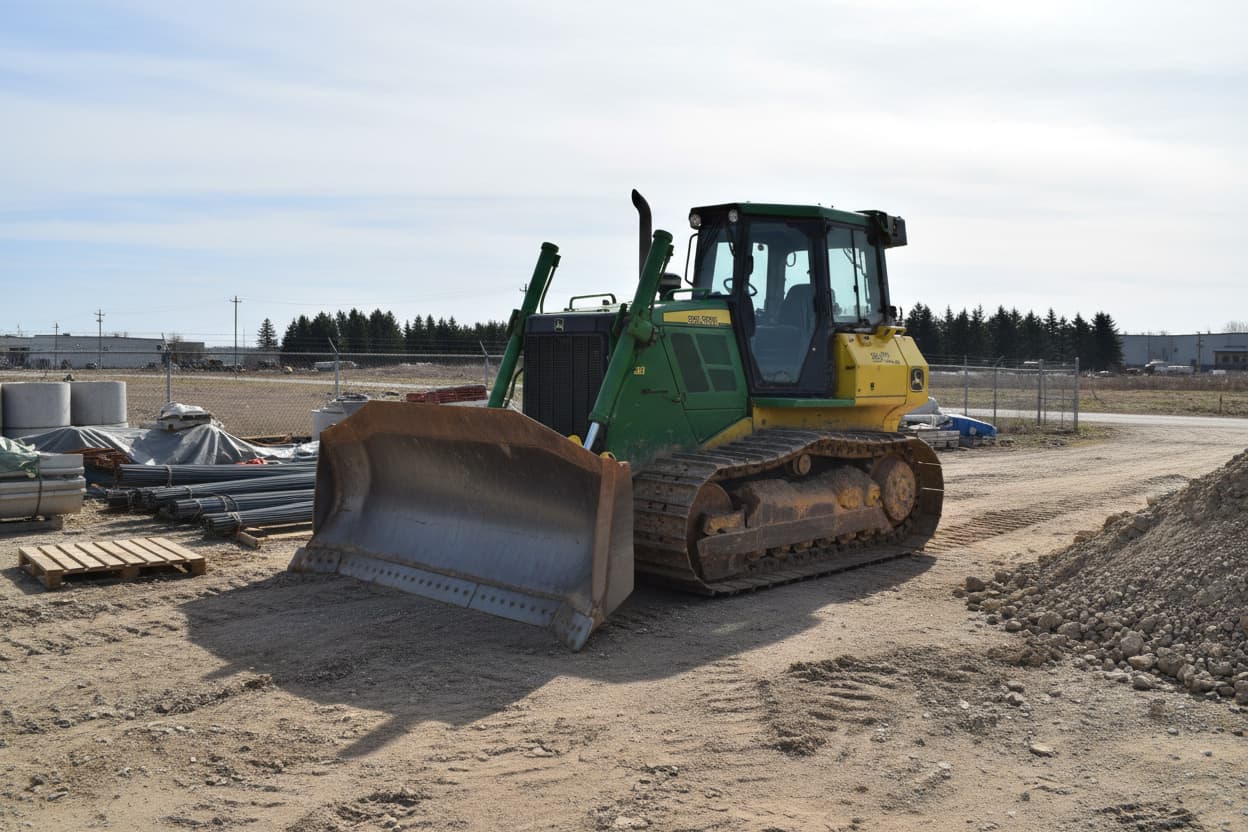
John Deere 650J Bulldozer
The John Deere 650J is a versatile and reliable hydrostatic drive bulldozer, well-suited for light-to-medium earthmoving, grading, and land clearing tasks in South Africa. Known for its ease of operation and fuel efficiency, it's a popular choice for contractors and plant hire fleets requiring a compact yet capable machine.
Overview
The John Deere 650J bulldozer, part of the J-Series, represents a significant advancement in hydrostatic drive dozer technology. Introduced in the mid-2000s, this model quickly gained traction in the South African market due to its combination of power, precision, and operator comfort. Its hydrostatic transmission system provides smooth, stepless speed changes and excellent maneuverability, making it highly effective in various applications from fine grading to pioneering work.
Designed with the operator in mind, the 650J typically features a comfortable cab with good visibility, intuitive controls, and reduced noise levels, which contributes to increased productivity over long shifts. The machine's compact size, relative to larger dozers, allows it to operate in tighter spaces while still delivering substantial pushing power. This makes it a valuable asset for residential developments, road maintenance, and agricultural land preparation.
Key aspects that appeal to South African operators include:
- Fuel Efficiency: The hydrostatic drive system is often cited for its ability to optimize engine output, leading to lower fuel consumption compared to traditional torque converter systems.
- Maneuverability: Independent track control allows for precise turns and counter-rotation, enhancing productivity in confined areas.
- Reliability: John Deere's reputation for robust engineering and readily available parts in South Africa supports the longevity and uptime of these machines.
- Versatility: Capable of handling a range of tasks, reducing the need for multiple specialized machines on smaller sites.
While not a heavy-duty production dozer, the 650J excels in its class, offering a balance of performance and operational economy that resonates with the demands of the local construction and agricultural sectors.
Key specs
- Years produced
- 2005–2015
- Year range
- 2005-2015
- Engine Power
- 69 kW (92 hp)
- Operating Weight
- 7,718 kg
- Blade Type
- Standard: 6-Way Power Angle Tilt (PAT) blade
- Blade Width (PAT)
- Approximately 2.9 - 3.2 m
- Track Shoe Width
- 400 - 460 mm (standard)
- Transmission
- Hydrostatic Drive
- Fuel Tank Capacity
- Approx. 190 - 210 litres
- Ground Pressure
- Approx. 40-45 kPa
- Drawbar Pull
- Approx. 100 - 120 kN
- Travel Speed (Forward/Reverse)
- Up to 9.7 km/h
- Undercarriage Type
- Sealed and Lubricated Track (SALT)
- Hydraulic System Flow
- Approx. 90 - 100 L/min
Applications
- Light-to-medium land clearing and pioneering
- Finish grading for roads, building pads, and sports fields
- Site preparation for residential and commercial developments
- Backfilling trenches and utility corridors
- Agricultural land preparation and terracing
- Road maintenance and shoulder work
Features
- Hydrostatic drive for precise control and fuel efficiency
- 6-Way Power Angle Tilt (PAT) blade for versatile grading
- Ergonomic joystick controls for intuitive operation
- Pressurized cab with air conditioning (optional but common in SA)
- Excellent visibility to the blade and surrounding area
- Automatic load-sensing power management
- Sealed and Lubricated Track (SALT) undercarriage for extended life
- Easy access to service points for simplified maintenance
Operating requirements
- Skilled operator proficient in hydrostatic dozer operation and grading techniques
- Regular daily checks and preventative maintenance schedule
- Access to quality diesel fuel and lubricants
- Appropriate transport for moving between sites (lowbed trailer)
- Understanding of ground conditions and material characteristics
- Adherence to site-specific safety protocols and regulations
Attachments and options
Common attachments
- Multi-shank ripper (for breaking up compacted soil or rock)
- Winches (for recovery or pulling tasks)
- Various blade extensions or specialized cutting edges
- Sweeps and screens for forestry or demolition applications
Options
- Heavy-duty undercarriage components
- Cold weather starting aids (less common in SA, but available)
- Rear counterweights for improved balance with ripper
- GPS/GNSS grade control systems for precision grading
- Specialized track shoes (e.g., swamp pads for soft ground)
- Additional work lights and safety beacons
Maintenance and inspections
- Daily visual inspections of tracks, blade, and fluid levels
- Regular oil and filter changes for engine, hydraulics, and hydrostatic system
- Undercarriage inspection and adjustment (track tension)
- Greasing of pivot points and articulation joints
- Cooling system cleaning and coolant level checks
- Battery terminal cleaning and charge level monitoring
- Checking for hydraulic leaks and hose wear
Consistent preventative maintenance is crucial for the longevity and performance of hydrostatic drive systems. Access to genuine John Deere parts and qualified technicians is vital in South Africa.
Safety notes
- ROPS/FOPS certified cab for operator protection
- Seat belt usage is mandatory
- Backup alarm and horn for alerting personnel
- Good visibility from the operator's station
- Emergency stop button
- Lockout/tagout procedures for maintenance
- Fire extinguisher readily accessible
Buying checklist
- Verify service history and maintenance records, especially for hydrostatic system
- Inspect undercarriage for wear (sprockets, idlers, rollers, track chains, shoes)
- Check for excessive play in blade linkages and pivot points
- Test hydrostatic drive for smooth operation, responsiveness, and power
- Examine engine for leaks, unusual noises, and exhaust smoke
- Assess hydraulic system for leaks, cylinder condition, and control responsiveness
- Inspect cab for damage, functionality of controls, and air conditioning
- Confirm availability of spare parts and local dealer support in your region of SA
- Obtain a recent oil analysis report if possible
- Compare pricing against similar models and condition in the South African market
FAQ
What are the main advantages of a hydrostatic drive dozer like the John Deere 650J?
Hydrostatic drive offers superior maneuverability, precise speed control, and often better fuel efficiency compared to traditional torque converter systems. It allows for independent track control, enabling smooth turns and counter-rotation in tight spaces, which is excellent for fine grading.
Is the John Deere 650J suitable for heavy ripping applications in South Africa?
While the 650J can be fitted with a ripper, it's generally considered a light-to-medium duty dozer. For very heavy ripping through hard rock or deeply compacted material, a larger dozer (e.g., 850J or larger) would typically be more efficient and durable. It's best for breaking up softer rock or compacted soil.
How is parts availability and service support for John Deere dozers in South Africa?
John Deere has a well-established dealer network across South Africa, offering good support for parts and service. However, as with any specialized equipment, it's always advisable to confirm the proximity and capability of your local dealer before purchase, especially for older models.
What is the typical fuel consumption for a John Deere 650J?
Fuel consumption can vary significantly based on application, operator technique, and ground conditions. However, due to its hydrostatic drive, the 650J is generally considered fuel-efficient for its class, typically consuming between 10-18 litres per hour under average working conditions. This is an estimated range.