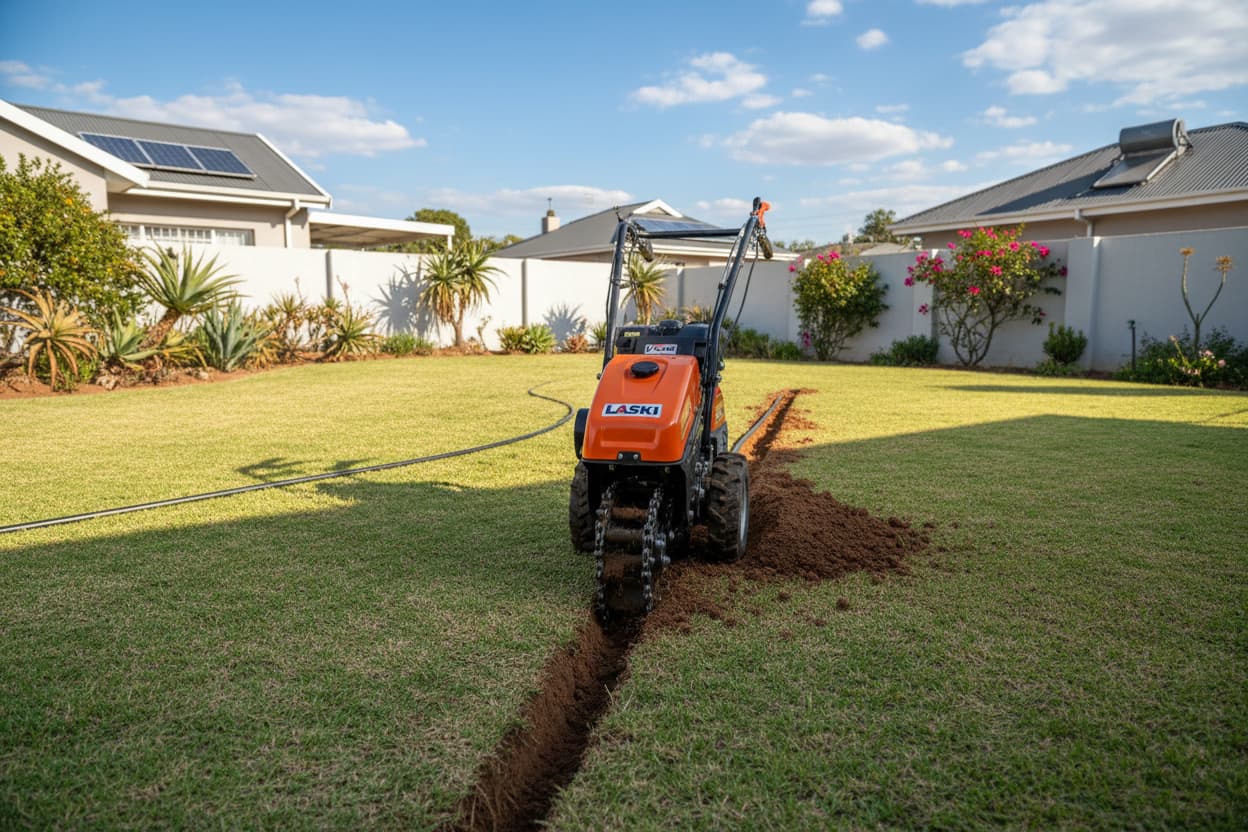
LASKI 60 Trencher
The LASKI 60 is a compact, pedestrian-operated trencher designed for efficient, narrow trenching in South Africa, ideal for irrigation, electrical cables, and small utility lines. Its robust build and user-friendly controls make it suitable for landscapers and contractors needing precise trenching in confined spaces.
Overview
The LASKI 60 trencher is a purpose-built machine designed for precision trenching tasks, particularly well-suited for the South African market where efficient installation of irrigation systems, electrical conduits, and communication cables is crucial. As a pedestrian-operated unit, it offers excellent maneuverability in tight spaces, making it a favourite among landscapers, small contractors, and utility installers.
Powered by a reliable petrol engine, the LASKI 60 delivers consistent performance for digging trenches up to a specified depth and width. Its compact footprint not only aids in transport but also minimises disruption to existing landscapes. The design prioritises ease of use, with straightforward controls that allow operators to quickly become proficient. For South African conditions, its robust construction is a significant advantage, capable of handling varying soil types, though extremely rocky ground may require pre-ripping or alternative methods.
Key advantages for local operators include:
- Maneuverability: Excellent for residential areas, gardens, and sites with limited access.
- Cost-Effectiveness: Lower initial investment and running costs compared to larger trenching equipment.
- Precision: Ideal for creating neat, consistent trenches for specific applications.
- Local Support: LASKI equipment generally benefits from a reasonable support network for parts and service in South Africa.
While not designed for large-scale earthmoving, the LASKI 60 excels in its niche, providing a reliable and efficient solution for numerous trenching requirements across the country.
Key specs
- Engine Type
- Petrol Engine
- Engine Power Output
- Approximately 6.5 - 9 kW (9 - 12 hp) (est.)
- Operating Weight
- 130 kg
- Trenching Depth (Max)
- Up to 600 mm (est.)
- Trenching Width
- Typically 100 - 150 mm (est.)
- Digging Chain Type
- Carbide-tipped teeth
- Starting System
- Recoil Start
- Fuel Tank Capacity
- Approximately 3.6 - 6.0 Litres (est.)
- Dimensions (L x W x H)
- Approx. 1500 x 700 x 1000 mm (Operating) (est.)
- Ground Clearance
- Sufficient for uneven terrain
- Drive System
- Manual push / Self-propelled (depending on variant) (est.)
- Productivity
- Up to 60 meters per hour (depending on soil) (est.)
Specifications may vary slightly based on specific engine configuration and optional features.
Applications
- Irrigation system installation (residential and commercial)
- Laying electrical cables for lighting, power, and security systems
- Installing communication lines (fibre optic, data cables)
- Drainage pipe installation (small diameter)
- Edging for landscaping projects
- Utility trenching for small water pipes or gas lines
Features
- Compact and maneuverable design for tight spaces
- Robust digging chain with carbide-tipped teeth for durability
- Adjustable trenching depth control
- Reliable petrol engine for consistent power
- User-friendly controls for easy operation
- Safety features like dead-man's handle
- Heavy-duty frame construction
Operating requirements
- Competent operator training for safe and efficient use
- Pre-site inspection for underground utilities (e.g., 'Call Before You Dig' services)
- Appropriate personal protective equipment (PPE): safety boots, gloves, eye protection, hearing protection
- Regular fuel supply (unleaded petrol)
- Suitable transport for moving the unit between sites (e.g., bakkie or small trailer)
- Clearance of debris and obstacles from the trenching path
Attachments and options
Common attachments
- Different width digging chains (e.g., 100mm, 150mm)
- Heavy-duty rock teeth for tougher ground conditions
- Trailer for transport (aftermarket)
Options
- Electric start option (on some engine variants)
- Hour meter for tracking usage
- Various engine brands/models (e.g., Honda, Briggs & Stratton)
- Self-propelled drive system (on higher-spec models)
Maintenance and inspections
- Daily check of oil levels and fuel
- Regular cleaning of air filter, especially in dusty South African conditions
- Inspection and lubrication of digging chain and sprockets
- Checking and tightening of all fasteners
- Spark plug inspection and replacement as per manufacturer schedule
- Blade/tooth inspection and replacement when worn
- General cleaning of the machine after each use
Adhering to the manufacturer's maintenance schedule is crucial for longevity and performance, particularly given the demanding nature of trenching work in varied South African soil types.
Safety notes
- Always wear appropriate PPE (Personal Protective Equipment)
- Ensure the work area is clear of bystanders and obstacles
- Never operate the machine on excessively steep slopes
- Locate and mark all underground utilities before digging
- Maintain a firm grip on handles and be aware of kickback
- Switch off the engine before performing any adjustments or maintenance
- Read and understand the operator's manual thoroughly before use
Buying checklist
- Verify engine condition and service history (if buying used)
- Inspect the digging chain and teeth for wear and damage
- Check for any structural damage or excessive rust on the frame
- Test the engine starting and running performance
- Assess the availability of spare parts and service support in your region of South Africa
- Confirm the maximum trenching depth and width meet your project requirements
- Consider transport logistics – can it fit in your existing vehicle or trailer?
- Ask about any included accessories or additional digging chains
- Compare pricing from multiple suppliers to ensure a competitive deal
FAQ
What is the typical fuel consumption of a LASKI 60 trencher?
Fuel consumption can vary based on engine size, soil conditions, and operator technique, but you can generally expect around 1 to 2 litres per hour under typical operating conditions. (est.)
Can the LASKI 60 dig through rocky soil in South Africa?
While the LASKI 60 is robust, it is primarily designed for softer to medium soils. Extremely rocky or hard-packed ground may significantly reduce its efficiency, cause excessive wear on the chain, or require pre-ripping. For such conditions, a larger, more powerful trencher or alternative excavation methods might be necessary.
Is the LASKI 60 easy to transport?
Yes, due to its compact size and relatively low weight (around 130 kg), the LASKI 60 is generally easy to transport. It can typically fit into the back of a standard bakkie or on a small utility trailer, making it convenient for moving between job sites.
What kind of maintenance is required for the digging chain?
The digging chain requires regular inspection for worn or broken teeth, proper tensioning, and lubrication. Worn teeth should be replaced promptly to maintain digging efficiency and prevent damage to the chain or sprockets. Always refer to the operator's manual for specific maintenance intervals and procedures.