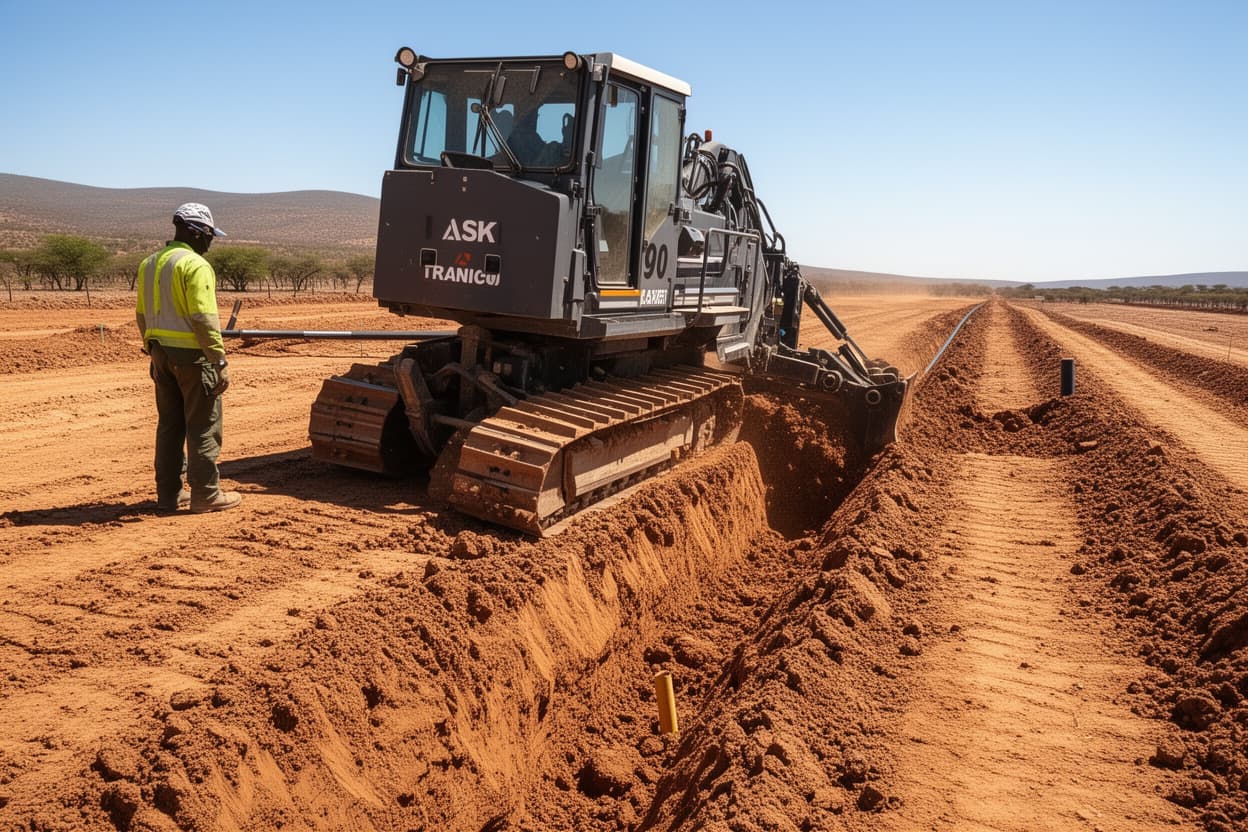
LASKI 90 Trencher
The LASKI 90 is a compact and robust walk-behind trencher designed for efficient, precise trenching in various South African applications, from irrigation and cable laying to drainage. Its user-friendly operation and durable construction make it a valuable asset for small to medium-scale projects, offering a balance of power and maneuverability for challenging ground conditions.
Overview
The LASKI 90 trencher is engineered for reliability and performance in the demanding South African environment. This walk-behind unit is particularly well-suited for tasks requiring narrow, clean trenches, such as installing irrigation systems, laying electrical or communication cables, and creating shallow drainage channels. Its compact footprint allows it to operate in confined spaces where larger trenchers cannot access, making it a versatile choice for landscapers, electricians, plumbers, and small-scale civil contractors.
Powered by a dependable petrol engine, the LASKI 90 delivers consistent power to its digging chain, capable of cutting through various soil types, including compacted earth and light rocky ground. The machine's design prioritises operator comfort and safety, featuring intuitive controls and a stable chassis. Its robust construction ensures longevity, an important consideration for equipment operating in the often harsh conditions found across South Africa.
Key advantages for South African operators include:
- Maneuverability: Excellent for residential areas, gardens, and sites with limited access.
- Cost-Effectiveness: Lower initial investment and running costs compared to larger, more complex trenching solutions.
- Ease of Transport: Can be easily transported on a standard utility trailer, reducing logistics overheads.
- Precision: Delivers clean, consistent trenches, minimising backfill requirements and site disruption.
While primarily designed for smaller projects, its efficiency and reliability make it a valuable tool for any contractor looking to streamline their trenching operations and improve productivity on site.
Key specs
- Year range
- 2025
- Engine Type
- Petrol (e.g., Honda GX270 or similar)
- Engine Power Output
- 6.6 kW (9 hp) (est.)
- Operating Weight
- 300 kg
- Trenching Depth (Max)
- 600 mm
- Trenching Width
- 100 mm
- Digging Chain Speed
- Variable, typically 0-60 m/min (est.)
- Fuel Tank Capacity
- 5.3 - 6.1 Litres (est.)
- Starting System
- Recoil Start
- Drive System
- Manual push / Self-propelled (chain drive) (est.)
- Dimensions (L x W x H)
- Approx. 1900 x 700 x 1100 mm (est.)
- Ground Clearance
- Approx. 150 mm (est.)
- Tyre Type
- Pneumatic, heavy-duty
- Chain Type
- Carbide-tipped teeth
Specifications are typical and may vary slightly based on specific engine configuration and market region. Always consult the manufacturer's official data sheet for precise figures.
Applications
- Irrigation system installation (residential, commercial, agricultural)
- Laying electrical cables and communication lines
- Shallow drainage channel creation
- Garden and landscape trenching
- Utility service line installation (water, gas, fibre optics)
- Fence post trenching
Features
- Compact and maneuverable design for tight spaces
- Robust petrol engine for reliable power
- Adjustable trenching depth control
- Durable digging chain with carbide-tipped teeth for various soil types
- Ergonomic operator handle with intuitive controls
- Safety clutch to protect against chain jams
- Heavy-duty chassis for enhanced durability
- Easy access for routine maintenance
Operating requirements
- Competent operator training on trencher safety and operation
- Appropriate personal protective equipment (PPE) including safety boots, gloves, eye protection, and hearing protection
- Pre-trenching site survey to identify underground utilities (e.g., using a cable and pipe locator)
- Clearance of debris and obstacles from the trenching path
- Adequate ventilation if operating in enclosed or semi-enclosed spaces
- Regular fuel and oil checks
Attachments and options
Common attachments
- Standard digging chain (100mm width)
- Optional wider digging chains (if available for specific models)
- Trench cleaner/backfill blade (some models may integrate this)
Options
- Hour meter for tracking usage and maintenance intervals
- Different tooth configurations for varying soil conditions (e.g., rock teeth)
- Transport wheels or trailer for easier site movement
- Service kits for routine maintenance
Maintenance and inspections
- Daily inspection of digging chain for wear and damage, and tension adjustment
- Regular cleaning of the machine, especially the engine cooling fins
- Engine oil level check and scheduled changes as per manufacturer guidelines
- Air filter inspection and cleaning/replacement
- Spark plug inspection and replacement
- Lubrication of moving parts (e.g., chain bearings, pivot points)
- Fuel system checks and fuel filter replacement
- Tyre pressure checks
Adhering to the manufacturer's recommended service schedule is crucial for optimal performance and longevity, especially given the dusty and sometimes harsh operating conditions in South Africa.
Safety notes
- Always wear appropriate PPE (safety boots, gloves, eye protection, hearing protection)
- Ensure all safety guards are in place and functional before operation
- Never operate the trencher on slopes exceeding manufacturer's recommendations
- Maintain a safe distance from the digging chain during operation
- Be aware of surroundings and potential bystanders
- Shut off the engine and engage the brake before performing any adjustments or maintenance
- Thoroughly survey the area for underground utilities before digging
- Do not operate under the influence of drugs or alcohol
Buying checklist
- Verify the trencher's digging depth and width capabilities match your typical project requirements.
- Inspect the condition of the digging chain and teeth for excessive wear.
- Check the engine for signs of leaks, excessive smoke, or unusual noises.
- Test all controls for smooth and responsive operation.
- Inquire about the availability of spare parts and service support in South Africa.
- Confirm the year of manufacture and service history, if buying used.
- Assess the ease of transport to and from your typical job sites.
- Compare fuel efficiency and maintenance costs with alternative models.
- Ensure the seller provides an operator's manual and safety guidelines.
FAQ
What type of ground can the LASKI 90 trencher handle?
The LASKI 90 is designed for a variety of soil types, including soft ground, compacted earth, and light rocky conditions. For very hard rock or heavily consolidated ground, a larger, more powerful trencher or alternative excavation methods might be required.
Is the LASKI 90 suitable for DIY projects?
While relatively easy to operate, trenchers require careful handling and adherence to safety protocols. For occasional DIY use, hiring a professional or renting the machine with proper instruction is advisable. For frequent use, investing in training is recommended.
How does the LASKI 90 compare to a mini excavator for trenching?
The LASKI 90 excels at creating narrow, consistent trenches quickly and efficiently, especially in confined spaces. A mini excavator offers greater versatility for wider trenches, deeper digging, and general excavation, but is less efficient for long, narrow trenches and requires more space to operate.
What is the typical fuel consumption for the LASKI 90?
Fuel consumption varies significantly based on engine load, soil conditions, and operator technique. However, with its efficient petrol engine, you can expect several hours of operation on a single tank under typical working conditions. Always refer to the engine manufacturer's specifications for more precise figures.