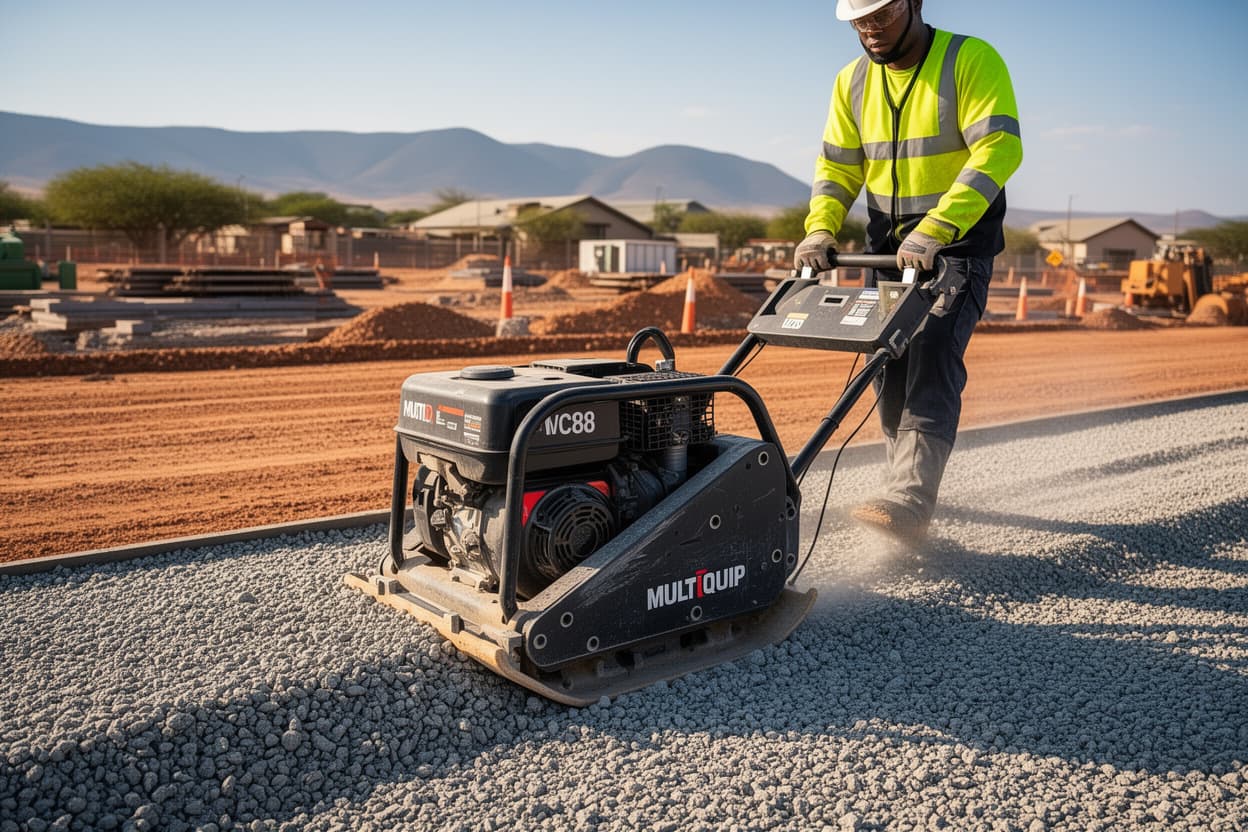
Multiquip MVC88 Vibratory Compactor
The Multiquip MVC88 is a robust and reliable vibratory plate compactor designed for efficient compaction of granular soils and asphalt in South African construction and landscaping projects. It offers a good balance of power, manoeuvrability, and durability for small to medium-scale jobs, making it a popular choice for contractors and plant hire operations.
Overview
The Multiquip MVC88 vibratory plate compactor is a staple in the South African construction industry, known for its dependable performance and ease of use. This forward-plate compactor is engineered to deliver consistent compaction results on various materials, including granular soils, sand, gravel, and asphalt. Its relatively compact size and manageable weight make it highly versatile for a range of applications, from trench work and foundation preparation to paving and landscaping.
Operators appreciate the MVC88 for its straightforward operation and robust construction, designed to withstand the demanding conditions often encountered on South African job sites. The unit typically features a powerful petrol engine, providing ample force for effective material consolidation. Its design prioritises operator comfort and safety, with features aimed at reducing vibration and ensuring stable handling.
For South African contractors and plant hire companies, the MVC88 represents a cost-effective solution for achieving specified compaction densities without the need for larger, more complex machinery. Its widespread availability and the established Multiquip support network contribute to its appeal, ensuring access to parts and service when needed. This makes it a practical investment for businesses looking for reliable equipment that can handle daily operational demands.
- Typical Applications
- Ideal for compacting sub-bases for driveways, patios, and walkways.
- Effective in trench backfill compaction for utility installations.
- Suitable for asphalt patching and repair work.
- Used in landscaping for preparing ground for artificial turf or paving.
- Key Design Elements
- Heavy-duty steel base plate for durability and even compaction.
- Vibration-isolated handles to reduce operator fatigue.
- Centrifugal force optimized for efficient material consolidation.
- Easy-access engine for routine maintenance.
Key specs
- Year range
- 2025
- Operating Weight
- 104 kg
- Engine Type
- Honda GX160 Petrol (or equivalent) (est.)
- Engine Power
- 4.8 - 5.5 hp (3.6 - 4.1 kW) (est.)
- Centrifugal Force
- 19.6 kN (4400 lbf) (est.)
- Vibration Frequency
- 5600 VPM (93 Hz) (est.)
- Plate Size (W x L)
- 450 mm x 580 mm (est.)
- Compaction Depth
- Up to 300 mm (depending on material) (est.)
- Travel Speed
- Up to 25 m/min (est.)
- Fuel Tank Capacity
- Approximately 3.1 litres (est.)
- Fuel Consumption
- Approx. 1.5 - 2.0 L/hr (under load) (est.)
- Starting System
- Recoil Start
- Gradeability
- Up to 20 degrees (depending on surface) (est.)
Specifications may vary slightly based on specific engine model and regional configurations. Values are typical for the MVC88 series.
Applications
- Compaction of granular soils, sand, and gravel for foundations and sub-bases.
- Asphalt patching and repair work on roads, driveways, and parking lots.
- Trench backfill compaction for utility lines (water, sewer, electrical).
- Landscaping projects, including preparation for paving, patios, and walkways.
- Compacting small to medium-sized areas where larger rollers are impractical.
- Preparation of surfaces for concrete slabs and artificial turf installations.
Features
- Heavy-duty, robust construction designed for demanding job site conditions.
- High-performance Honda GX series engine (or equivalent) for reliable power.
- Vibration-isolated handle system to reduce operator fatigue and improve comfort.
- Open base plate design for easy cleaning and maintenance.
- Centrifugal force optimized for efficient compaction of various materials.
- Foldable handle for convenient transport and storage.
- Integrated lifting hook for easy loading and unloading.
Operating requirements
- Requires regular fuel (unleaded petrol) and engine oil checks.
- Operators must wear appropriate Personal Protective Equipment (PPE), including hearing protection, safety boots, and gloves.
- Requires a relatively level and stable surface for safe operation.
- Adequate ventilation if operating in enclosed or semi-enclosed spaces due to engine exhaust.
- Regular inspection of the base plate and vibrator assembly for wear and damage.
- Competent operator training is essential for safe and effective use.
Attachments and options
Common attachments
- Water tank kit: For asphalt compaction to prevent material sticking to the plate.
- Wheel kit: Facilitates easier transport around the job site.
- Paving pad (rubber mat): For compacting interlocking pavers without damaging surfaces.
Options
- Hour meter: To track operational hours for maintenance scheduling.
- Different engine options: While Honda GX is standard, other reliable engines may be offered.
- Service kits: Pre-packaged maintenance parts for routine servicing.
Maintenance and inspections
- Daily checks: Fuel level, engine oil level, air filter cleanliness, and general machine condition.
- Regular cleaning: Remove dirt and debris from the engine and vibrator housing.
- Engine oil changes: As per manufacturer's recommendations (typically every 50-100 hours).
- Air filter cleaning/replacement: Depending on dust conditions, inspect daily and clean/replace as needed.
- Spark plug inspection/replacement: Annually or as per engine manual.
- V-belt tension and condition check: Ensure proper tension and inspect for wear.
- Base plate inspection: Check for cracks, excessive wear, or damage.
Adhering to the manufacturer's maintenance schedule is crucial for longevity and optimal performance, especially given the dusty and demanding conditions often found on South African sites. Access to genuine Multiquip parts or quality aftermarket equivalents is generally good.
Safety notes
- Always wear appropriate PPE: hearing protection, safety glasses, gloves, and steel-toed boots.
- Ensure the work area is clear of bystanders and obstructions.
- Never operate the compactor on slopes exceeding the manufacturer's recommendations.
- Be aware of exhaust fumes; ensure adequate ventilation.
- Do not operate the machine if it is damaged or malfunctioning.
- Keep hands and feet clear of the vibrating plate during operation.
- Secure the compactor properly during transport to prevent movement.
Buying checklist
- Verify the engine's condition: Check for easy starting, smooth running, and excessive smoke.
- Inspect the base plate: Look for excessive wear, cracks, or signs of previous repairs.
- Check the vibrator housing: Listen for unusual noises and inspect for leaks.
- Examine the handle and mounts: Ensure they are secure and free from excessive play or damage.
- Test the controls: Confirm throttle and kill switch function correctly.
- Assess overall structural integrity: Look for bent frames or signs of heavy impact.
- Inquire about service history and availability of spare parts in your region.
- Compare pricing from multiple reputable dealers in South Africa.
- Consider the availability of local technical support and warranty (if applicable).
FAQ
What materials can the Multiquip MVC88 compact?
The Multiquip MVC88 is primarily designed for compacting granular materials such as sand, gravel, crushed stone, and asphalt. It is not typically recommended for cohesive soils like heavy clay.
Is the MVC88 suitable for asphalt work?
Yes, with the optional water tank kit, the MVC88 is well-suited for asphalt patching and repair work, preventing the asphalt from sticking to the base plate and ensuring a smoother finish.
How often should I service the engine on my MVC88?
Engine service intervals, particularly oil changes, typically range from 50 to 100 operating hours, or annually, whichever comes first. Always refer to the engine manufacturer's manual for precise recommendations, especially given South Africa's often dusty conditions.
Can I transport the MVC88 in a standard bakkie?
Yes, due to its relatively compact size and foldable handle, the MVC88 can generally be transported in the back of a standard utility vehicle (bakkie) or on a small trailer. Always ensure it is securely tied down to prevent movement during transit.
What is the typical lifespan of an MVC88 in South Africa?
With proper maintenance and responsible operation, a Multiquip MVC88 can have a lifespan of 5 to 10 years or more in South African conditions. Key factors include regular servicing, avoiding abuse, and prompt repair of any issues.