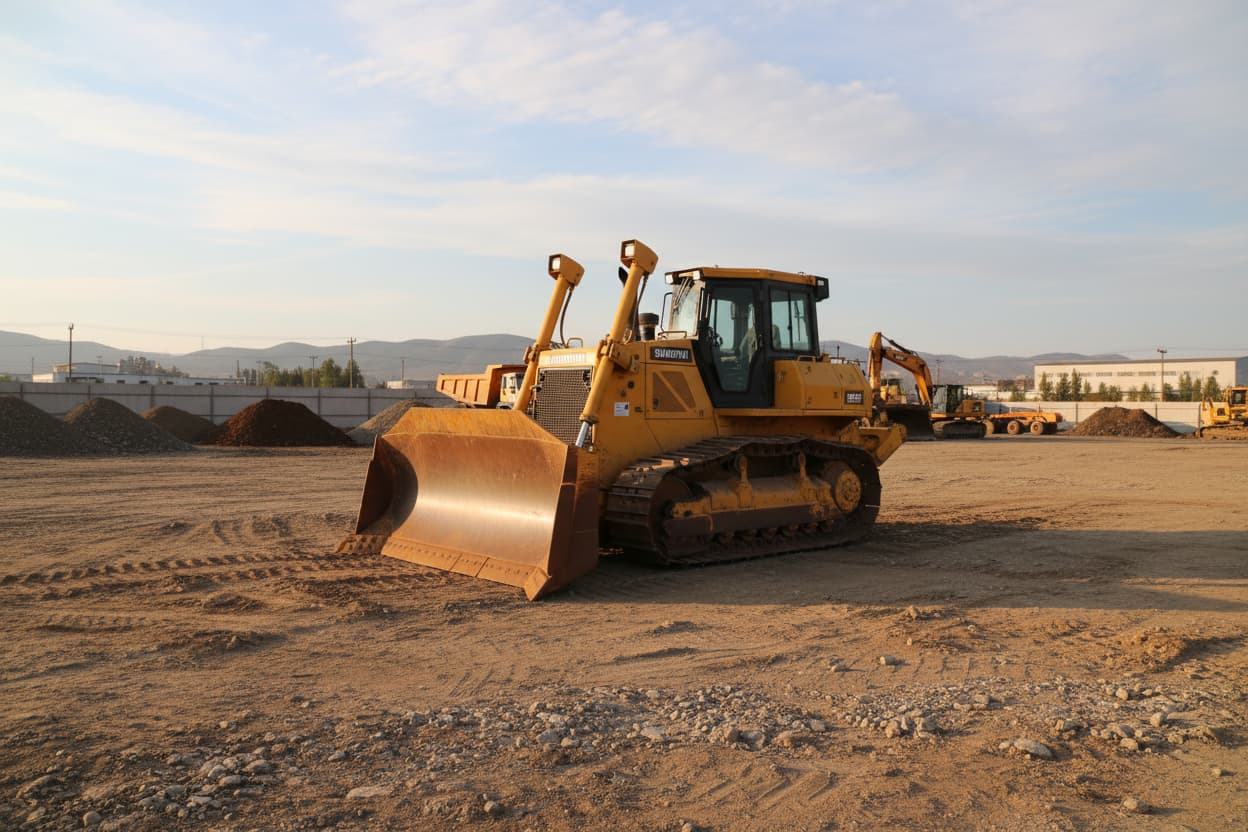
Shantui SD22W Bulldozer
The Shantui SD22W is a robust and cost-effective 23-ton bulldozer designed for heavy-duty earthmoving, land clearing, and mining support in South Africa. Known for its reliable performance and straightforward mechanics, it offers a strong alternative for contractors seeking value and durability in challenging conditions.
Overview
The Shantui SD22W bulldozer is a workhorse designed for demanding applications across various industries in South Africa, including mining, construction, and large-scale infrastructure projects. As part of Shantui's well-regarded SD series, the SD22W is engineered for durability and performance, offering a compelling option for contractors and plant hire companies looking for a balance between capability and operational cost.
This model is particularly suited for heavy-duty tasks such as ripping hard ground, pushing large volumes of material, and maintaining haul roads. Its robust undercarriage and powerful engine are built to withstand the harsh operating environments often encountered in South Africa, from dusty quarries to remote construction sites. The 'W' designation often indicates a wider track shoe for improved flotation in softer ground conditions, a common requirement in certain South African terrains.
Key aspects that appeal to South African operators include:
- Reliability: Known for its straightforward design and robust components, leading to less downtime.
- Cost-Effectiveness: Offers a lower initial purchase price compared to premium brands, with competitive running costs.
- Parts Availability: Shantui has an established presence in South Africa, ensuring reasonable access to spare parts and technical support.
- Versatility: Capable of handling a wide range of tasks from land clearing to bulk earthworks.
While it may not always boast the advanced technological features of some competitors, the SD22W focuses on core functionality and brute strength, making it a practical choice for many South African operations where reliability and cost are paramount.
Key specs
- Years produced
- 2010–2010 (est.)
- Year range
- 2015
- Operating Weight
- 23,450 kg
- Engine Model
- Weichai WD10G220E23 (or similar)
- Rated Power
- 162 kW (220 hp)
- Blade Type
- Straight Tilt Blade (standard)
- Blade Capacity
- 6.4 m³ (estimated) (est.)
- Max Drawbar Pull
- 200 kN (estimated) (est.)
- Track Shoe Width
- 560 mm (standard, 'W' may indicate wider options)
- Ground Pressure
- 0.077 MPa (estimated) (est.)
- Transmission Type
- Planetary Power Shift
- Forward Gears
- 3
- Reverse Gears
- 3
- Fuel Tank Capacity
- 380 - 400 L (estimated) (est.)
Specifications may vary slightly based on specific year of manufacture, regional configurations, and optional attachments. Values marked 'estimated' are typical for this class of machine.
Applications
- Heavy-duty land clearing and site preparation
- Mining operations (haul road maintenance, overburden removal, ripping)
- Large-scale construction projects (bulk earthworks, dam building)
- Quarrying and aggregate production (stockpile management, ripping rock)
- Road construction and maintenance
- Forestry and agricultural land development
Features
- Robust Weichai engine for reliable power and torque
- Planetary power shift transmission for smooth gear changes under load
- Modular design for easier maintenance and repair access
- Comfortable operator cabin with good visibility (for its class)
- Heavy-duty undercarriage designed for harsh conditions
- Hydraulic pilot control for precise blade operation
- Optional ripper attachment for breaking up compacted or rocky ground
- Wider track shoes (on 'W' models) for enhanced flotation in soft terrain
Operating requirements
- Skilled and certified bulldozer operator familiar with heavy earthmoving equipment
- Regular pre-shift inspections and daily maintenance checks
- Adequate fuel supply (diesel) and lubricants for continuous operation
- Access to a well-equipped workshop for scheduled servicing and major repairs
- Compliance with site-specific safety regulations and environmental standards
- Logistics planning for transport to and from remote sites, often requiring low-bed trailers
- Availability of genuine Shantui or high-quality aftermarket spare parts
Attachments and options
Common attachments
- Straight Tilt Blade (standard)
- U-Blade (for increased capacity)
- Angle Blade (for side casting)
- Single Shank Ripper
- Three Shank Ripper
- Winches (for specific applications)
Options
- Air conditioning for operator comfort in hot climates
- ROPS/FOPS certified cabin for enhanced safety
- Various track shoe widths and types (e.g., swamp shoes)
- Cold weather starting aids
- Heavy-duty guarding packages for mining applications
- GPS/GNSS machine control readiness (aftermarket integration)
Maintenance and inspections
- Daily checks: fluid levels (engine oil, coolant, hydraulic oil), track tension, blade condition, lights
- Regular greasing of pivot points and articulation joints
- Scheduled engine oil and filter changes (every 250-500 hours)
- Hydraulic filter replacement and system checks
- Undercarriage inspection for wear on rollers, idlers, sprockets, and track links
- Cooling system cleaning and coolant level/condition checks
- Transmission and final drive oil changes as per manufacturer schedule
- Electrical system checks, including battery and alternator
Adhering to the manufacturer's recommended service intervals is crucial for maximizing uptime and extending the lifespan of the Shantui SD22W, especially given the demanding South African operating conditions.
Safety notes
- ROPS/FOPS certified cabin to protect operator in case of rollover or falling objects
- Seat belt usage is mandatory for operator safety
- Clear visibility from the cabin, supplemented by mirrors and optional cameras
- Audible reverse alarm and horn for warning personnel on site
- Emergency stop button within easy reach of the operator
- Well-maintained braking system for effective stopping power
- Fire extinguisher readily accessible in the cabin
- Proper lockout/tagout procedures during maintenance to prevent accidental startup
Buying checklist
- Verify service history and maintenance records, especially for engine and transmission
- Inspect the undercarriage thoroughly for wear on tracks, rollers, idlers, and sprockets (a major cost item)
- Check for any visible leaks from hydraulic cylinders, hoses, and engine seals
- Assess engine performance: look for excessive smoke, unusual noises, and proper power delivery
- Test all hydraulic functions (blade lift, tilt, ripper) for smooth and responsive operation
- Examine the cabin for damage, functionality of controls, and air conditioning (if fitted)
- Confirm availability of spare parts and local dealer support in your operating region
- Obtain a recent oil analysis report if possible, to gauge internal component health
- Consider a pre-purchase inspection by an independent, qualified heavy equipment mechanic
- Negotiate price based on condition, hours, and included attachments
FAQ
What is the typical fuel consumption of a Shantui SD22W?
Fuel consumption for an SD22W can vary significantly based on application, operator technique, and ground conditions. Expect a range of 25-45 litres per hour under typical heavy-duty operation in South Africa. Ripping hard ground will be at the higher end of this range.
How does the Shantui SD22W compare to other brands like Caterpillar or Komatsu?
The Shantui SD22W is generally positioned as a more cost-effective alternative. While it may not always match the advanced technology or refined operator comfort of premium brands, it offers robust performance, reliability, and a lower acquisition cost, making it attractive for budget-conscious operations in South Africa. Parts availability and support network are also key considerations.
Is the SD22W suitable for mining applications in South Africa?
Yes, the SD22W is commonly used in mining operations for tasks such as haul road maintenance, pushing overburden, ripping softer rock, and general site preparation. Its robust build and powerful engine are well-suited to the demanding conditions found in South African mines, particularly where cost-efficiency is a priority.
What are the common wear parts to monitor on an SD22W?
The most common wear parts include the undercarriage components (track links, rollers, idlers, sprockets, track shoes), cutting edges and end bits on the blade, ripper teeth, and standard service items like filters and fluids. Regular inspection and timely replacement of these parts are crucial for operational efficiency.