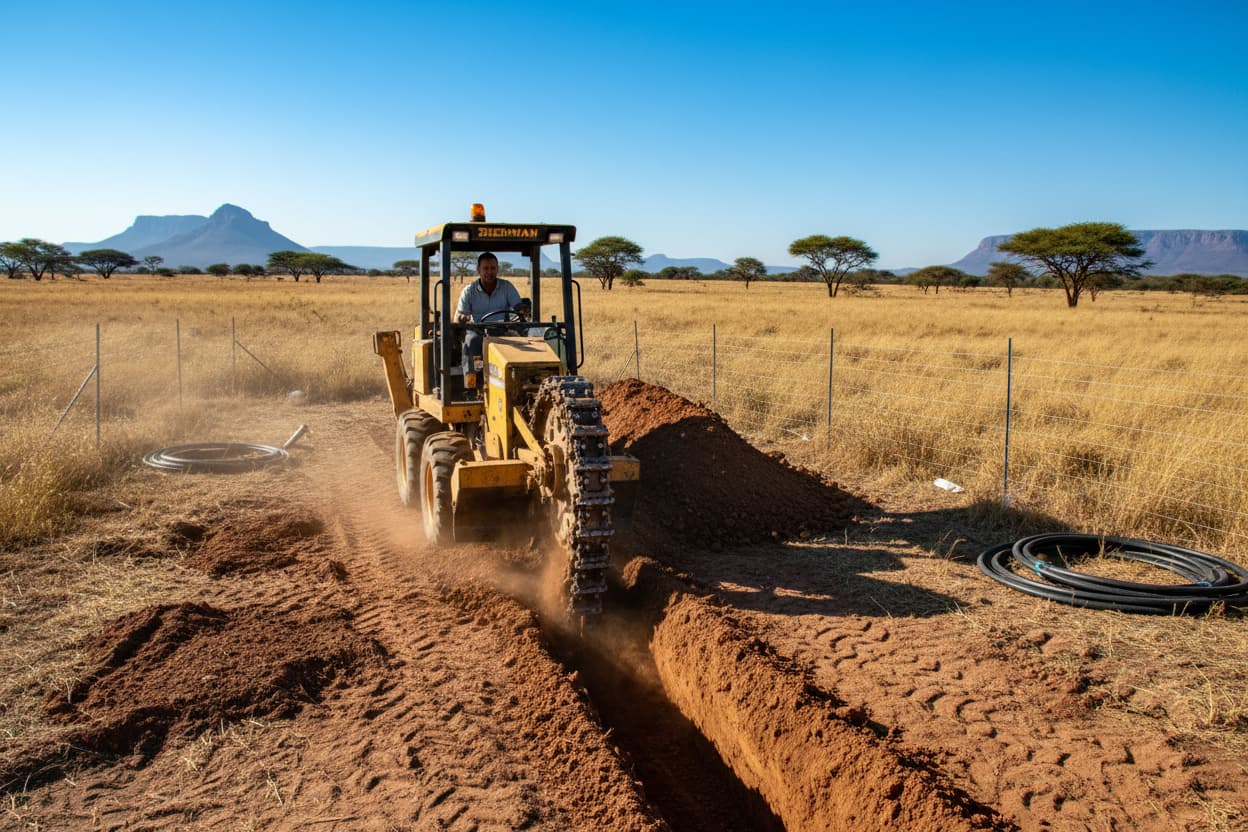
Sherman BWT1303 Trencher
The Sherman BWT1303 is a powerful and versatile trencher designed for efficient and precise trenching in various ground conditions, ideal for utility installation, irrigation, and drainage projects in South Africa.
Overview
The Sherman BWT1303 trencher is engineered for demanding trenching tasks, offering a robust design and reliable performance. This machine is well-suited for a range of applications, from laying pipes and cables to creating drainage channels. Its powerful engine and durable digging chain ensure consistent productivity, even in challenging South African soil types. Operators benefit from intuitive controls and a focus on safety, making the BWT1303 a valuable asset for contractors and utility companies.
- Designed for high-volume trenching operations.
- Robust construction ensures longevity and reliability.
- Suitable for various ground conditions, including hard soil and rock.
- Focus on operator comfort and safety.
Key specs
- Operating Weight
- 21,158 kg
- Engine Power
- Approximately 130-150 kW (est.)
- Maximum Trench Depth
- Up to 2.5 - 3.0 meters (est.)
- Maximum Trench Width
- Up to 0.6 - 1.0 meters (est.)
- Trenching Speed
- Variable, depending on ground conditions (est.)
- Fuel Tank Capacity
- Approximately 300-400 litres (est.)
Specifications are typical for this class of trencher and may vary slightly based on specific configurations and attachments.
Applications
- Utility trenching (water, gas, electricity, fibre optics)
- Irrigation system installation
- Drainage ditch creation
- Foundation preparation for small structures
- Pipeline installation
- Roadside trenching
Features
- Heavy-duty digging chain with various tooth options
- Hydrostatic drive system for smooth operation
- Adjustable trenching depth and width
- Operator-friendly control panel
- Robust chassis and frame for durability
- Efficient cooling system for extended operation
- Easy access for routine maintenance
Operating requirements
- Skilled and certified trencher operator
- Pre-site inspection for underground utilities
- Appropriate personal protective equipment (PPE)
- Adequate fuel supply
- Regular maintenance checks
- Clearance for machine operation and spoil disposal
Attachments and options
Common attachments
- Various chain types (rock, dirt, combination)
- Different tooth configurations (carbide, cup, shark)
- Crumber bar for clean trench bottom
- Spoil conveyor systems
- Laser grading systems for precise depth control
Options
- Enclosed cab with air conditioning
- GPS guidance systems
- Cold weather starting kits
- Additional lighting packages
- Custom paint and branding
Maintenance and inspections
- Daily inspection of digging chain and teeth
- Regular lubrication of pivot points and bearings
- Checking hydraulic fluid levels and filters
- Engine oil and filter changes as per manufacturer schedule
- Inspection of tracks/tires and undercarriage
- Cleaning of air filters and cooling system
- Checking electrical connections and wiring
Adherence to the manufacturer's recommended maintenance schedule is crucial for optimal performance and longevity.
Safety notes
- ROPS/FOPS certified operator station
- Emergency stop buttons
- Audible reverse alarm
- Clear visibility from operator's seat
- Safety interlocks for digging functions
- Warning decals and operating instructions
- Proper training for all operators
Buying checklist
- Verify trenching depth and width requirements for your projects.
- Assess ground conditions where the trencher will primarily operate.
- Consider the availability of spare parts and service support in South Africa.
- Evaluate fuel efficiency and operating costs.
- Inspect the condition of the digging chain and teeth.
- Check for any signs of hydraulic leaks or engine issues.
- Review maintenance records if purchasing a used model.
- Confirm warranty details and after-sales support.
FAQ
What is the typical fuel consumption of a Sherman BWT1303 trencher?
Fuel consumption can vary significantly based on engine load, ground conditions, and operator technique, but expect it to be in the range of 20-40 litres per hour under typical operating conditions. (est.)
Can the Sherman BWT1303 handle rocky soil?
Yes, with the appropriate rock chain and carbide-tipped teeth, the BWT1303 is designed to handle challenging ground conditions, including rocky and abrasive soils.
What kind of training is required to operate this trencher?
Operators should possess relevant heavy equipment operating certifications and specific training on trencher operation, safety protocols, and daily maintenance checks.